In reflecting back on my very productive recent days, laboring diligently to prepare The Barn to house our several tons of books, I have the nagging suspicion that I was the target of some subliminal mockery. I got some of the two dozen glazed doors cut and a few installed (and the stock for all of them ready to assemble). Still, just beyond earshot I thought I sensed, feeling more than hearing, a gentle guttural Gallic guffaw, cruelly chiding me with, “Roubo, Roubo, Roubo.”
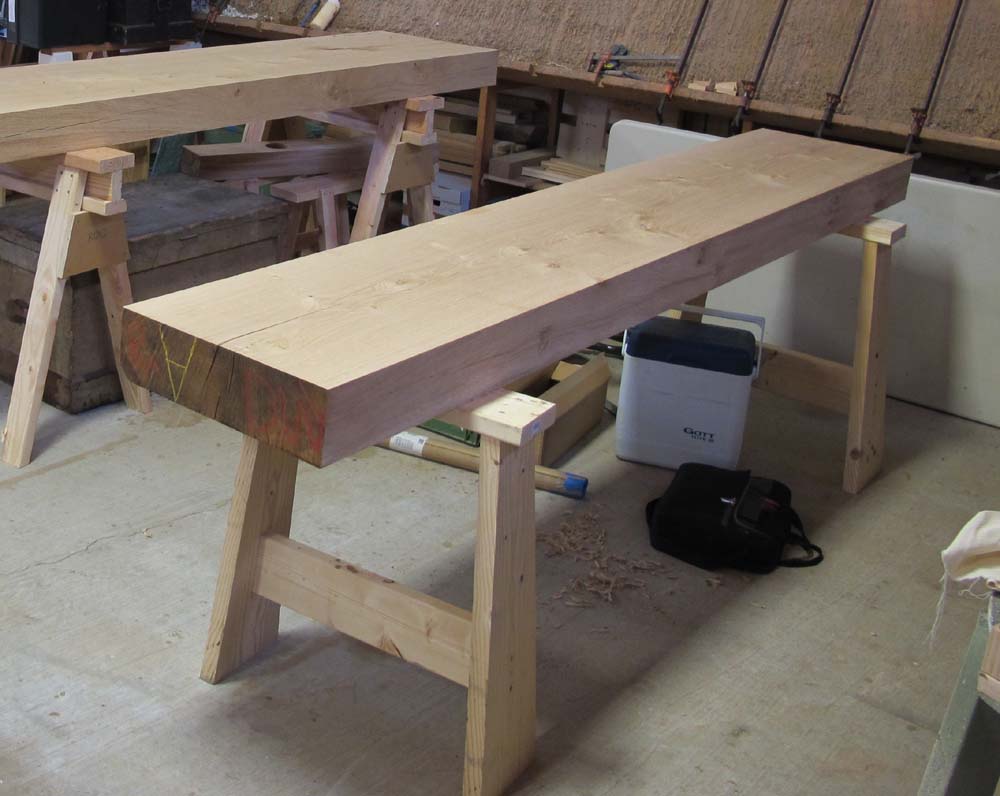
Yes, only steps away from where I toiled from dawn to dusk were the ~600 pounds worth of components for The Bench, sitting patiently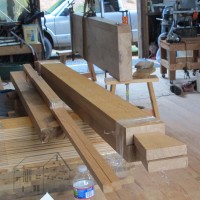 waiting for my attentive affections. The top is already bound to a triple block and tackle, as it is the only way I can maneuver it at all. Based on my rudimentary understanding of mechanics and some back-of-the-envelope calculations, the top itself weighs about 450 pounds (my fully-clothed weight of about 230 is just barely enough to levitate the unit, hence the top weighs a smidge less than twice that weight).
Unfortunately given my upcoming schedule it is unlikely that I will be able to focus my efforts on completing The Bench before early October. It is immensely gratifying and frustrating to receive the periodic emails from my fellow FORPXI congregants regaling the group with the tales of completing their shrine, er, workbench, from the recent gathering in Barnesville, Georgia.
My day will come. My only steps thus far are to prepare the space where it will reside. Directly in front of two banks of north-facing windows, it will be the centerpiece of my work for the next three or four decades.
Jameel Abraham, the godfather of the French Oak Roubo Project, posted this excellent video of the event.
This link should work.
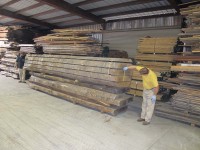
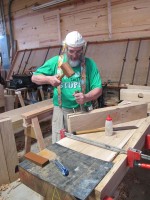
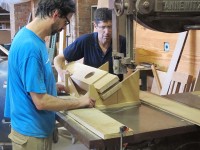
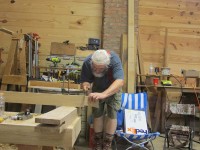
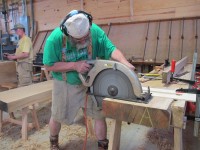
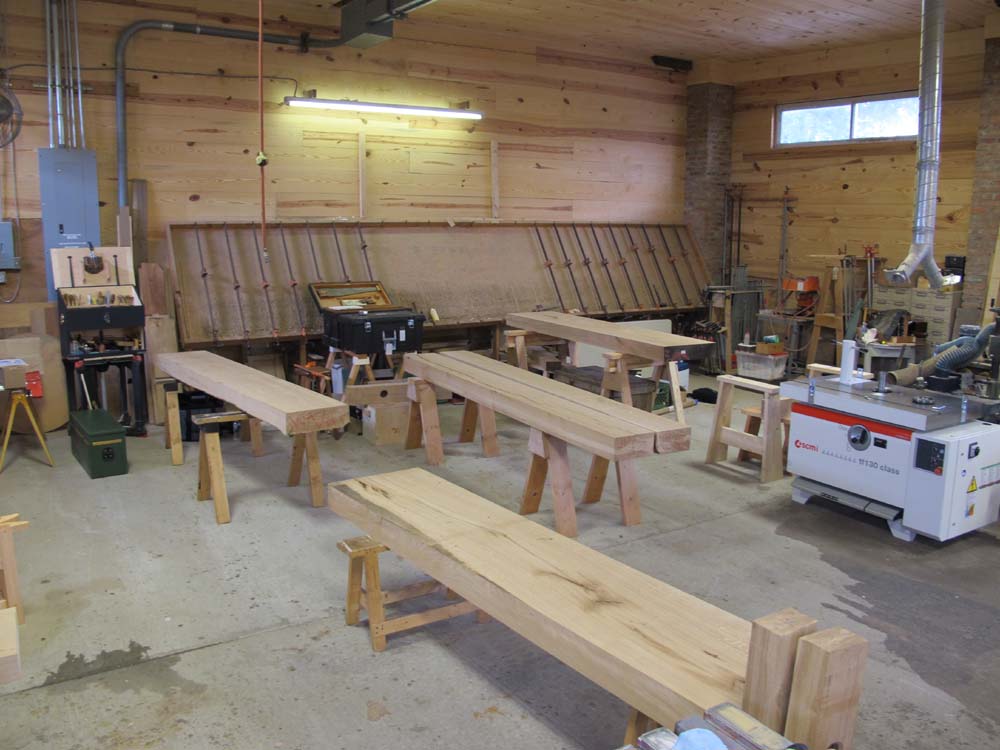
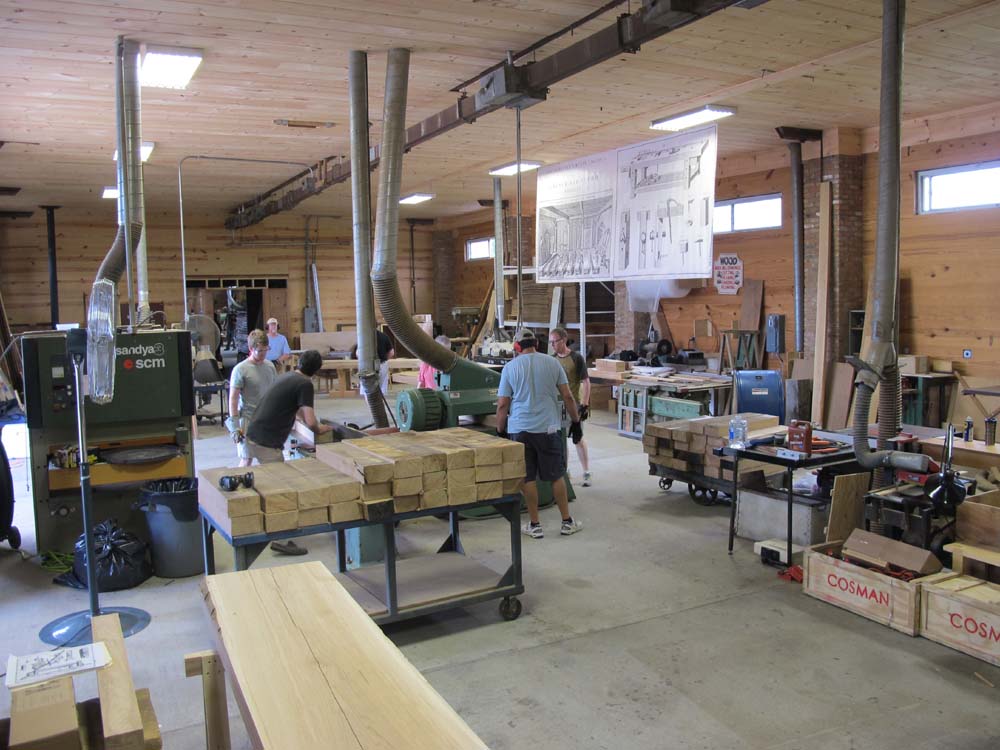
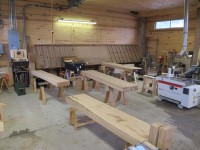 I’m back home again after an exhausting and exhilarating week of “vacation” in Barnesville, Georgia, a guest at the remarkable millwork and lumber brokerage facility of Wyatt Childs, Inc. The purpose of the visit was to participate in the much-touted “French Oak Roubo Project,” or FORP for short. The event was the brainchild born from a chance intersection between vise-manufacturer and all-around smart guy Jameel Abraham and Bo Childs, with plane maker Ron Brese as the matchmaker.
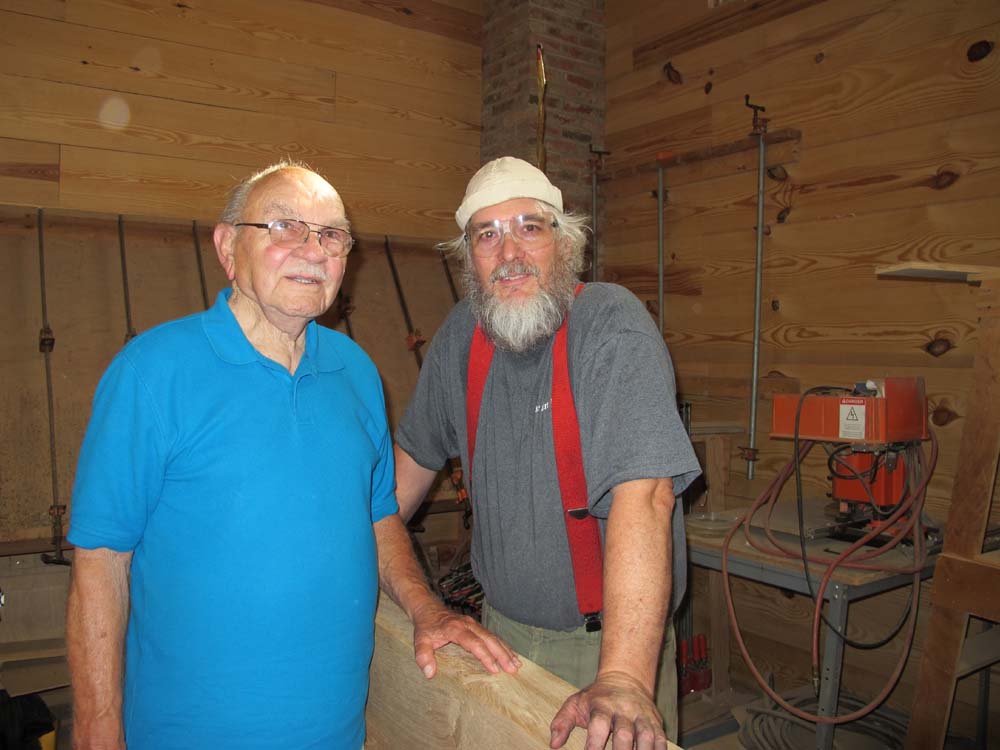
The enthusiasm and excellence on display were indeed (and will no doubt remain) a critical 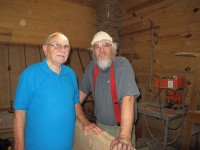 motivating force in my own quest to become a skilled woodworker. I encourage you to find folks like this to hang with on your own path to excellence. A genuine highlight of the week for me was to get a visit from my oldest mentor, who has retired just north of Atlanta. He is the best woodfinisher I ever met, and “To Make as Perfectly As Possible: Roubo on Marquetry” is dedicated to him and his father, the man who first introduced me to Roubo.
Several of the participants have blogged excellently already – Jameel and Ron, Chris Schwarz, Justin Leib, and Jeff Miller – so my remarks are decidedly brief.
I believe FORP 2013 may be viewed some day, and that day is not far off, as one of the seminal events in the renaissance of the modern/historical “blended” woodworking movement.
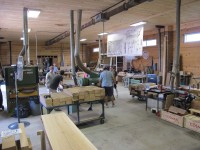 All week the attitude was not whether we were rich or poor, famous or anonymous, etc., but rather that we were all woodworkers, accomplished and passionate about our activities. And we were all doing, not merely hearing or watching. While it was not a worship activity, there can be no denying that it was a profound fellowship experience.
Thanks Jameel and Bo for making this happen.
 As we approach the long-awaited debut of To Make As Perfectly As Possible: Roubo on Marquetry, (my first documents for this project are over six years old!) it is worth reflecting for a minute on the unsung heroes for our completion, the tools that were integral to the whole project. Those tools were Michele Pagan’s lovingly assembled collection of French dictionaries going back more that 200 years. Notwithstanding the fact that French was one of the first Western languages to be standardized, the usage of words and expressions has changed over the decades and centuries. One phenomenon that Michele noticed was the change in dictionaries over time. In some early editions, the definition of a word would rank the likely usages in a particular order, but in the ensuing editions over 250 years, new usage emphases emerged while others receded and some disappeared altogether.
Once our remaining Roubo projects are finished in four or five years, it is unlikely that these precious word repositories will be retired. Michele now has a taste for the hunt for words, and she will keep on translating old time words on behalf of collaborators passionate about old time ways.

 waiting for my attentive affections. The top is already bound to a triple block and tackle, as it is the only way I can maneuver it at all. Based on my rudimentary understanding of mechanics and some back-of-the-envelope calculations, the top itself weighs about 450 pounds (my fully-clothed weight of about 230 is just barely enough to levitate the unit, hence the top weighs a smidge less than twice that weight).


Recent Comments