Upcoming Appearance in Nashville
In two weekends I’ll be presenting for the Cumberland Furniture Guild in Nashville.
Here’s the flyer for the event. Hope to see you there.

In two weekends I’ll be presenting for the Cumberland Furniture Guild in Nashville.
Here’s the flyer for the event. Hope to see you there.

Just in case you have a spare $5-10k laying around you can acquire this spectacular piano maker’s bench at Martin Donnelly’s summer auction.
I will be there but only to examine and document this. It’s way out of my price range.
I have rarely been afflicted by the phenomenon of “buyer’s remorse.” It could be because I am such a skilled and thoughtful acquisitor, but it is more likely that I am 1) indifferent for the most part, and 2) able to learn from my mistakes. Except for that much-used 4WD F250 back in 1991. I am much more likely to regret not buying something than buying something.

This week is an instance where I celebrate the purchase of something that I went after good and hard. My long time bud MartinO emailed me with information about the sale of two two piles of prints that were possibly from a First Edition of L’Art du Menuisier Volume III that had been sliced up.
I immediately contacted the seller and she confirmed that the paper was right (laid linen paper ranging from abut 100 to 140 pound weight) and the engraving plate marks were clearly evident.
So I bought them.

The “hand made-ness” of this print couldn’t be clearer; the paper was not placed on the engraving plate squarely so the print was out of whack with the page. Roubo must have been getting a croissant then.

When I got them home I was able to examine them more closely and confirm that they appear to be the real deal. While the act of slicing up vintage bound volumes is barbaric, at least something wonderful was the result. Had it not been for this act of vandalism I would have never been able to acquire (read: afford) these wonderful hand-made prints that were almost certainly produced under the watchful oversight of Roubo himself.

It is unlikely that I will keep all of them, but there are those that will remain my own treasures until they scatter my ashes on the mountainside. Imagine the thrill of inventorying these and finding the single print that lit the spark for me more than thirty years ago! Yes indeed, in the inventory was a print of Plate 296 in absolutely perfect condition. Along with it were a number of the prints from the parquetry sections that will hang alongside 296 on the walls of the cabin.
As for the rest of my newly purchase Roubo prints I have not yet decided. A select few will be gifted to my Roubo collaborators and others, but it is possible I will simply sell the rest. Since I have access to the digital files from when Chris Schwarz had his First Edition scanned I do not need them for research and informational purposes, but still they are The Real Thing. Like I said, I just have not decided.
Stay tuned.
Note: My only connection to Safest Stripper is that its manufacturer is a Minnesota-based company, and I have a brother and many friends living in Minnesota.
One of the most vexing headaches when treating a piece of furniture is that gob of white or yellow glue that has been slathered on to or in to bad repairs. Yes, paste paint strippers work on getting it softened and removed, but will also likely remove any adjacent coatings materials.
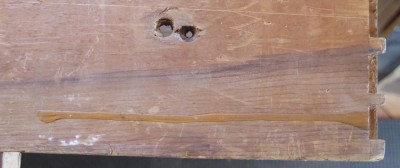
But what about those instances where the glue runs down the nearby vertical surfaces? Sure tehy can be chipped off, but in most of my work the objective is to leave the object as undisturbed as possible when enacting the repair. This is an example that is painfully typical. A repair of some damaged dovetails in this drawer resulted in a line of yellow glue crustifying on the unfinished inside surface of the drawer. Chipping this off with a knife or chisel will almost certainly result is some damage to the underlying substrate.
The approach I have found to be most satisfying is this one.

Placing the affected surface horizontally I brush a thin bead of Safest Stripper on only the glue reside.
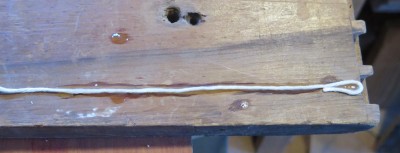
Then I lay on this line a piece of unsized cotton string and repeat the brushing of the Safest STripper until the string is saturated, serving as a reservoir for the solution to do its work.
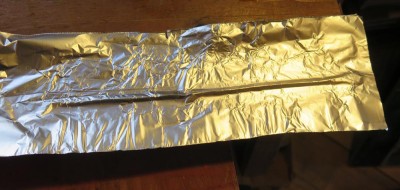
I then cover the area with a piece of aluminum foil and walk away for a day at least, sometimes much longer. When I check on the progress of the process and think the time is right, I take off the aluminum foil and get to work. I lift up and remove the string (sometimes the softened glue is imbibed into the string and it comes up with it, but that is not a common happiness) and with either my fingernail or a piano key I begin to lift one end of the glue drip.
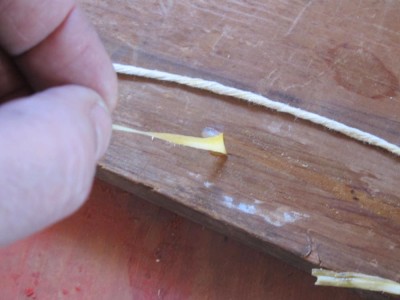
With care and a bit of patience the entire line of the drip peels off leaving the underlying surface completely untouched.

Since DBEs are water soluble and very low volatility I generally poultice the area at least twice to wick out any residue that might have infused the surrounding area.
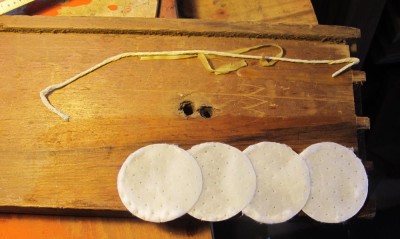
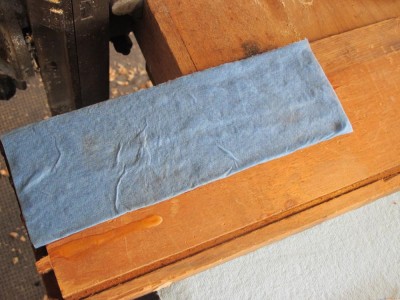
Almost any clean poulticing material is fine. I generally use either cosmetics pads or blue shop paper towels.
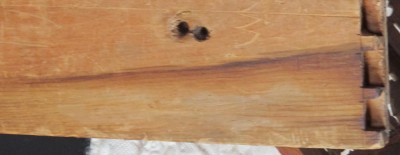
Once I am satisfied that the clean-up is complete, I am done. I’ve still got a tiny bit to do here, but you get the idea.
Thanks to my pal DaveR I spent a delightful few minutes watching the fabrication of a new “art bicycle” complete with gold and urushi as the paint job.
You will too.
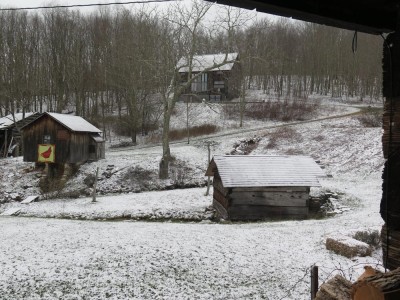
Cold and windy and snowy, with more snow expected off and on for the next few days. Ugh.
High tomorrow in the 20s. In Virginia. In April.
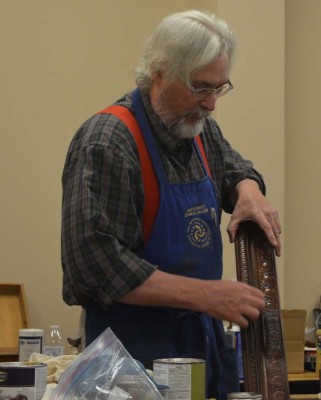
An eagle-eyed blog reader noticed that the initial schedule for the upcoming “Historic Finishes” weekend workshop at The Barn coincided with the Mid-Year Meeting of the SAPFM, and since it precluded those attendees for contemplating spending time here I decided to change the schedule. The new date is June 20-22, the Monday-Wednesday before the SAPFM meeting. It is a switch for me to have a weekday event so we will see how it goes.
If you are interested in attending the workshop, which will be mostly hands-on instruction and exercises, contact me here.
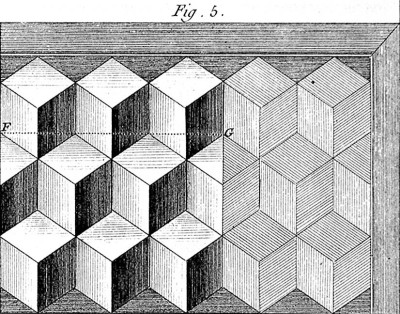
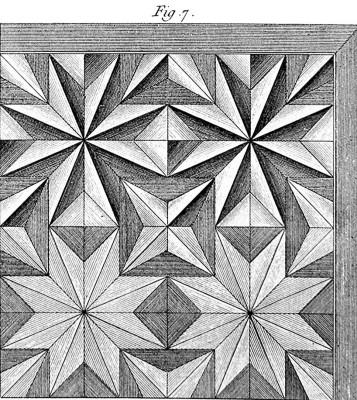
The final of the three summer workshops at The Barn will be held August 19-21, 2016, and involve the replication of three principal patterns for parquetry as documented by Roubo’s L’Art du Menusier, from which we have created To Make As Perfectly As Possible: Roubo On Marquetry.
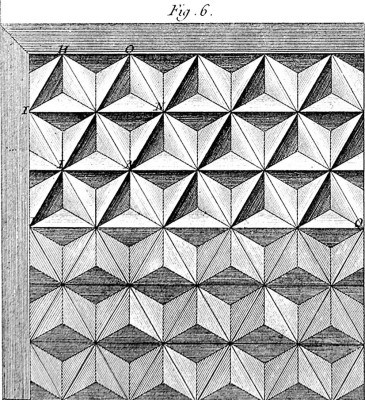
Unlike some of my earlier workshops in marquetry and parquetry, this weekend will focus entirely on the replication of the techniques (lots of precision saw and planing jigs involved) rather than making a completed project. From the review of the design, the sawing of the veneer stock and the individual elements, the participants will leave with completed jigs integral to the techniques and a solid foundation for incorporating these designs into their own work. I know I will be working on a project that could best be described as the imagined result if James Krenov received a commission to build a piece that was the merging of 16th Century Chinese and 18th Century French styles.
Drop me a line here if this interests you.
===================================
The other two workshops at The Barn this summer are Traditional Finishing (originally planned for June 24-26, but that is the same schedule as the SAPFM Mid-Year meeting so I will likely move it forward, stay tuned) and Build Your Own Nicholson or Roubo Workbench (July 25-29).
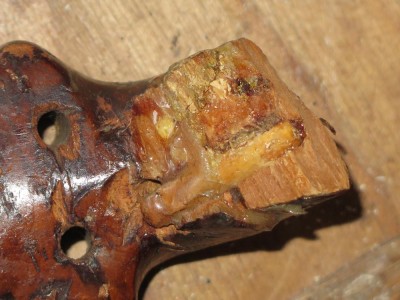
One of my most typical exquisite applications for Safest Stripper is demonstrated by this problem. This almost life sized sculpture of a lute player, where the head of the lute had been snapped off and the break slathered with yellow glue in an ill-advised and worse executed repair, had a mass of the hardened glue preventing anything useful as a response. The rock-hard glue had to be removed before any further steps could proceed.
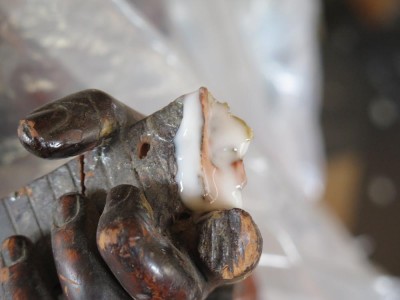
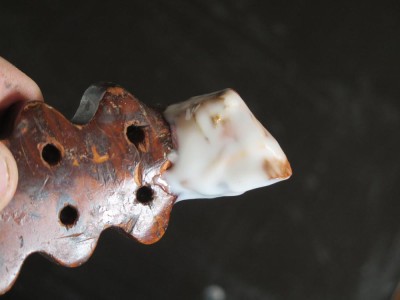
First I coated the effected areas with a healthy load of Safest Stripper, then wrapped those areas with aluminum foil and set them aside for at least a month.
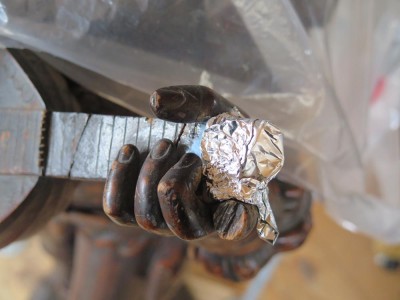
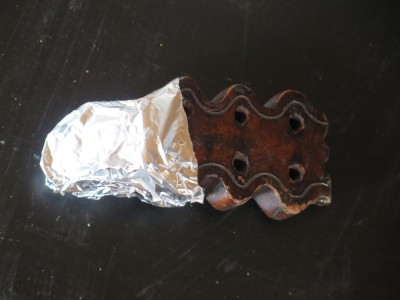
That’s right, a month. (If you have a project with an urgent turn-around time, I am not the guy for you).
The beauty of Safest Stripper for me is that it can be set aside and allowed to work at its own pace. In some instances this means overnight, sometimes until next month. In these cases letting it sit until I was ready to get back to them was not a problem, it was a feature.
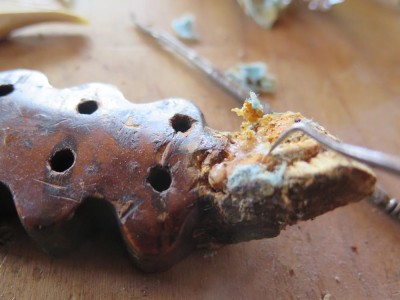
A month later I returned to this part of the project and the mass of yellow glue was in perfect condition. What I was looking for was for the glue to have softened to a hard taffy consistency rather than a liquid goo. Using a variety of tools, including dental picks and self-fashioned tools of similar function, I was able to peel off the softened plastic mass gently without inflicting any harm to the underlying substrate.
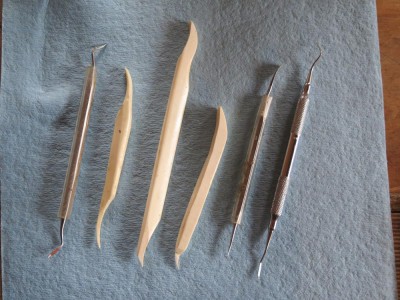
Swabbing the surfaces with distilled water to remove any DBE residue the broken pieces were ready for reintegration with hot hide glue.
Next time I will discuss the absolute best use of Safest Stripper when dealing with old, damaged, and badly repaired furniture.
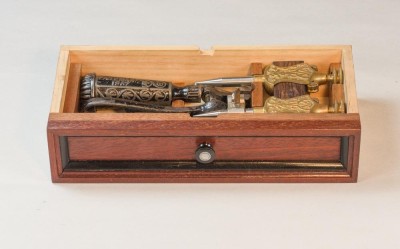
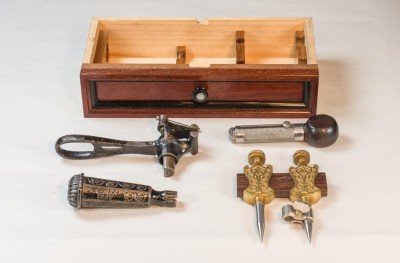
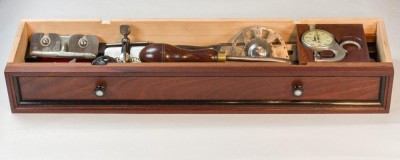
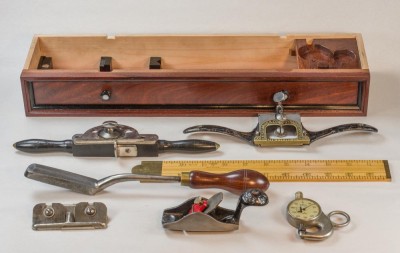
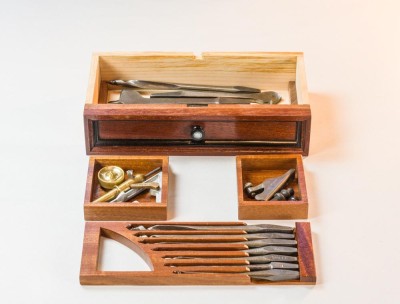
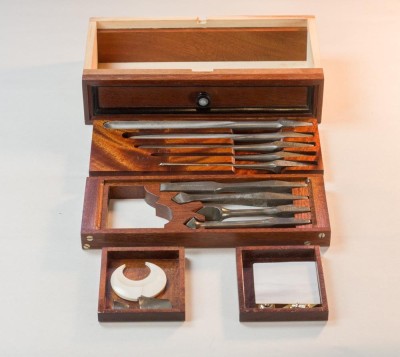
Again, no commentary required. Just sit back and enjoy the simultaneous appreciation of Sleepless Jim’s magnificent work along with the implicit condemnation of your own slackerdom.
Or perhaps I am just engaged in psychological projection…
More to come anon.
© 2024 Don Williams

Recent Comments