Among the multitude of planes that I own and use, the five previously mentioned are my Pantheon. Three more planes are “near misses” for one of three reasons. First, even though the tool might be called “a plane” it might not really be a plane in the most common sense of the word, that being a tool to make lumber flat, smooth, true, to a specific dimension. Second, it might not be as integral to my own work, in other words my projects might not require this or that tool. If your projects do require this tool, wonderful. Finally, I wanted to make sure the Essential Planes were not gargantuan or heavyweight; my Pantheon are things that would be found in a reasonably-sized traveling tool box. Admittedly, these restrictions are idiosyncratic and almost arbitrary, but so be it.
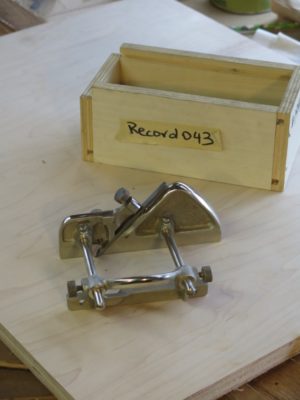
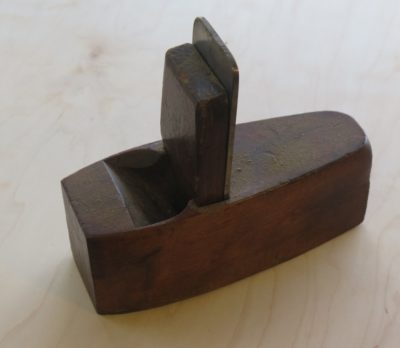
One of the tools in the “near miss” category is my sweet little #43 mini plow plane. Though technically a groove cutter rather than a stock prepping tool, it is called a plane in the lexicon so I will do so too. Were I more of a frame-and-panel sorta guy (I have recounted about how I am a premium plywood user for panel construction, even to the point of laying up my own custom veneer plywood) it would be right up there in the Mount Rushmore of planes. If you produce a lot of small boxes and furniture like RalphB over at The Accidental Woodworker it would be a perfect fit. The fact is I do not make much frame-and-panel work so this little beauty mostly sits on the shelf, patiently awaiting those few projects where it is an integral asset. If you do build a lot of frame-and-panel work, especially small to medium sized, this could easily be one of your two or three most important tools. I know that if I migrate in that direction, it will be for me too.
All that said, I do own two of these plow planes, one for the shelf in the shop and the other in my traveling tool kit; it breaks down to a very small package that fits into a #1 mailing envelope. You just never know when a frame-and-panel project will strike.
Up next – not a bird, not a plane, but for me a supertool!
From the golden age of America’s best ever rock band, sez me and Jimmy Page, the jazz/funk/polyrhythmic “Day at the Dog Races,” (I vaguely recall blogging about it eons ago) a song I can listen to repeatedly at the same sitting. Speaking of which, I remember one Thanksgiving Friday twenty years ago when Mel and I might have been the only people at work, so we decided to see how many times we could listen to Phil Collins’ “Something in the Air Tonight” on our best-in-the-building sound system. We put the CD player on “Repeat 1” until we were tired of it. As I recall, the answer was 43 times in a row.
Little Feat did a lot of backup for a variety of vocalists including Robert Palmer (Sneaking Sally Through the Alley) but as a bonus here is LF backing an engaging performance of Rhumba Baby by the infectiously charming Nicolette Larson. From back in the day when music was fun and didn’t make my ears bleed, like the junk kids listen to today.
Certainly the undertaking to study, understand, and replicate the “Elastic Chairs” of c.1810 Boston chairmaker Samuel Gragg has and continues to consume much of my interest, time and energy. There’s just something about them. It seems as though I always have a couple in progress in the shop or on the finishing bench, and indulge in some far-afield explorations of the basic bentwood technology.
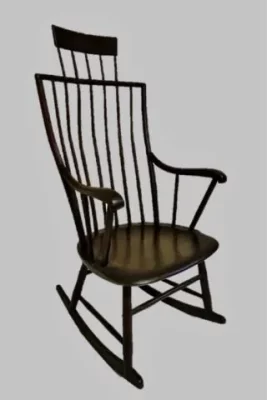
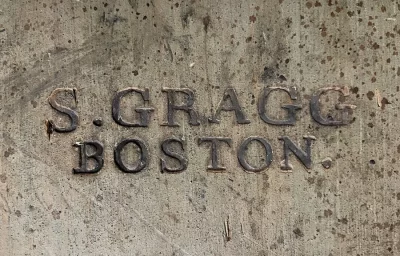
Recently my friend JustinB dropped me a note to inform me of an upcoming auction for a stamped “S.Gragg/Boston” chair of a different sort. Thanks to the research of Michael Podmaniczky and Patricia Kane we presume that Gragg only made his Elastic Chairs for a few years before turning his attentions to other, more profitable chairmaking enterprises. Having now made many Elastic Chairs I can appreciate Gragg’s transition from making indescribably elegant chairs that took a lot of time to make towards making slightly less elegant but definitely much less time-consuming chairs in the Windsor milieu or even simpler forms. It is useful to remember that artisans of the past were not generally engaged in contemplative work, they were trying to just survive and often never more than several days or weeks away from hunger or even malnutrition. Generating any kind of cash flow was at the top of the “to do” list. Simpler chairs that could be made in a matter of hours rather than a matter of days fits that bill.
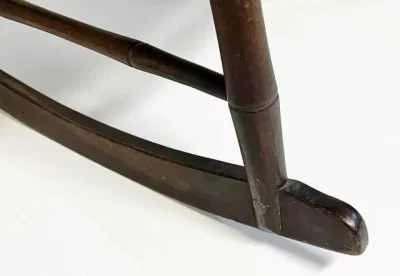
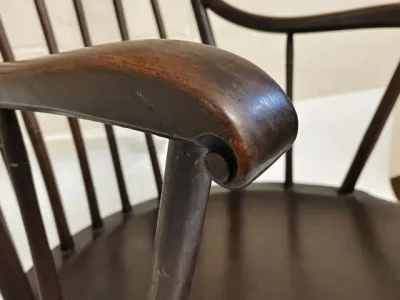
So I bid on the chair in this on-line auction, taking the risk in that I had not examined the chair in any way other than scouring the on-line images. Much to my astonishment the final price was about 1/10th of what I expected, and I won the auction. I still have not seen the chair and it is winding its way to The Fortress of Solitude. When it arrives and I check it out, I’ll let you know even if it is phony baloney. In that case I’ve spent a completely acceptable amount of money on an idiosyncratic rocking chair for the front porch. If it’s a “real deal” I will own a piece of history I will treasure, but it still may wind up on the front porch.
Stay tuned.
PS I apologize if the chair’s images are funky, they were in a format my primitive software would not process as I downloaded them directly from the auction page. Good thing I have a new compewder I am bringing on-line.
I am probably(?) not unique among movie viewers n that my own personal interests, when represented on screen, often supersede the story of the movie itself. One of those aspects for me is the furniture in the frame; I often spend more time looking at interesting or historical furniture than I do watching or listening to the characters. One instance of this was when I would watch the television show Frazier. Whenever the setting was Frazier’s apartment I was always distracted by the Eames Chair and ottoman. One downside to my proclivity is whenever I watch a show in a historical setting, I have caught myself conversing inside my skull something like, “Yeah, this style of furniture didn’t come into fashion until long after this setting.”
Such an occurrence played out on our DVD player recently when we watched (or rewatched) the post apocalyptic movie Logan’s Run. When I saw it first over four decades ago it left so little impression on me I literally could not remember a lot of the details of either the plot or the setting.
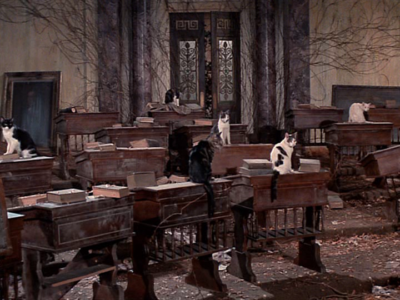
In this example, there was one scene set in a derelict US Capitol in the Well of the Senate. Given my affection for the Webster Desk and its descendants in that chamber of mostly unconvicted felons, there were pastiches of this piece of furniture in abundance. I could tell from the motion dynamics of moving the desks that they were not only fakes, but lightweight stage set accoutrements as well. The real deal is quite heavy. I blogged extensively on the project of replicating a Webster Desk a few years ago.
Nevertheless it was fun to see a furniture form with which I am very familiar being so prominent in the action.
When choosing “the essential planes” the sorting factors differ from person to person, and my selection definitely reflects my interests and projects. These three planes, combined with the previous pair, fulfills my needs for 99% of the work I do, and, as an added benefit, don’t weigh much or take up much space.
My final three Essential Planes are;
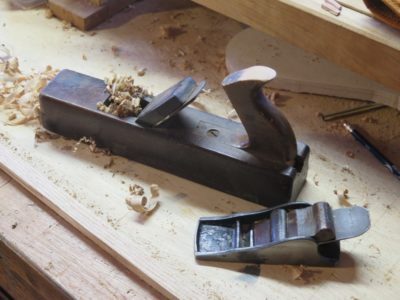
The scrub plane is simply part and parcel of my work in that they get rough wood flat (but not smooth) fast. I find myself using one more and more and the power planer/jointer less and less. A great part of that development is the nature of my projects — I make almost no large scale “cabinetry” — and the steeply cambered iron works wonders at getting things flat. Even on my large-scale projects, mostly workbenches, the scrub plane is a jewel when it comes to flattening gigantic slabs of wood that don’t even fit into the planer anyway.
I’ve got both metal bodied (LNT) and wooden horned scrub planes and use them interchangeably.
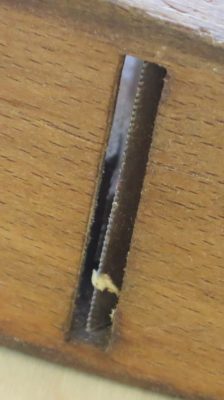
Next comes the toothing plane, perhaps peculiar to my work in that I do a lot of veneer work and laminations for which the toothing plane was designed. The serrated, or “toothed” iron is perfect for getting surfaces prepared perfectly for gluing together and there are regional techniques whereby all secondary surfaces are flattened quickly. Again, not smooth, but definitely flat. Admittedly I own far more toothers than I need (13) but you should have at least one and incorporate it into your work. It really increases production efficiency.
Finally is a plane probably in most of your tool kit, the rebate/dado plane. When it comes to making wide channels to fit pieces of wood together, or cleaning up the inside corners of joinery, nothing can compete with a rebate/dado plane. I would say that it is a tool perfectly designed to do one essential thing, but it is more than that. It is great for shooting moldings the Roubo/Bickford way.
Up next, three tools that may or may not be “planes” per se, and whose utility depends on my projects. If my work was a little different they, too, would be in the pantheon.
This week I was again interviewed by my longtime friend Brian Wilson for his program Something Completely Different (about as apt a description of me as you will find), in which he asked if I had any thoughts about the ongoing craziness of the culture.
Yes, I had thoughts.
If pungent discussion of impolitic topics is not your thing, you should probably avoid it. If such discussions invigorate you, track it down.
There’s been a lot of “rearrangeritis-ing” going on in the barn as I try to organize and winnow the contents so that I can establish an honest-to-goodness estimate of the footprint I need to use, in great part to project into the distant future when we build our final, geezerized home some time in the 2030s.
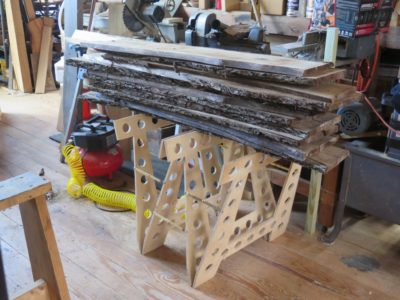
Back in the day when I used to write a lot for PopWood one of my articles was about building and using something I called a Butterfly Sawhorse, that could be folded flat to hang on the wall or unfolded to operate as a very convenient work or holding station (I’ll post the article as soon as Webmeister Tim and I can figure out how to unlock the AWS archive where it is stored). In the maelstrom of rearangeritis I find myself using this tool almost every day.
One of the things I’ve always wondered about the Butterfly is, how much can it carry? To be technically dispositive about it I would load it up with weights until it collapsed, documenting the process exactly. But that does not strike me as particularly useful exercise is the results would be 1) a precise knowledge of the load bearing capacity of the Butterfly, and 2) a squashed flat Butterfly.
I did get a good sense of the Butterfly’s strength recently when I loaded it up with an estimated 700 pounds of really, really green walnut. It accomplished with task with nary a quiver.
During the set-up for Handworks 2013 the weather was lovely (the bitter cold front moved in overnight as we were preparing for the Studley presentation), and my booth was tucked into a corner adjacent to the Lee Valley/Veritas mega-booth. Mrs. Barn wandered about the Festhalle before returning to cross paths with Robin Lee as his crew finished installing their scrumptious displays.
At one point she noted the walls of hand planes, and asked Robin, “How many planes do you really need?”
His answer? “How many planes are there?”
It could have not been more perfect had I scripted the exchange myself. She does not know exactly how many planes I own, but it is a lot, probaby a couple hundred by the time you count all the specialty planes
As I am simultaneously building my own tool cabinet and reviewing/winnowing my own shop contents, the question of “How many planes do you really need?” has been running through my mind a lot. I have come to the following conclusion, which I can state without fear since she does not read the blog — a lot fewer than I own. In fact, I believe I could engage in 95% of my own work with just two planes, a jack and a block.
I have a great many planes that would fit these descriptions and nearly every variation therein. But these two are my favorites, the ones I reach for more than any others. The jack plane is an ancient, high-mileage lignum vitae “shipwright’s” plane (I am an absolute sucker for vintage rosewood and lignum planes and own several), unmarked, simple in design, and outfitted with a slightly cambered iron I keep at a razor’s edge effortlessly. I find myself using this plane for hours at a time, especially when preparing stock for making Gragg chairs but truth be told it is my tool of choice for almost any stock-planing exercise. Yes, I have many longer, fancier and more noteworthy stock prep planes but given the nature of my work over the past and coming decades, this is the one for me.
My other favorite is this low-angled Excelsior sleigh bodied block plane that like the lignum jack was probably in a box lot of tools from an auction or flea market, the details of which are lost in the mists of time long past. I do recall it was a filthy mess when I finally retrieved it from the pile, but once I got it cleaned and tuned it is an absolute treasure. With a tap or two from the iron-setting hammer it can be hogging off material to make a softwood door fit its frame or remove gossamer hardwood shavings as it performs exquisitely as a smoother. Again, I have many smoother planes from renown makers and none surpass this little gem. It might in fact be one of the three favorite tools I own along with the ball peen hammer with the curly maple handle, a gift from my long-time consigliere MikeM, and the tiny brass spokeshave I made when working in the pattern shop 45 years ago. (Obviously, I am not including my Victorinox Spirit multitool; that is no mere shop tool, it is an essential component of daily life.)
I recall with amusement an exchange I had on a panel discussion with a famed furniture maker who snorted at the thought of incorporating a block plane into fine woodworking.
“A block plane has no place in a furniture makers tool kit, it is a carpenter’s tool,” he said.
I responded sotto voce with, “Well, if you need for me to help set one up for you, I will.” Normally a jovial sort he was none too happy with my comment. But then, he never met my sweet little Excelsior.
Up next, the three planes that round out my “Essential Planes” pantheon. With those five planes I am up to 99% of what I do.
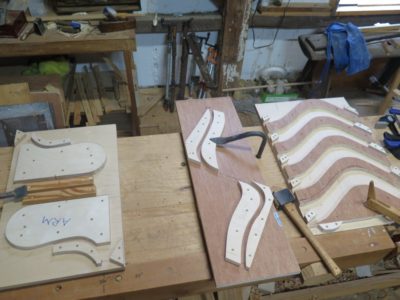
Recently I’ve been developing some new bending forms and was steam bending some Gragg chair parts. Unfortunately(?) my steam bending set-up is on the fourth flour, an unheated space with great ventilation (read: wind blows through unimpeded). I remember filming some videos up there one winter and two kerosene heaters barely made a difference even though I was practically on top of them. I think in a couple of shots you could see my breath; not exactly the optimal conditions for working with hot hide glue.
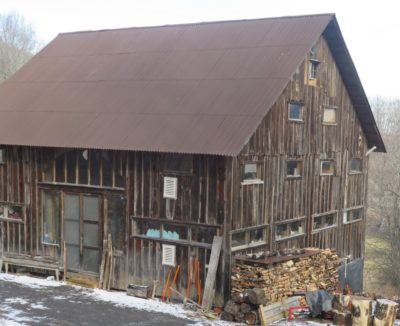
Ditto steam bending thin parts, where in even the best of conditions I have a couple dozen seconds to get the parts bent around the forms and fixed in place until they cool and dehydrate into their set shape. The first recent session was on a cold, grey day and was miserable. I found that if I timed things just right, even on a cold day, if it was sunny and the air was still I could get the work done just fine. The reason was my 2500 s.f. of corrugated asphalt roofing overhead. Since the roof is completely uninsulated as the sun warms the roof it then radiates much of that heat downward into the attic space of the barn. My curiosity led me to point my laser thermometer at the roof at the peak of the solar gain — the underside of the sheathing was almost 100 degrees F! The result was a 20-25 degree gain in heat in the space.
I fully intend to exploit this in the furute with some fabricated passive solar units. Stay tuned.
I am delighted to have scheduled some teaching events for this year. The first one on the calendar if “Historic Wood Finishing” being taught for the Howard County Woodworkers Guild in Columbia, Maryland, April 12-14, 2023. I do not know if this will be opened beyond their own members, but if you have interest give them a jingle.
As other event dates get nailed down (as is imminent) I will post them as well.




Recent Comments