Like many woodworkers, over the years I have compiled more tools than I need (shhhh!; fortunately Mrs. Barn does not read this blog much so she does not need to be made aware of this confession). It was often from noble impulses as I would see a nice tool that was way underpriced, and say to myself, “Let me get that and find a good home for it.”
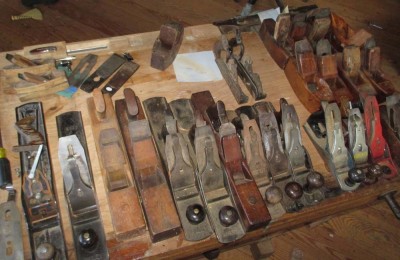
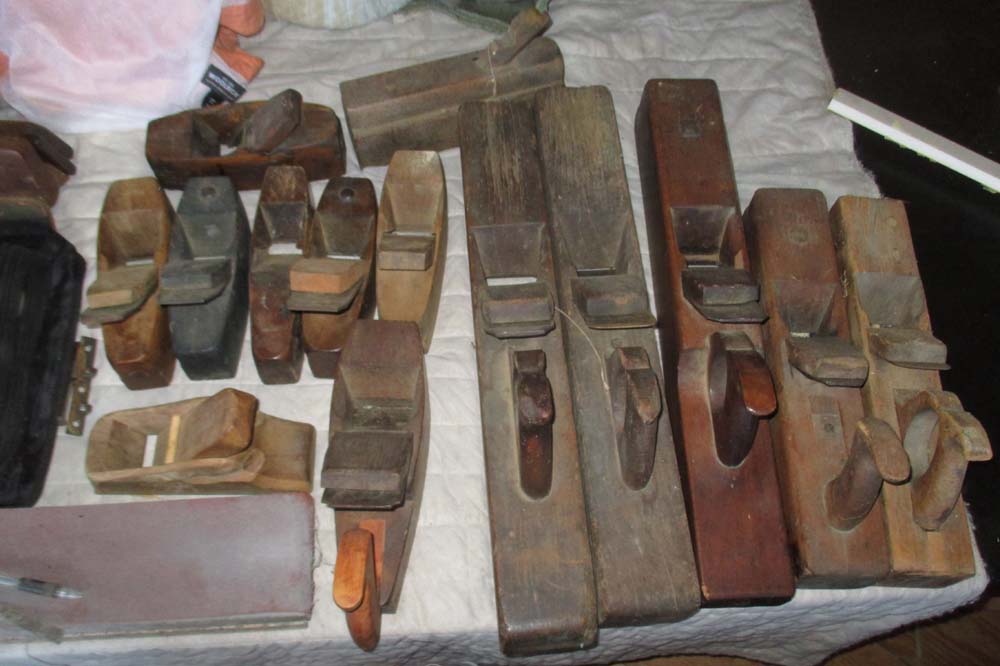
Regardless of the true motive, one undeniable fact remains; that “good home” was not to be my studio. There is no need for me to have several bushel baskets of tools that I do not and will not use. Some redundancy may be sensible, but do I really need six #6 Bailey planes? Or two dozen coffin planes? Two drawers full of bench chisels?
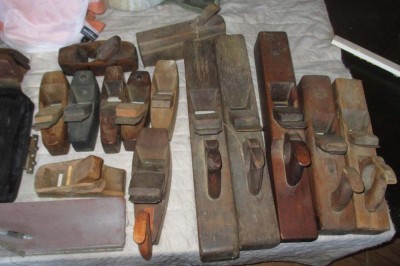
Over the past week I have been trying to impose, or at least, evolve some sort of order and organization to the barn studio. And time after time I would want to derive just the right spot for a tool or set of tools only to find that perfect spot was already full of boxes, bins, and tubs of tools.
So, beginning now and continuing through winter I vow to winnow my tool inventory, compiling a collection that I will sell, gift, or otherwise dispense. I will try to have a nice collection for sale at the Maple Festival in March, but otherwise will find places I can facilitate the parting of company., SAPFM Chapter meetings, etc., and if necessary get a table at MJD’s auction next summer. I am not going into the tool mongering biz– it is done far better by folks like Josh Clark, Martin Donnelly, and Patrick Leach, and others, and I will leave them to it — I am merely cleaning house.
Some tools will be, or can be made into, very nice “user tools.” For example, the #7 Bailey I bought recently for $15, with flaking varnish on the handles and a blade that has never been sharpened. Since I can sharpen fairly quickly it would be nice to get each edge tool presentable.
It will be quite nice to gain the space occupied by these tools, and hope they will do good work in the service of craftsmanship. In someone else’s shop.
And all I have to do is stop buying more tools I don’t need!
Re-ordering the Jackson Browne lyrics:
Well I’ve been out talkin’
I don’t do that much walkin’
these days
I have long enjoyed the non-political early music of Jackson Browne (I’m not in tune with his political worldview and he is not a good enough songsmith for me to listen to it when he goes there; Bruce Cockburn, on the other hand, is), who penned “These Days” when he was a teenager, and was first recorded by Nico of Velvet Underground fame. Browne’s rendition of the song is one of my least favorite. I think it was performed better by other performers, the best by Gregg Allman, second best by Jennifer Warnes, who I could listen to singing the phone book. Nevertheless, the song kept running though my mind as I was puttering in the shop yesterday.
Re-worked ever so slightly it was a perfect metaphor for what “these days” are like for me.
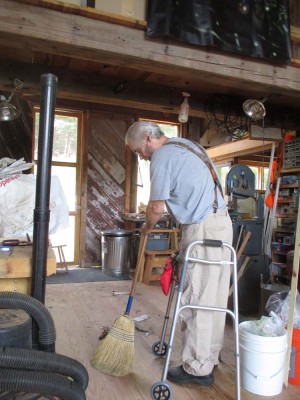
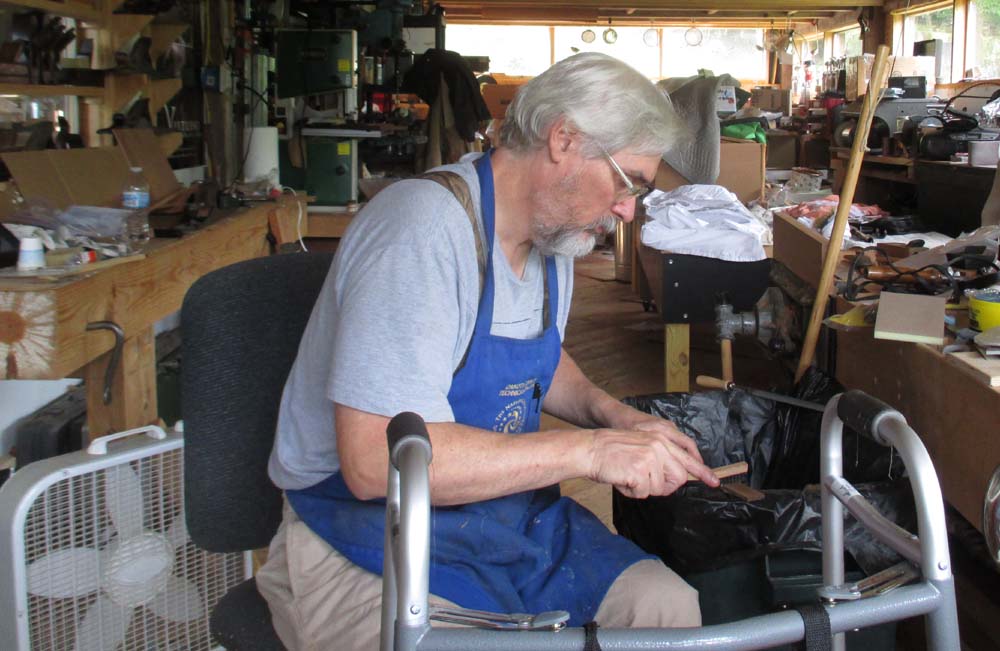
I am now allowed as much time in the shop as I can manage, with the non-negotiable rule that I cannot put any weight on my right leg. Period. For another 16 days. So I stand with all my weight on my left leg, and my right foot merely resting on the ground for balance.
Fortunately there is a lot I can do with my walker and rolling office chair. For starters, I had never really tidied up following the Studley exhibit, as I left again on another long trip almost immediately after returning from re-installing the tool cabinet and workbench back at its home and dumping the full cargo truck worth of materiel in the barn. Then I went to the MJD tool auction, returning to spend a week working on the root cellar, then my brother and nephew came to visit and we worked on deconstructing the old shack and tinkering with the hydro, then I broke my hip. Inexplicably during this entire period the shop fairies did not trek to White Run and dispense with the aftermath of what looked like a tool bomb explosion.
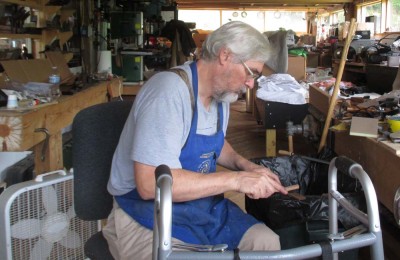
So lots of cleaning up, organizing, and putting away was on the docket. Floors needed sweeping, tools needed cleaning and putting away (I am not a neatnik by nature), and workbenches needed clearing, all of which I could do on either one leg or two cheeks.
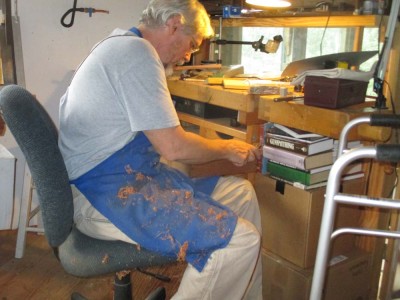
I even grabbed my Japanese block plane and fitted some new drawers for my “fussy work” bench. The Japanese affinity for doing woodworking while sitting is an increasingly attractive option, provided I do not have to sit like a pretzel.
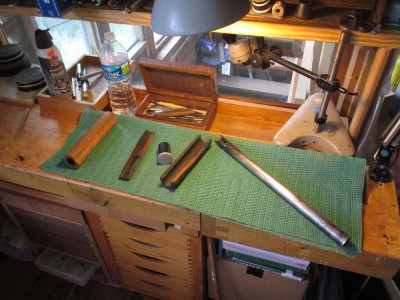
I have a lot of smallish artifacts to finish conserving and gun stock work to do so I will be able to stay productively occupied while my femur finishes fusing.
Four decades ago while working for the Schindlers in West Palm Beach, Florida, I became entranced (addicted might be too strong a description) with fresh, steaming biled pinders. Our shop was in a small industrial section — “industrial park” would be too formal — a few blocks long and wide, adjacent to an older residential neighborhood. The finishing room was right on the street; literally when I opened the garage door next to the spray booth I could step right out onto the street.
A couple times a week a misshaped tiny black man would walk the streets of the shops pushing a shopping cart with small steaming bags of biled pinders. My coworker Dewayne was always there to greet him, and after my first hit I was too. I cannot recall the vendor’s name but remember him as being nearly ebullient in his cheer despite his physical condition. It was a struggle for him to get around but I truly admired him for his desire to remain not dependent on anyone, he was making his own way the best he could. It was a powerful example for me to see, one the culture has long since forgotten I fear.
I do not know where he prepared the biled pinders — fresh, raw green peanuts cooked for hours in boiling saltwater — but I looked forward to the twice a week food of the gods. We always bought some, and always stopped what we were doing to eat them immediately. If you get hot fresh biled pinders you take advantage of the moment.
The hook was set, and even to this day when we travel to Florida the odds are good I will stop somewhere to get a bag. The girls think they are disgusting, but what to they know? The eat cilantro, the inedible herb that tastes like soap laced with metal flakes!
So last week we went over to the orthopedist’s for the two-week post-op checkup, and since we were venturing to the big city Mrs. Barn took advantage of the proximity to go grocery shopping. While I can spend hours in a hardware store or lumber mill, grocery and clothes shopping are in the neighborhood of Dante’s Seventh Circle of Hell to me. I waited in the car, resting my hip and listening to podcasts.
When Mrs. Barn emerged one of the treats she had for me was a bag of boiled peanuts. I finally was able to partake of the splendor as she warmed them for my afternoon snack today. It was the very definition of decadence, sitting in my recliner while my sweetie brought me a bowl of this earthy delight. I offered her some, but she took one taste and said, “They taste and smell just like you are eating dirt.”
Au contraire, it was leguminous-ly divine.

One of my not-so-secret desires about the aftermath of releasing Virtuoso: The Tool Cabinet and Workbench of Henry O. Studley was that voids in my research could be alleviated, and that people who had more knowledge than I would contact me to push back my frontiers of ignorance. Well, I am delighted to say that it has begun! It’s just a trickle so far, but I will recount the developments as they occur.

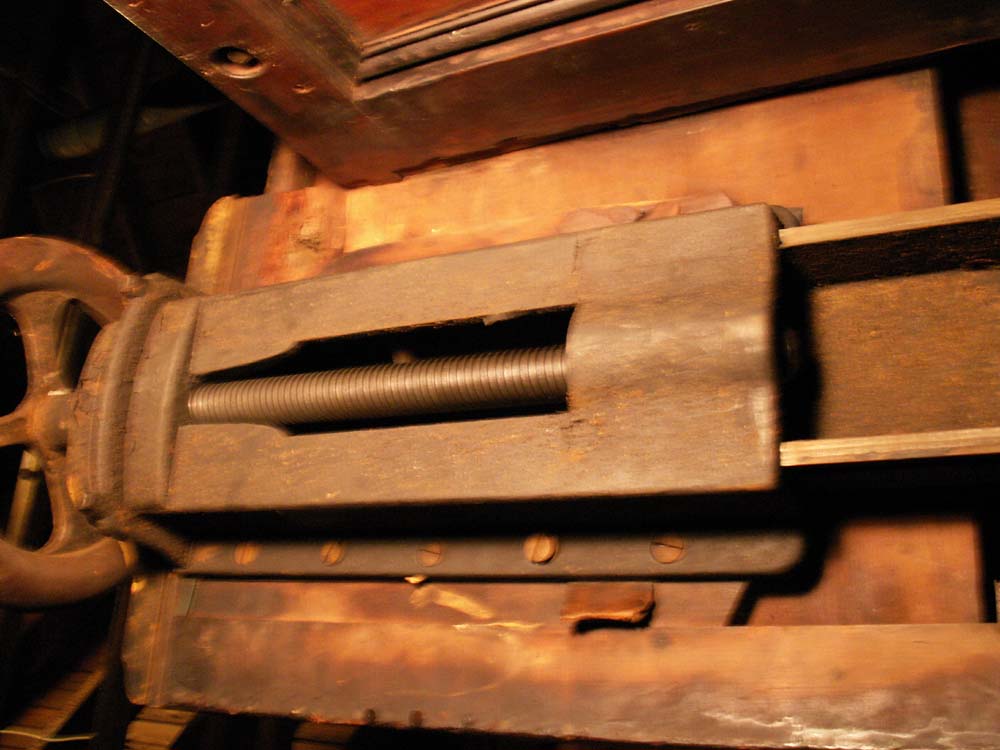
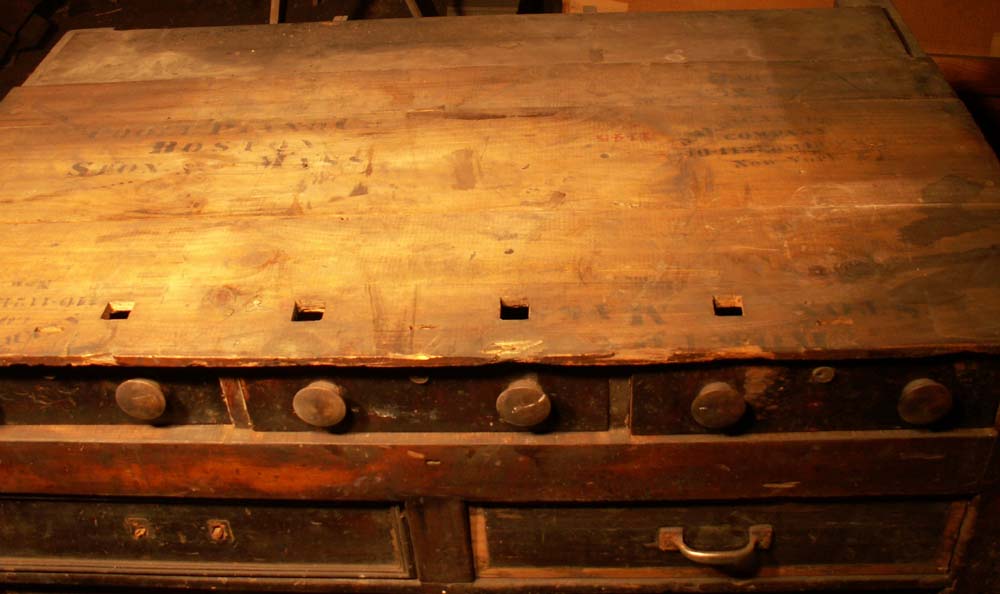
Recently I was contacted by renowned tool maker Ray Larsen, author of the much-ought-after Toolmaking for Woodworkers (I’ve had mine since it was first published), with images and the tale of his piano-maker’s workbench, complete with two of the wheel-handled vises.
In reviewing the known history of the bench, the odds are pretty good that this bench has a Two Degree of Separation connection to Henry O. Studley himself!
Here is Ray’s fascinating account [edited lightly for clarity].
I purchased the bench in question about 25 years ago from an antiques dealer in Hingham, MA, not far from Quincy. She had gotten it when she cleaned out a house in Quincy where the bench had been stored for many years in either a cellar or a garage… The bench is in the same form as the benches in your book.
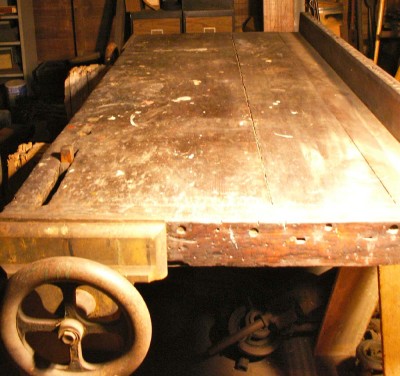
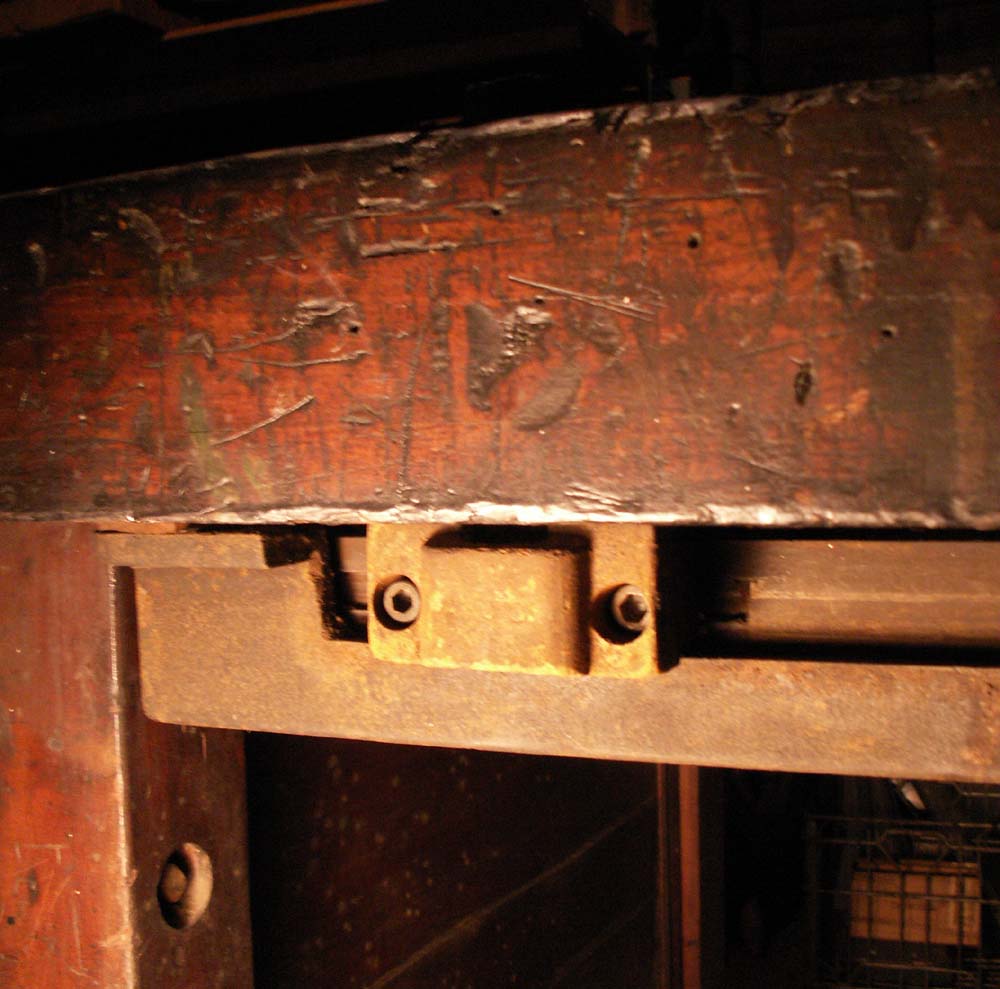
It has a heavy, hardwood top with two large hand-wheel operated vices.
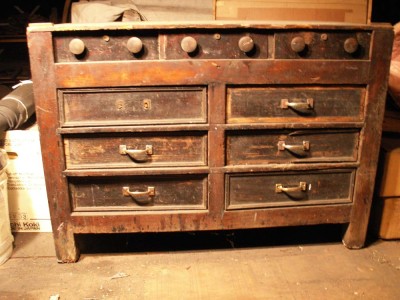
This top sits on a 9-drawer base similar to the base of the Mack Gavitt bench in your book. There is no kneehole. The bench was used hard —and it shows it. It also suffered further indignities while in storage; there are one or two paint spills on the top surface and some of the moulding around the drawers is missing, as are some of the original drawer pulls. It is, however, totally original.
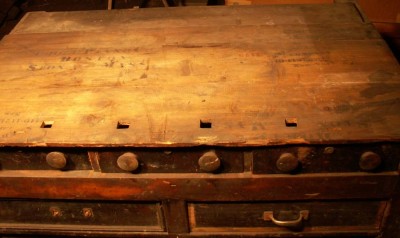
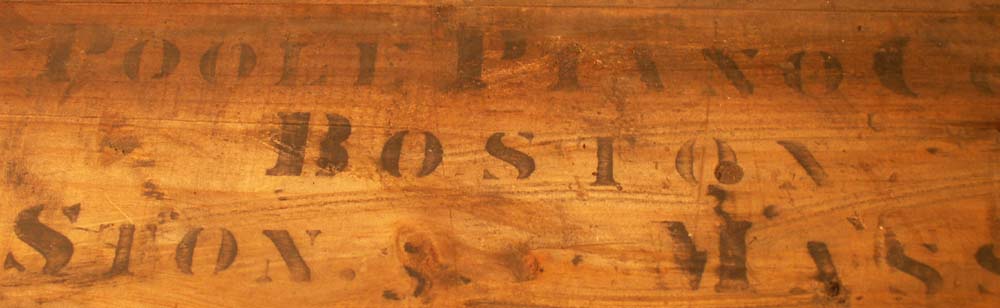
An interesting aspect of the bench is the fact that the top surface of its base is made up of planks taken from piano shipping crates.
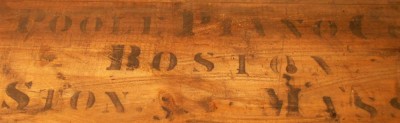
These planks have several piano company addresses painted on them, including that of the Poole Piano Company where Brother Studley worked. Another unusual feature is a 4-inch-high vertical tool rack or holder mounted along the back of the top.
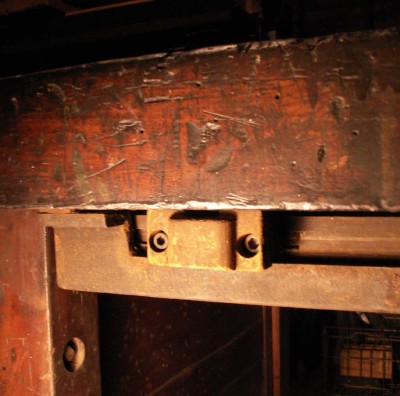
And,
Have been able to track down more info on the piano bench. It was owned and used by Charles A. Ross of Quincy. I got the name from a guy (now 90 years old) who lived across the street from him many years ago. The September 16, 1922 edition of THE MUSIC TRADES provides more info, reporting that Ross was resigning as sales manager of the A. J. Jackson & Co.’s piano warerooms in Boston to establish his own warerooms in Boston under the name Charles Ross & Co. The article goes on to say: “Mr. Ross has had a thorough schooling in the piano craft. For fourteen years he was employed by local factories and after several years at the Vose and Poole companies he entered the retrial sales branch.”
Turns out Ross was a big cheese in Quincy, having spent many years in politics including a stint as Quincy’s mayor.
The time frame and context are fascinating, perhaps even downright seductive to us Studleyophiles. Given that Ross was actually in the piano making trades during the long career of Studley including his 1898-1918 tenure at Poole, and given that there is a solid connection to the Poole Piano Company, the possibility exists – and seems probable to me – that this workbench was originally owned and used by one of Henry Studley’s action mechanics at Poole.
And how cool is that?
With my brother and nephew “in the house” we took a walk up the hill to do some noodling about the penstock (pipeline) for the hydroelectric system. Since it froze last winter I had awaited its thaw and repair, the former occurring in late April and the latter after I returned home from the Studley exhibit. I did not complete the penstock all the way to the original capturing basin as the last 400 feet or so were quite difficult and gained very little additional head (the amount of water fall in the system) — only about 2 psi. For the mean time I had simply immersed the end of the penstock into the creek bed.

With the three of us in hand I located a near perfect location for the penstock head only about 40 feet upstream from the temporary location. It was a place where the creek narrowed and one bank was a huge rock and the other bank a movable pile of rocks that could be configured to a width of just a couple feet. With a little bit of bed and bank reconfiguration it seemed like a darned good place to construct a new diverging and capturing dam.
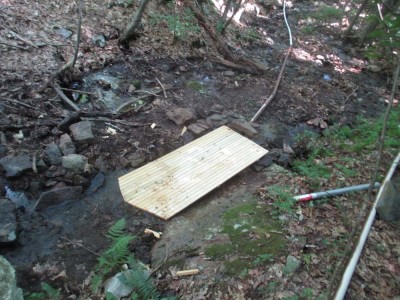
To test the idea I went to the hardware store for a couple hundred pounds of sand, and grabbing a handfull of feed sacks to use as sandbags, backed my trusty 4WD pickup up the hill to be adjacent to the location. In short order we had a less temporary but fully functional sandbag structure in place and the system was up and running with excellent performance. To enhance the new basin I built a debris catcher to place over the spot and reduce the amount of leaves and sticks to clean from the intake. My hope is that the new basin needs housekeeping only every month or so. Once I am back on my feet I will fabricate a little more functional debris trap for the end of the penstock, but that will have to wait another six weeks or so.
…tearing down the house…
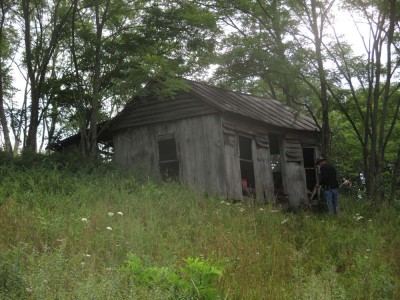
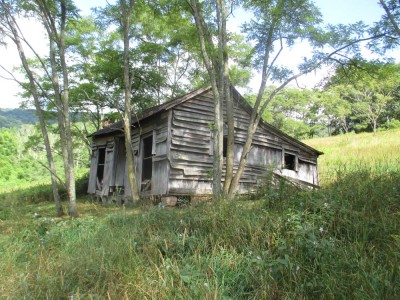
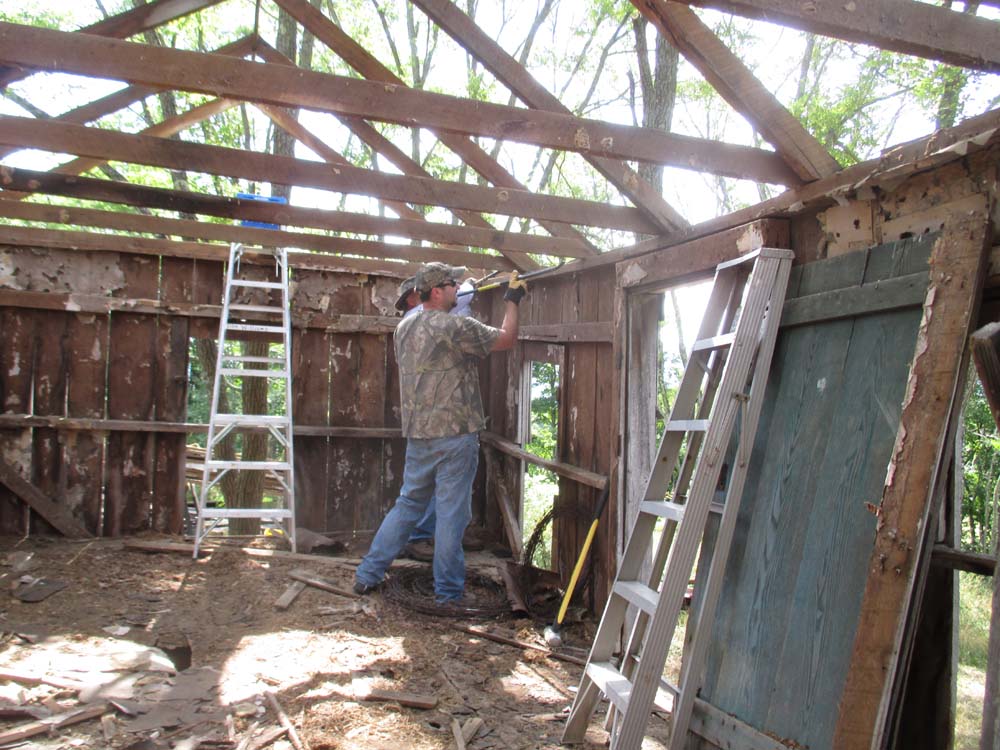
Recently my younger brother and his son visited White Run for a week of vacation, during which we tore down a shack that had been a blight on the front hillside corner of the property. My local pal Tony said he thought it had a lot of chestnut in it and I needed some chestnut to make battens and some trim for the shed over the root cellar, so that was all the impetus we needed.
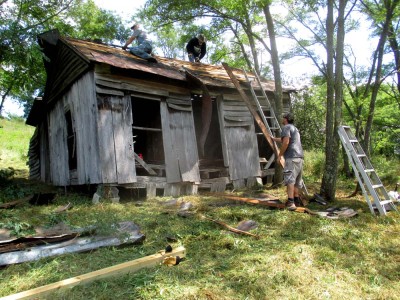
Day One was marked by the removal of the roof and much of the siding, yielding indeed a very large quantity of chestnut boards from the roof sheathing and ship-lapped siding. So we tore into it with enthusiasm, first peeling off the standing seam metal roof and underlying tar paper.
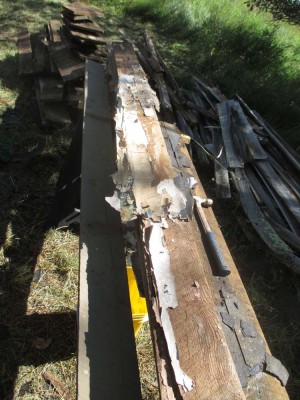
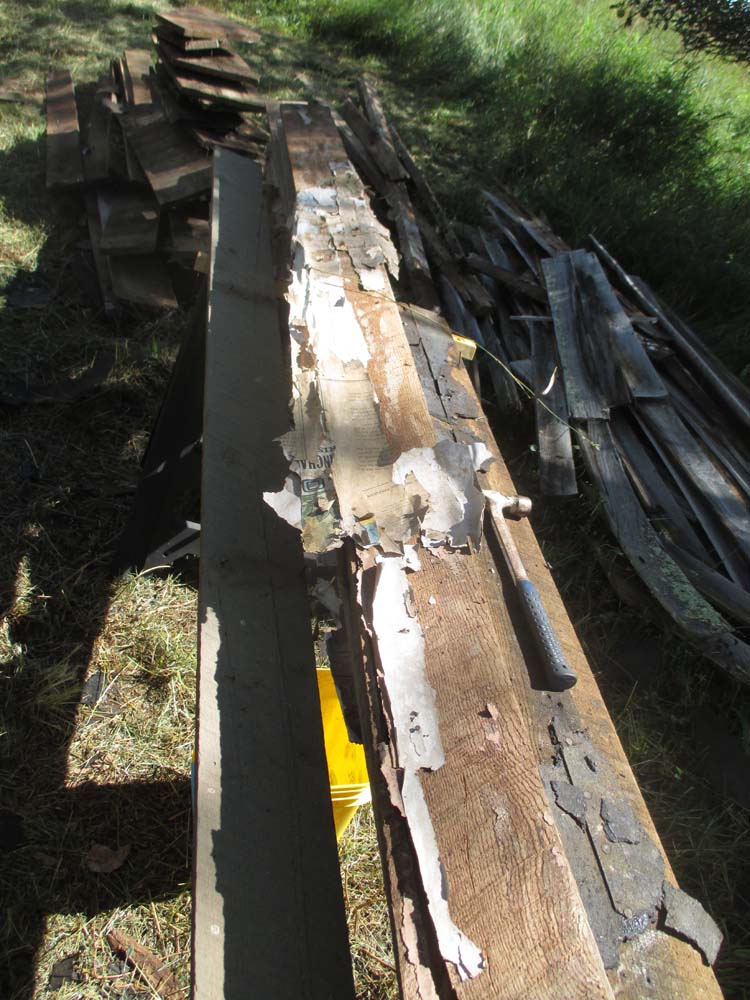
While my brother and I were working on this my nephew stripped all of the ceiling boards out of the one room inside. These ceiling boards were among the treasures of the project as the were long, straight pieces of 6″ wide by 3/4″ thick chestnut.
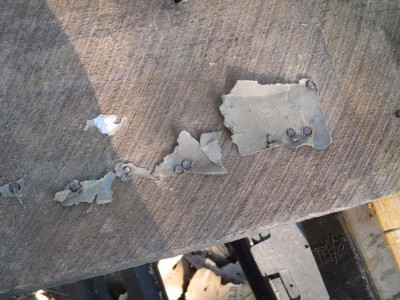
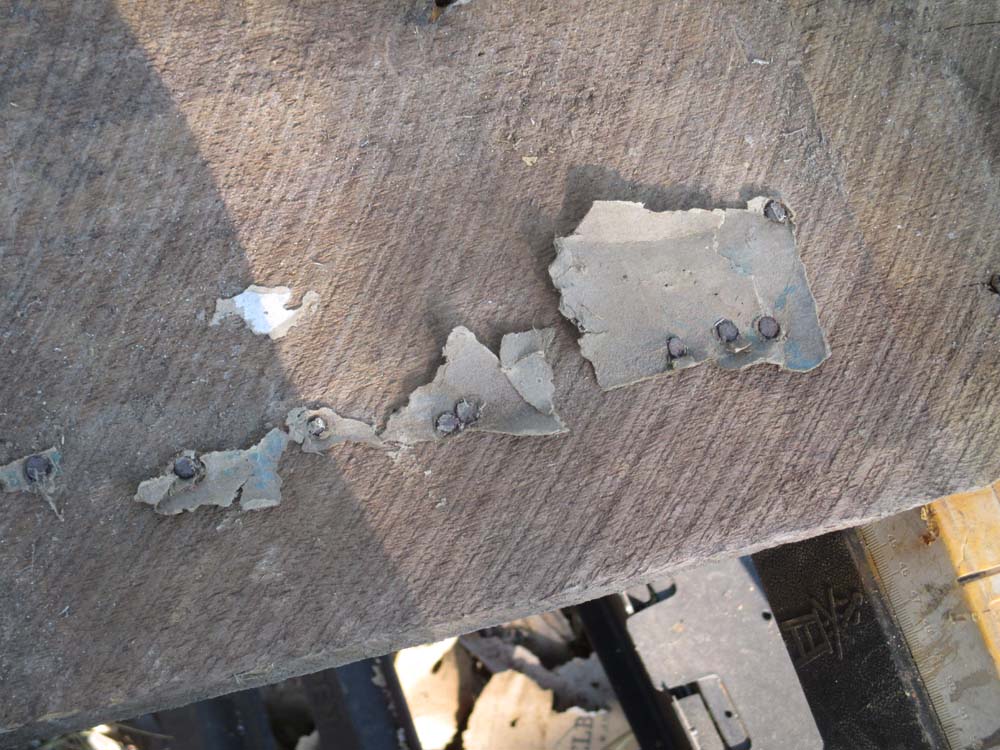
Unfortunately like all of the interior surfaces, they were plastered with numerous layers of newspaper and cardboard, affixed to the surfaces in part with flour paste, easy enough to remove, augmented with literally thousands and thousands of tiny upholstery tacks. We removed as many of these as we had time for, but I will have to go over all of these boards with metal detectors before I use them. Still, these are magnificent boards.
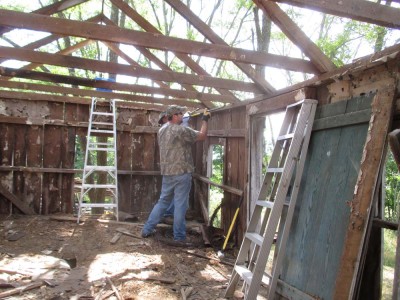
It turned out that all of the roof sheathing and almost all of the structural lumber, run-of-the-mill 8/4 stock, were chestnut, which back until the early 20th century was a dominant local material.
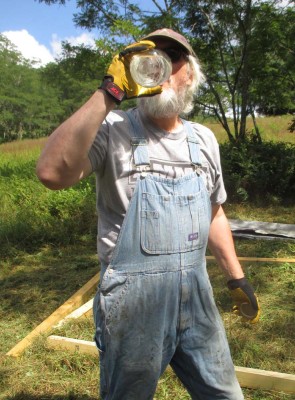
It was pretty warm that day, probably about 80, and we took frequent breaks for refreshment.
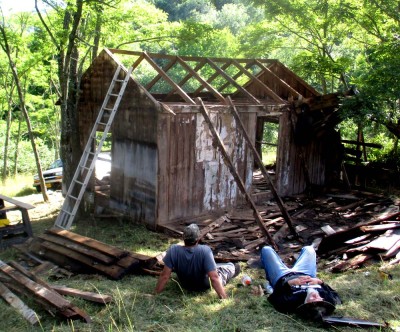
By five o’clock we were done for the day.
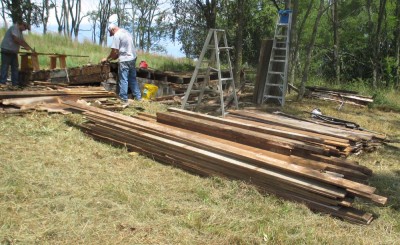
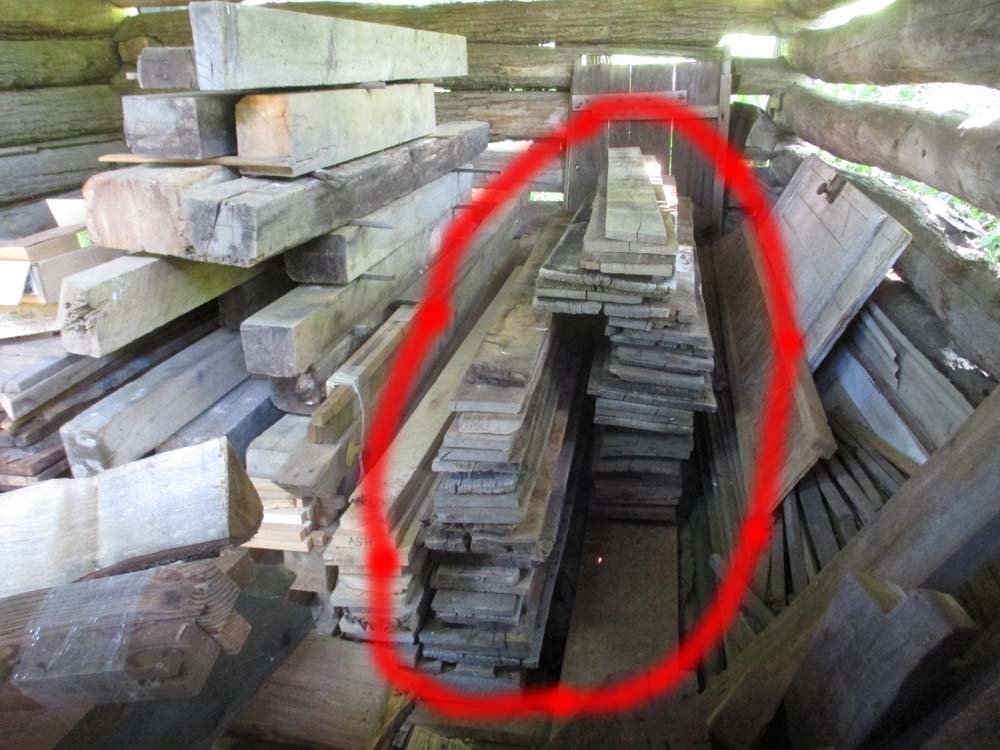
Day Two pretty much finished the deconstruction phase of the project, harvesting an even greater stack of oak sheathing from the walls. Most of the sheathing boards were 5/4 white oak, 7-1/2 feet long. Some of these boards were in excess of 16″ wide. Our stacks of salvaged vintage lumber that had been air drying for a century kept growing throughout the day.
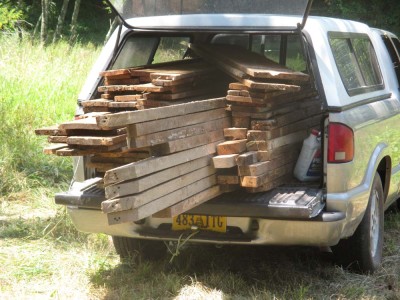
I started the task of loading the salvaged lumber into the truck and the unloading and stacking it in the log barn. I think this load was all chestnut.
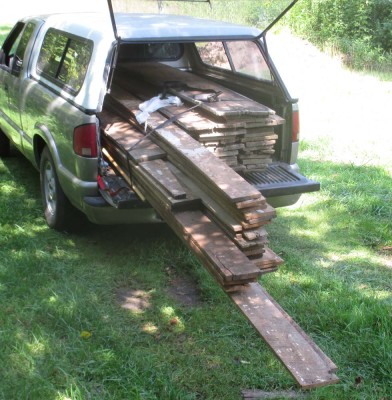
The second load was a mix of the long chestnut with a mound of white oak.
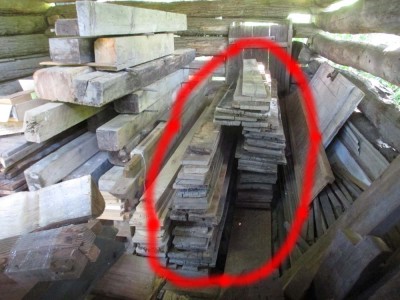
Oak stacked in the lumber barn.
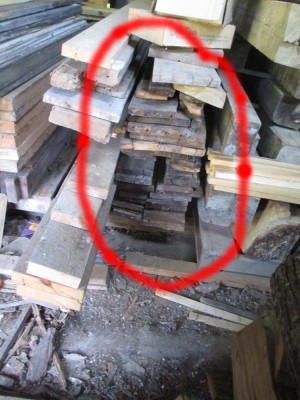
Chestnut roof sheathing stacked up.
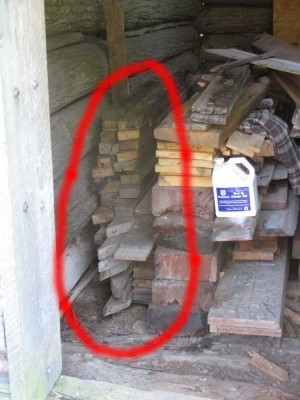
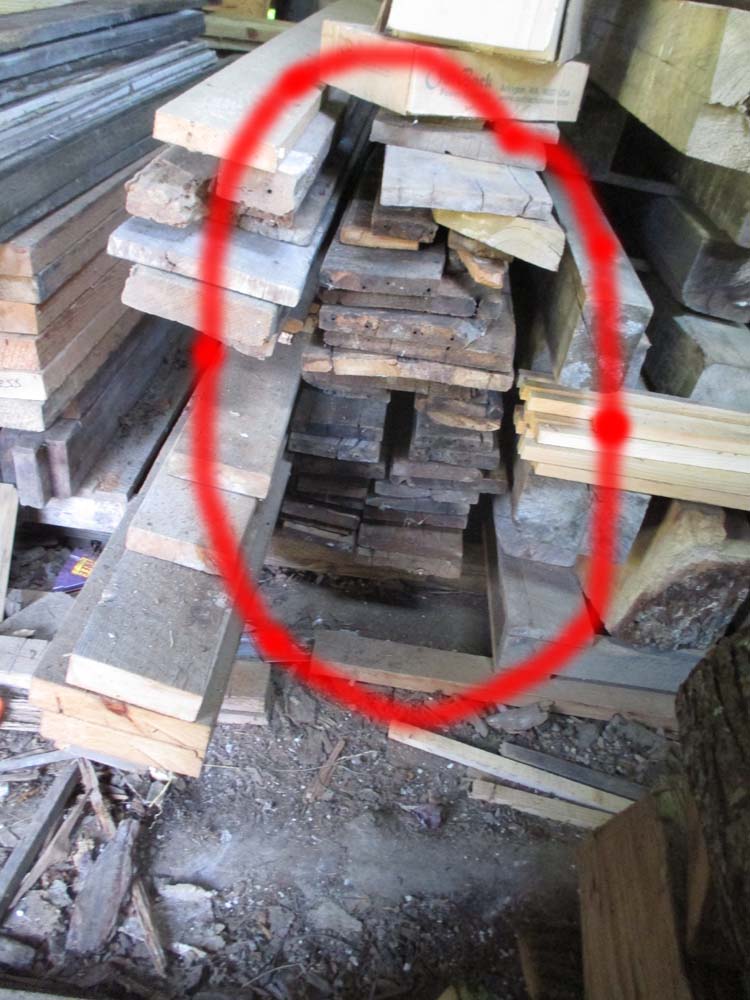
More chestnut, including a lot of 8/4 structural material just awaiting me to do something with it.
On the next day in my quest for new experiences I decided to break my hip. I cannot recommend it as it is much less amusing than I had been led to believe.
Thus endeth this chapter of life on the homestead.
Not exactly a project worthy of Joshua Klein (and huzzahs to Joshua, Julia and company for getting the house down without any injuries!) but it made us pretty pleased with ourselves.
Once the contractors departed I jumped in and replaced the original floor of the shed. The building had settled enough that I wound up shimming the joists at the new wall about an inch prior to laying the new 3/4″ CDX flooring. Once that was done I retrieved some of my stash of rigid foam insulation from the barn fourth floor and cut and placed three inches of foil faced polyisocyanurate rigid insulation in between the joists from below, in essence turning the root cellar into a super-insulated chamber.
The winter set in about then and I abandoned the project for eight months while we coped with winter and the all-consuming Studley projects.
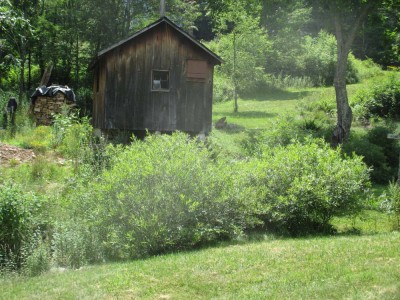
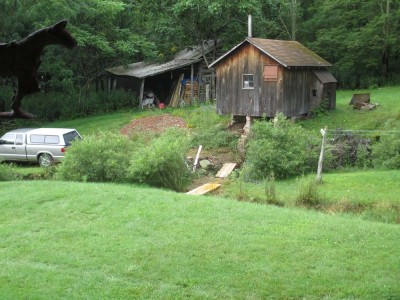
Finally on my return from the MJD tool auction I turned my attentions to finishing this project. This included first clearing the path across the creek to the entrance of the root cellar and the construction of a temporary walkway bridge to hold sway until I build the permanent arched bridge there this fall or next spring.
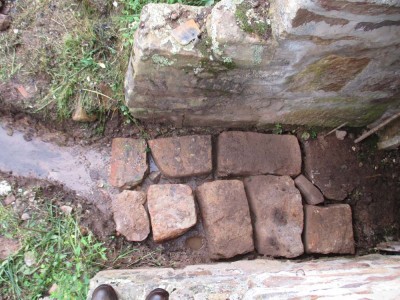
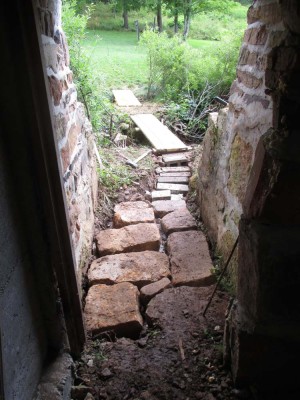
The next step was to excavate the rubble on the entrance path to the cellar door in order to find a place to put the huge stones left in place by the concrete contractors who managed to leave the collapse rubble in place.
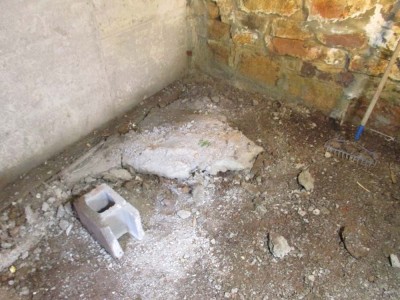
One special treat was removing a several hundred pound mass of poured concrete slag that was simply left in place. The wrong place.
The moving of all these hunks of stone and concrete was achieved through the judicious use of horsepower in the form of my truck, placed across the creek directly opposite the cellar door, with the stones lashed to the tow hooks on the bumper with rope. Gently I pulled the stones out, then placed them with iron pipes and other leveraging tools.
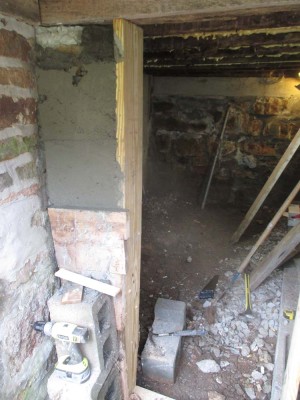
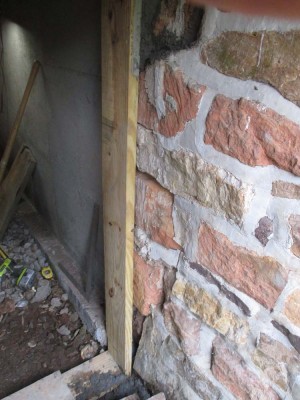
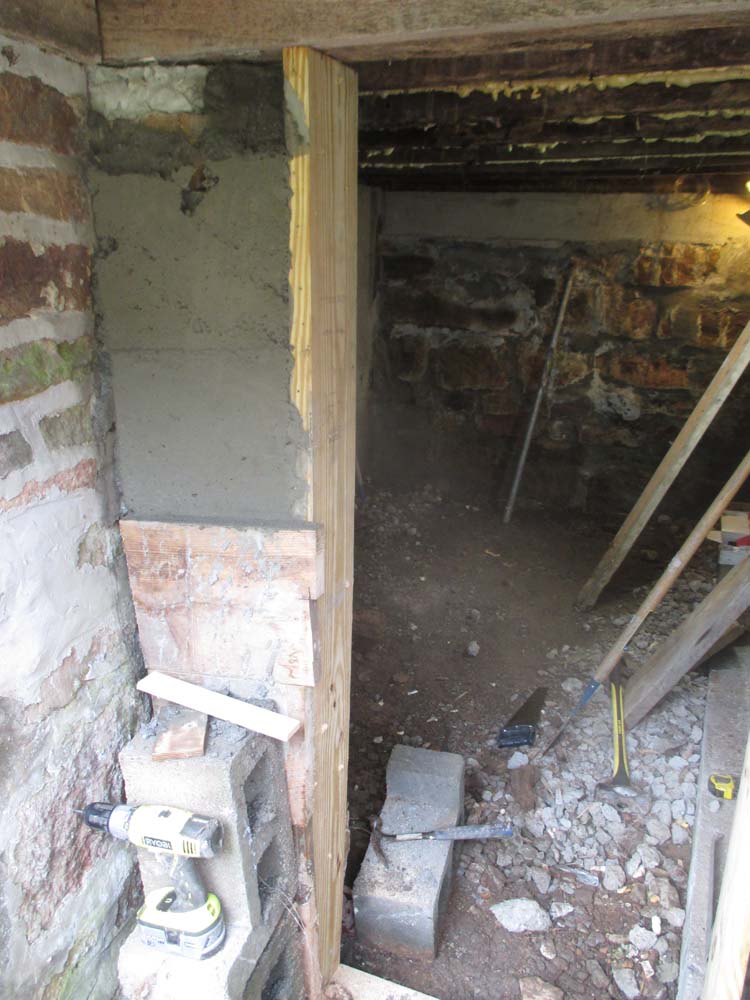
Once that was done and the space was cleared enough to actually work I undertook the finishing of the masonry so that the doorway could be rebuilt, along with some repointing of the stonework inside.
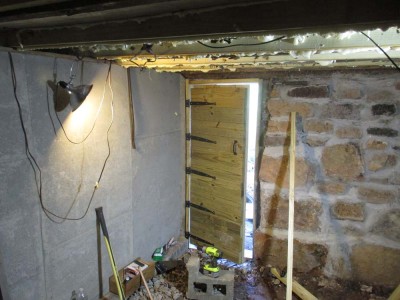
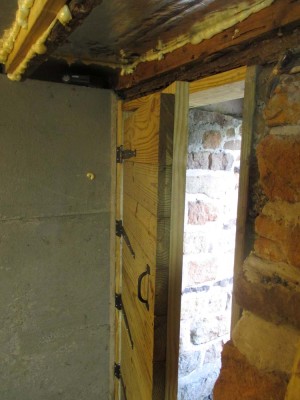
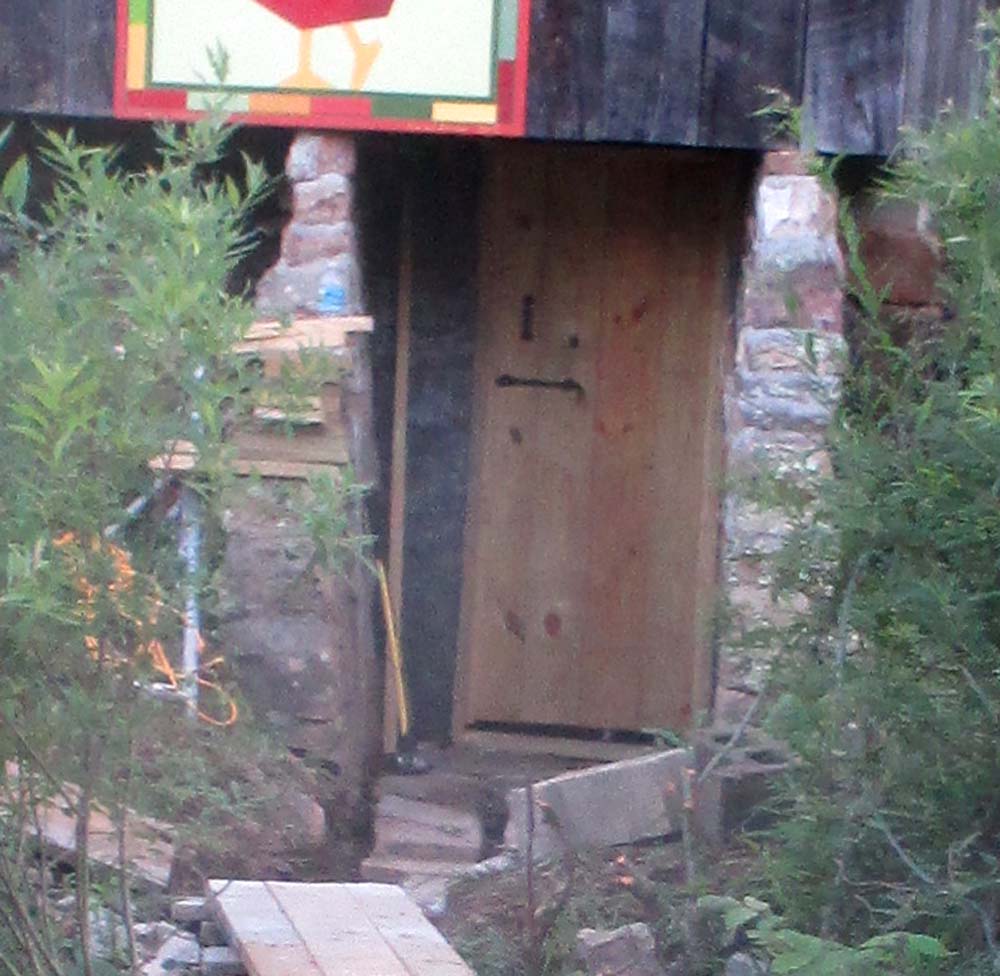
The last big construction task was to fabricate a bear-proof door for the cellar, which I did with two layers of pressure treated 2x construction lumber with the two lamina assembled cross grained with a box of decking screws.
The final steps were cleaning up, clearing out, and moving in the new gravel to level and smooth the floor in order to fit the door bottom and threshold. And that is when I suffered the debilitating attack by the gravel laden wheelbarrow.
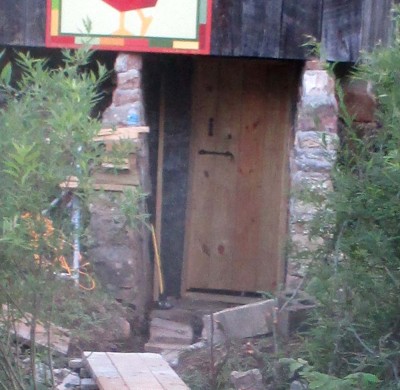
This is how I left it, the final details will have to wait another month.
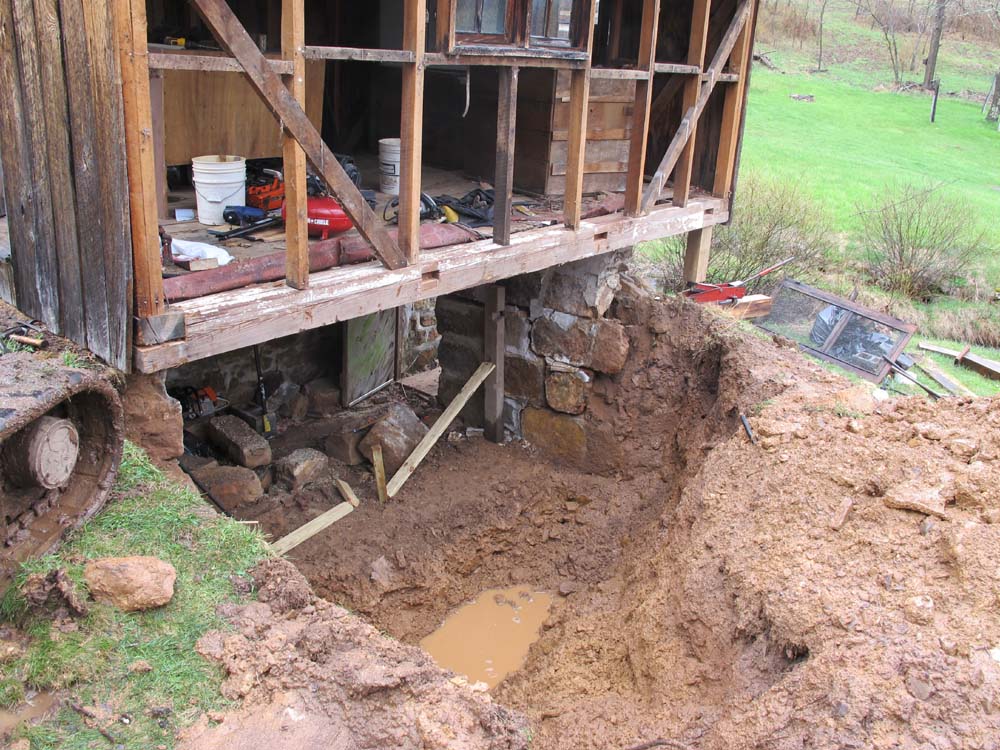
With the shoring in place we had a bit of time to think through the ultimate resolution to the problem of the collapsed root cellar wall. The options ranged from reconstructing the original wall with the original materials strewn on the floor of the cellar, building an all weather wood foundation to replace the original wall, constructing a concrete block wall, and finally the option we went with, pouring a new monolithic concrete wall. This technology has been making serious headway in places like here where the providers of skilled trade are pretty scarce.
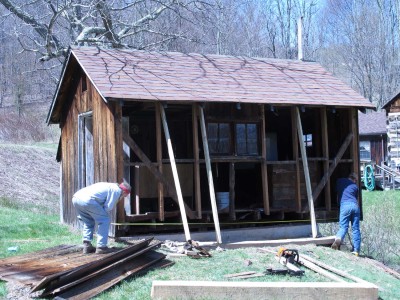
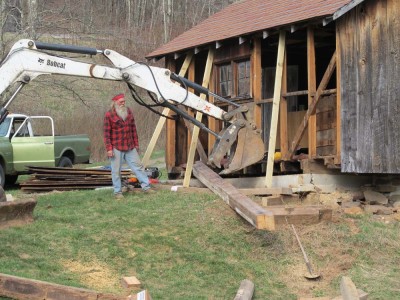
One of the first orders of business was to replace the wooden sill plate on the shed wall.
Fortunately I have a substantial inventory of large timbers. These were mostly being compiled for the eventual building of workbenches, but this need trumped that one.
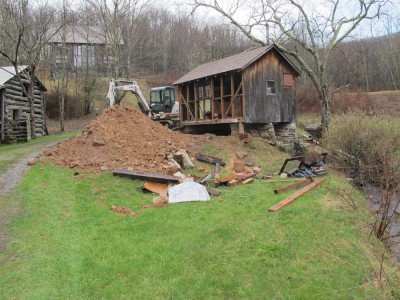
Once the new sill plate was in place it allowed Tony to remove the poured-in-place rock wall top beam that was part of a 1953 rehab of the original building. Under Tony’s direction the ground adjacent to the previous wall was excavated fully in order to provide access to the structure for some repair and new work.
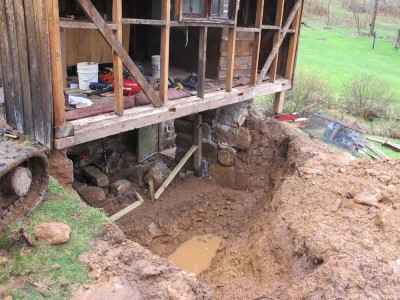
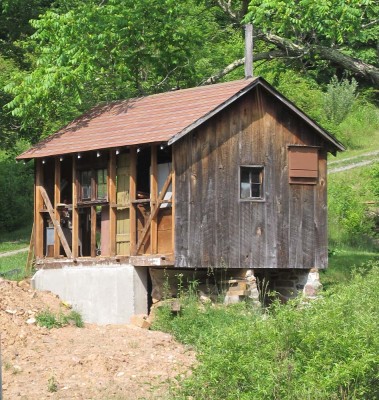
Once the new sill plate was in place it allowed Tony to remove the poured-in-place rock wall top beam that was part of a 1953 rehab of the original building.
Then the concrete contractor moved in to set the forms and rebar/wire mesh for the new poured wall, followed by a new poured inner wall on the opposite wall to make sure that wall didn’t collapse also. Some remedial stone work to finish off the corner you see here, and the crews cleared out leaving the rest to me.
It took 14 months but I finally got back to it last month, which I will recount next time.
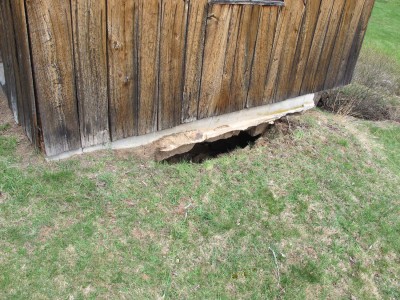
The Spring of 2014 was a hectic time as we were trying to get moved from the house in Maryland in order to take up full time residence in the holler by the barn. We found ourselves taking frequent overnight and even out-and-back trips with the truck loaded with possessions to relocate. The pace of these trips meant that at times we would swoop in, unload, and leave. Well, in this one particular day we were just walking around for a minute before jumping back in the truck and heading to Mordor on the Potomac.
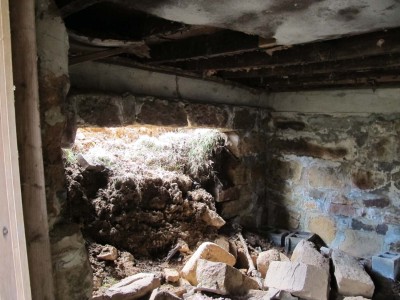
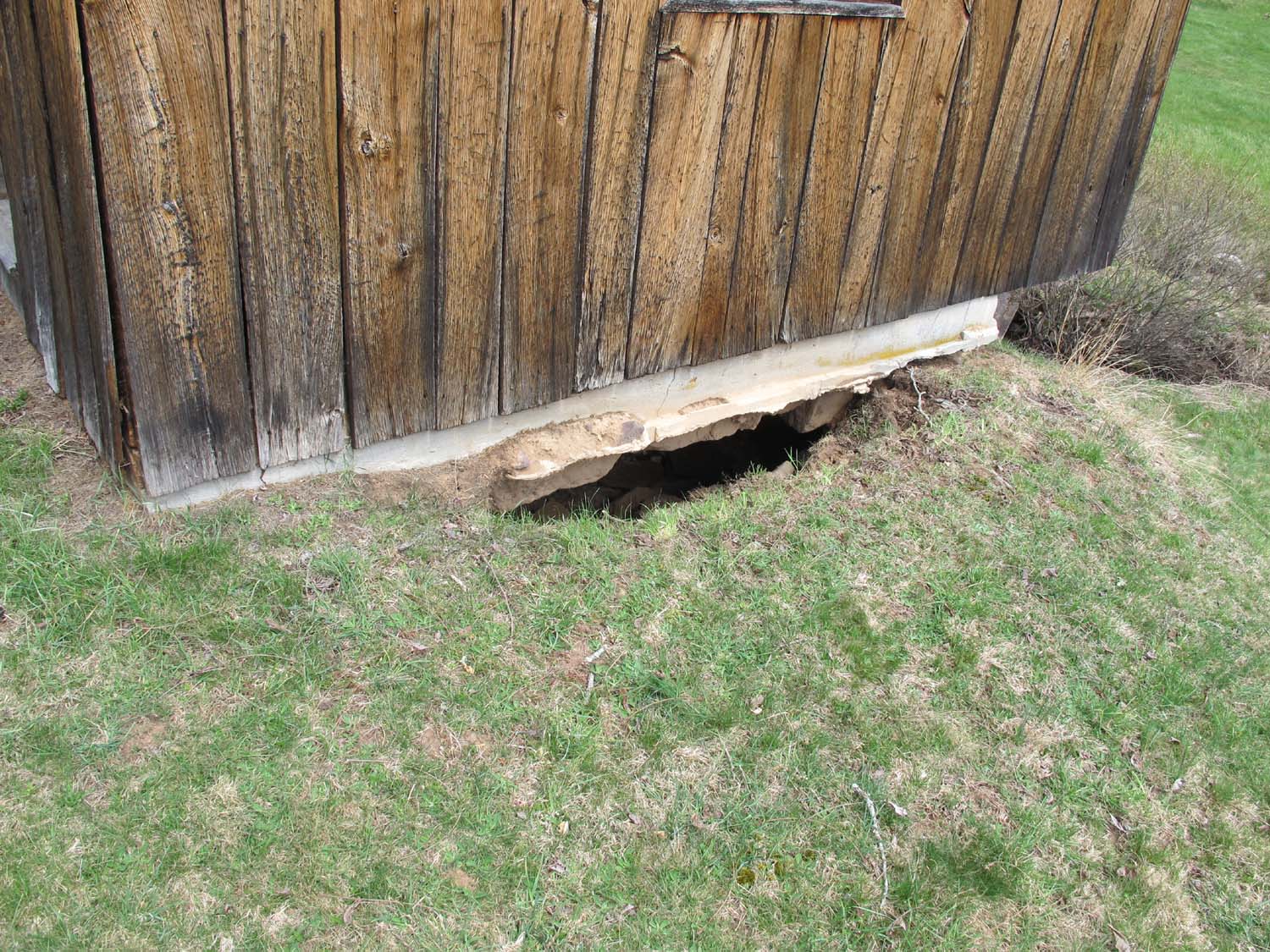
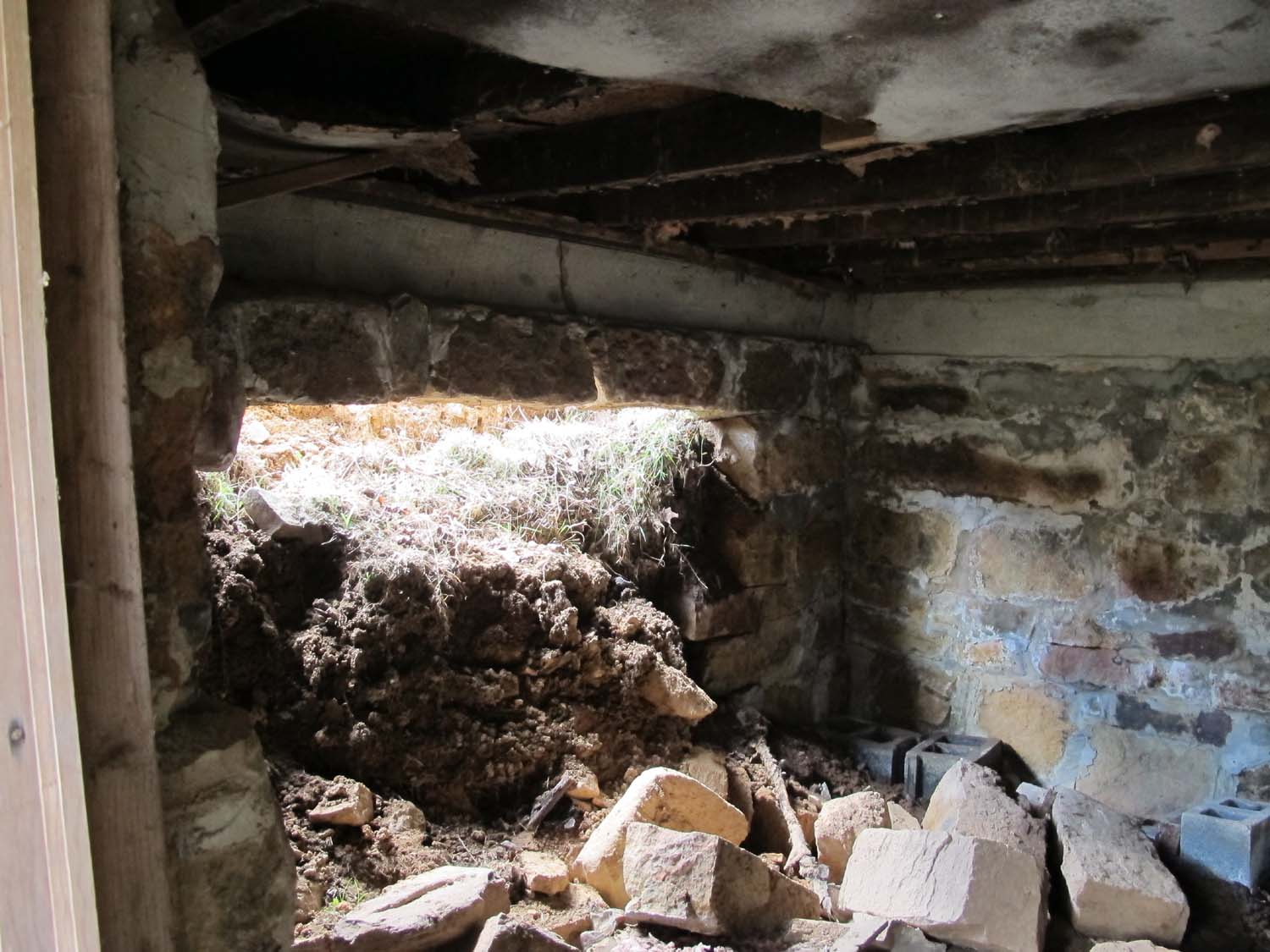
As I rounded the root cellar/garden shed I was struck by something in the corner of my eye that didn’t look quite right. On closer examination my heart sank, as the catastrophic damage to the building was readily apparent. A look underneath from inside the root cellar confirmed that decades of frost heave and the spring snow melt caused one wall of the root cellar to collapse with a couple of tons of debris scattered about inside.
With zero time available I departed for home and called my pal Tony to ask him to take a peek at the problem and offer some counsel. Tony is a local contractor and amazingly inventive guy.
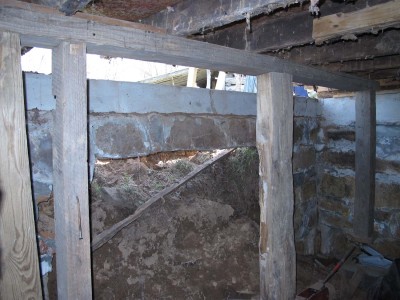
He reported back a couple days later that he had shored up the building with some of the timbers in my lumber storage and hydraulic jacks from the barn. That would hold stasis until we decided what to do next, which I will recount in the next blog post.
I had an excellent report at the surgeon’s this morning. Everything is progressing nicely, (virtually no discomfort unless I move the wrong way and then I get a little pinch), mostly sleeping well, can maneuver through the cabin fine. Now all it takes is time and inactivity to fuse the break back together.
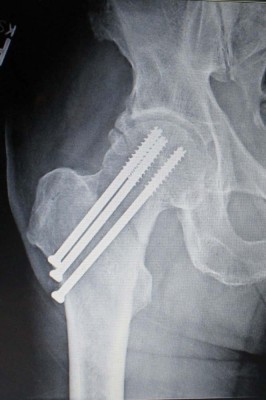
The lag bolts make sure everything stays put in the mean time. I also got permission for VERY limited activities in the shop, provided I am always sitting down or using my walker to stand. I’ll probably begin to spend a little time there next week. Still plowing ahead with reviewing the edits and adding essays to R2.
I’m still on track to make it to WIA the last weekend of September. Until then I can place zero weight on my foot, and afterwards only a light load until full strength returns.




















Recent Comments