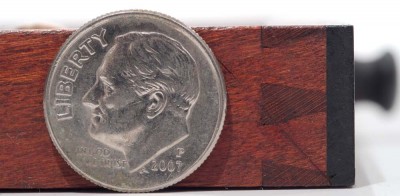
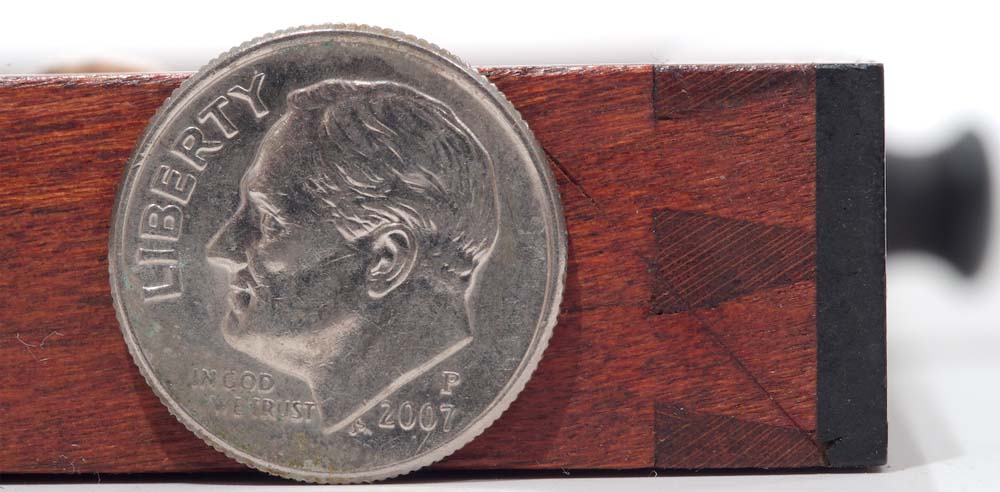
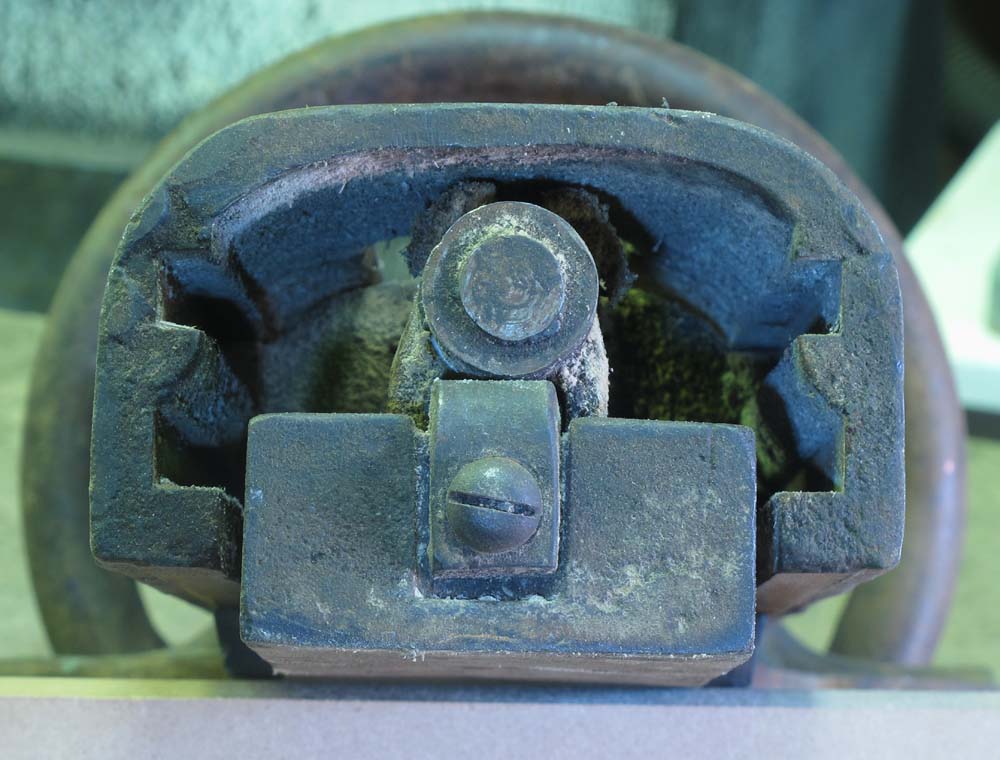
I’ve been working my way through the thousands of images to select the several hundred I want in VIRTUOSO: The Tool Cabinet and Workbench of Henry O. Studley (submitting the manuscript to LAP in a few days) and I came across this one Narayan shot last year. It is the dovetail set on the edge of one of teensy ebony-front mother-of-pearl inlaid drawers at the top of the drawers section of the tool cabinet.
Wow.
If you make it to the exhibit of Studley’s ensemble next May you can see it in person. Almost this close.
My final day in Cedar Rapids was pretty much one of relaxation, as all the goals I had for the visit vis-a-vie the exhibit The Tool Cabinet and Workbench of Henry O. Studley were met.
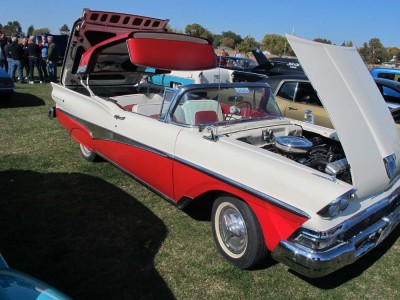
I turns out that in a nearby town was a hot rod gathering, and Jameel and Father John’s dad Father Raphael had been a car buff and knew the organizers for the event. So off we went to spend a glorious day in the sun looking at the rods from the days of my youth.

After that we went to a huge yard sale with tons of tools, none of which tempted me, and finished off the evening dining on Mexican food.
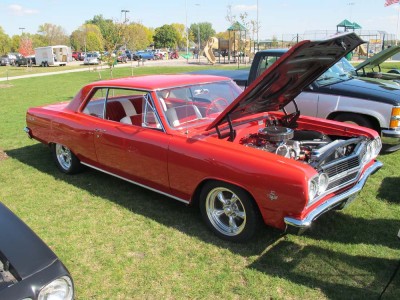
Thanks to the fantastic contacts the Abrahams have in their home town, the visit was about as perfect and productive as it could be
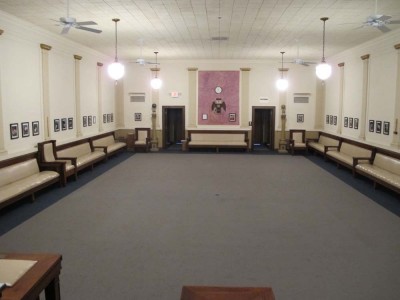
Today was a seamless continuation of the successes of yesterday, as Jameel Abraham and I first went to the Scottish Rite Temple in Cedar rapids, Iowa, which will be the venue for the exhibit The Tool Cabinet and Workbench of Henry O. Studley. We spent about an hour in the exhibit hall, brainstorming about the actual layout and design of the event.
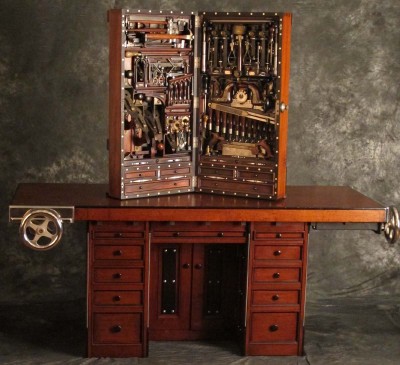
Can’t you just see it now?
Following that we went immediately to a theatrical lighting supplier to order the necessary fixtures to make sure the exhibit is visually compelling. It will be.
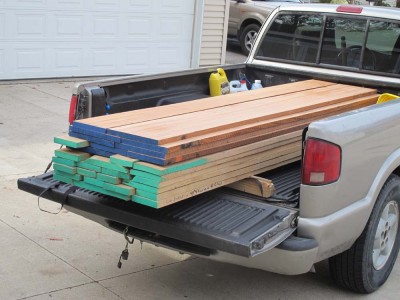
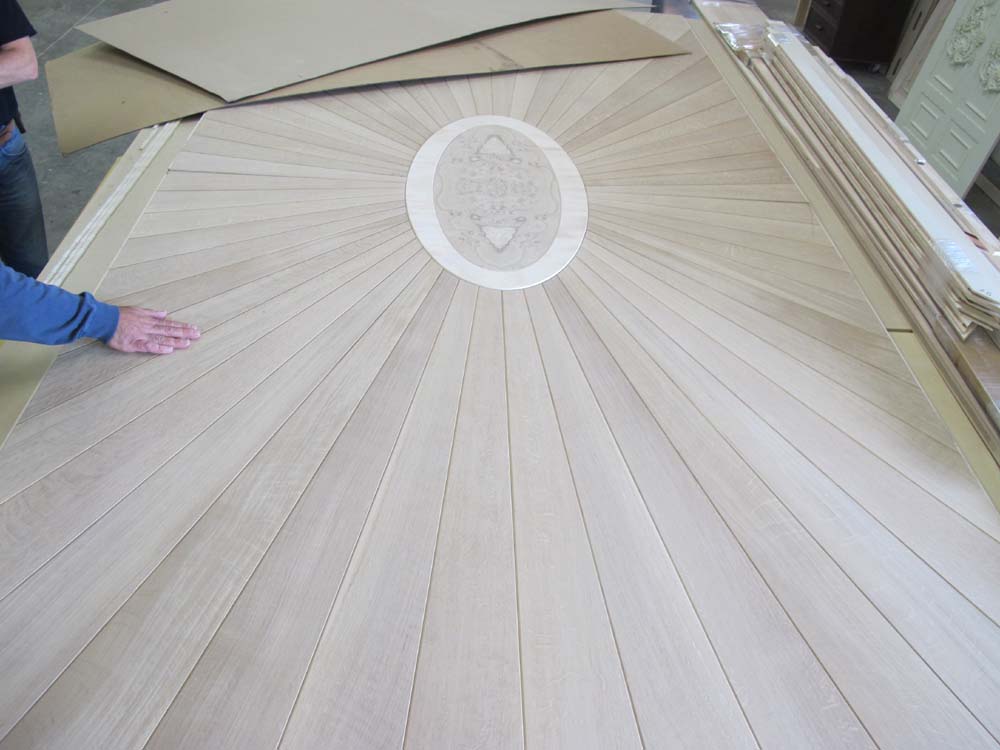
I spent the afternoon heading an hour north to purchase some Select white oak to complete the purchase of materials for the Studley workbench replica I will build to use as a prop in the exhibit.
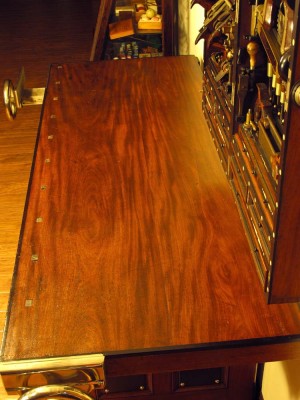
Now that is a bench top!
I can now leave Cedar Rapids knowing everything is moving forward.
As I write this I’m in Cedar Rapids, Iowa, for a few days of running around making arrangements for next Spring’s exhibit The Tool Cabinet and Workbench of Henry O. Studley (tickets available here). In the company of Cedar Rapids native and vise-maker extraordinaire Jameel Abraham I made excellent progress finding the perfect shops to build the exhibit case bases and plexiglass vitrines. Jameel took me to a plastics shop he frequents in Cedar Rapids, and the manager said, in essence, “Yes, we can make this case for you, but the guy you really need to be talking to is down in Iowa city.” Since Jameel had other business in Iowa City, off we went.
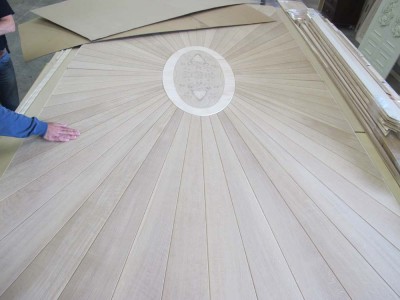
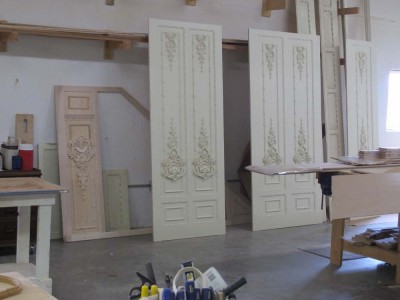
The first stop in the Iowa City area was the cabinet shop Jameel had recommended for the base of the display cabinet and the platform for the Studley workbench. It was the right choice. Any shop that can do the sort of work they do is fussy enough for me.
Next we visited the plexiglass shop, and yes indeed he was the right guy. We speced out the job and he has it on his calendar. Another great thing is that the cabinet shop and the plexi shop guys know each other and have worked together in the past.
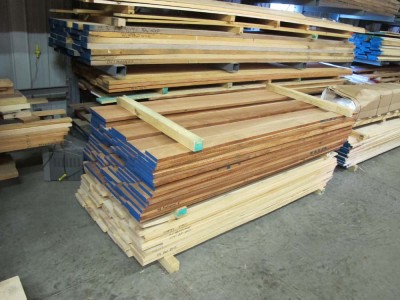
Our final stop int eh area was one of Jameel’s lumber dealers, and while he was doing his business I purchased some mahogany for the replica of Studley’s workbench I will be building to include as part of the exhibit.
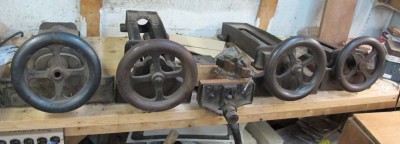
I will be hanging a number of piano-maker’s vises from the replica, and they will be “touch-able” by the exhibit visitors.
Finding the perfect shop for the plexiglass work was one of my prime concerns, and it feels great to have it resolved. Even though the cabinet work for the exhibit will be minimal and fairly simple, it was a real treat to visit a woodworking shop that makes exquisite cabinetry and architectural elements.
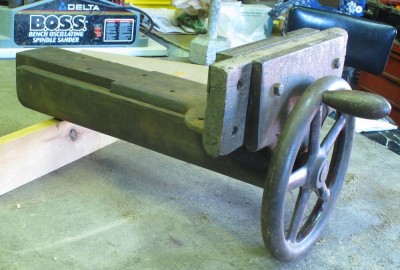
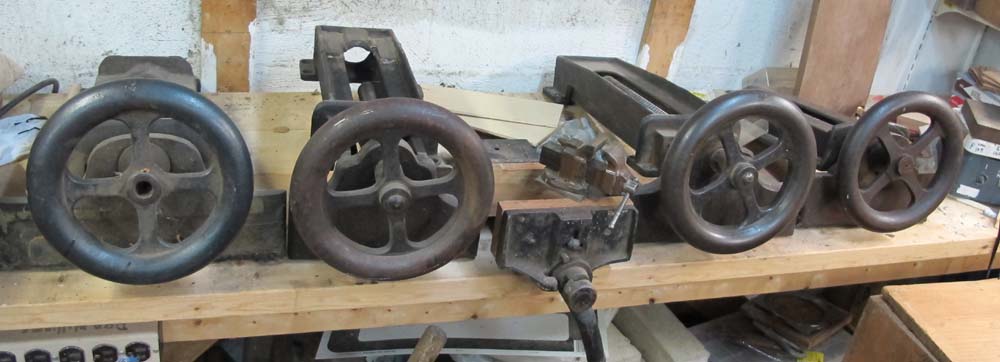
During last month’s foray into the alien planet known as Newengland I stopped in South Portland to visit MikeM, who had emailed me about a wheel-handled vise he found at a flea market up there.
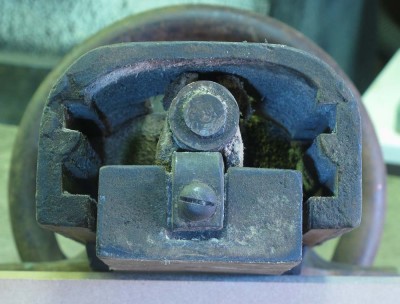
Since I have been on the hunt for piano makers’ vises for several years, and since he was literally less than a mile off the interstate, stopping to check it out was a no-brainer. The vise itself was a head-scratcher.
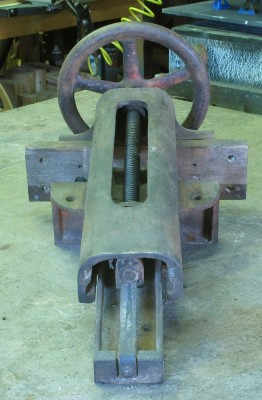
It is definitely in the same vein as all the others I have seen, and no two have been identical thus far, this one was a real outlier.
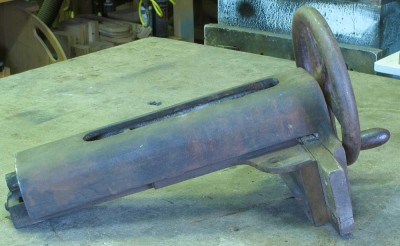
The general configuration certainly conformed to the style, but the travel of the face was quite short, and where in the world did that five-spoke wheel come from?
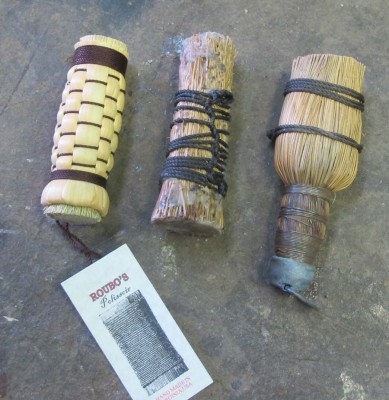
One thing that definitely made me smile was the factt hat he had taken my advice and made some polissoirs himself from whisk brooms. I was honored to add to his collection with a genuine Roubo Polissoir from Don’s Barn.
Thanks Mike for sharing this peculiar tool with me. I will look fine alongside all the others in the book.
Tomorrow night at 7PM Eastern Time Matt Vanderlist will post a video interview he did with Narayan Nayar and me on the upcoming doings of the Studley enterprise. Chris Schwarz blogged about this the other day, and I have borrowed this picture from that blog (it is very difficult to take a picture of yourself while appearing on camera.)
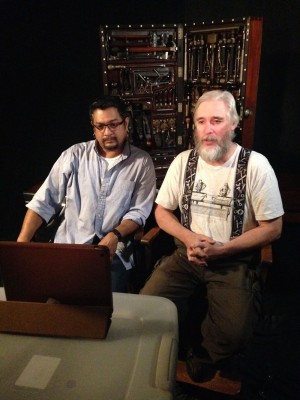
It was great fun to chat with Matt and we enjoyed the experience and the discussion immensely. You will no doubt notice my well-coiffed and sartorially splendid self, looking like I was at the end of a long slog, For me it was the pleasant near-culmination of a week wrapping up my research on the tool cabinet in preparations for polishing the manuscript, which is ongoing at this moment.
We also shot another ten minute special segment on the workbench, which I believe Matt made available to his patrons for the web site, but I understand that segment will not be posted on the general site.
I watched both of the videos and thought they looked like fun.
For the most part I try to keep this blog focused on artisanry and homesteading, but every now and then I veer off course. This is one of those times.
My post-adolescent life has seen me plagued with sleeping problems, mostly that I had difficulty falling asleep when I was supposed to be going to sleep. Three or four hours of tossing and turning was not uncommon, one or two hours was the norm. (I did get a lot of extra reading and writing done, though.) One thing that helped me a fair bit was to listen to the spoken word as I was trying to get drowsy. For some reason music did not work as well, so from the time of my teens I would listen to radio to sop up the extra brainwaves or something.

In recent years late night radio has increasingly irritated me, mostly the 1:1 ratio of programming to non-programming like commercials, news, promos, public service announcements, etc., so instead I’ve switched to downloading old-time radio shows especially of the detective variety, which work like a charm. One delightful recent discovery was a contemporary Toronto radio theater troupe that creates hilarious over-the-top homages the the hard-boiled detective genre, in the character of Black Jack Justice and his sidekick, Trixie Dixon, Girl Detective. Though I am no longer plagued by sleepless nights, the habit is hard to kick and at times I still find myself listening and laughing out loud as I drift off to sleep.
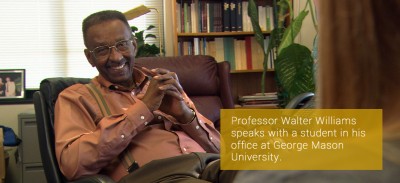
Totally unrelated, a biographical documentary has been released recently for my long time friend, economist Dr. Walter E. Williams. I have not yet seen it but will soon, but it is unlikely that I will be surprised after three decades of camaraderie and lengthy dinner conversations chewing the iconoclastic philosophical fat. I am proud to call him “friend.”
Tomorrow, back to woodworking. I have about 20 blog posts in the can, and just have to parcel them out as the final grind for Manuscript Studley takes control of my life for a fortnight.
My two-week-long trip to make on-site exhibit arrangements and a final examination of the Studley Tool Cabinet and Workbench began with a long day’s drive from the Virginia mountains to Cincinnati. I remain convinced that Google Maps employs aspiring NASCAR drivers to ascertain driving times.
About an hour out of Cincy I drove through a storm cell that almost certainly contained a tornado or two, or so I deduced from the building parts flying past me on the road. I’ve driven through rain so intense that I could not see the road in front of me, but this was the first time I have ever been in rain so fierce that I could not see the road beside me. I pulled into a gas station as soon as I could see well enough to navigate, but immediately noticed two things. First, the gas pumps were scattered around the lot, some on top of cars. Second was the unmistakable smell of gasoline. I moved on as soon as I could get turned around.
As I write this I’m in Fort Mitchell visiting Chris Schwarz for the evening, reviewing the recently returned page proofs for the Roubo l’Art du Menuisier Book of Plates and working through some of the details for the soon-to-be-submitted manuscript for VIRTUOSO: The Tool Cabinet and Workbench of Henry O. Studley. We spent a fair bit of time discussing Chris’ vision for the physical manifestation of the latter. To tell you the truth I am ambivalent about some of these details; I just want the book to be as compelling as Lost Art Press can make it. Given their track record, I have nothing to worry about in that regard.
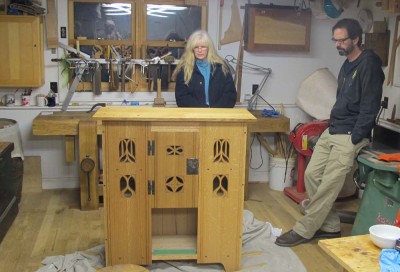
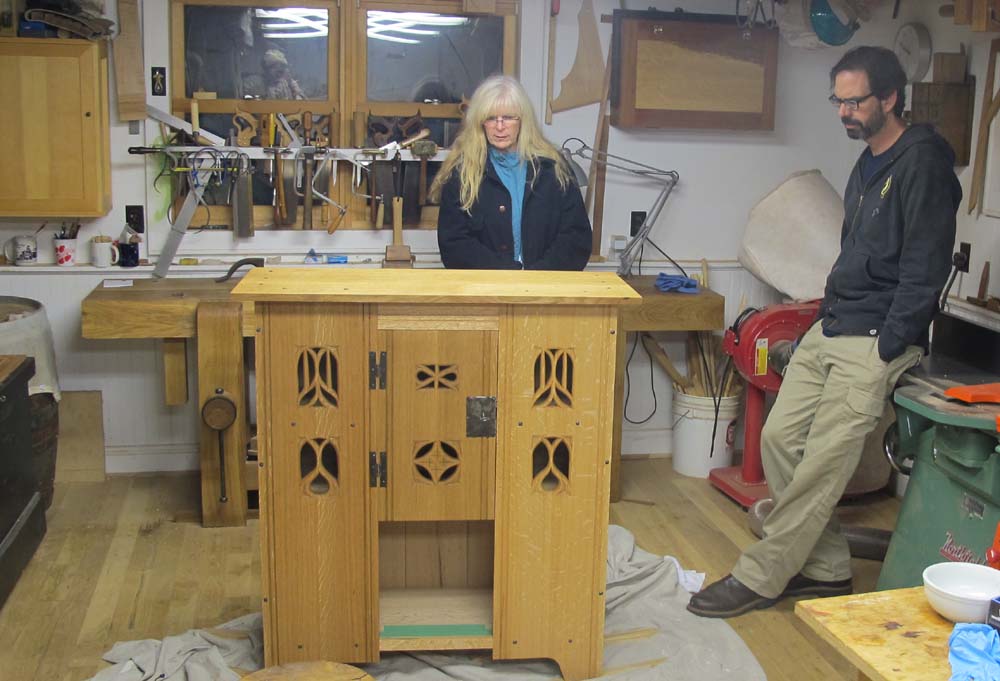
A special treat was to be a fly on the wall as Chris and Megan Fitzpatrick discussed an upcoming PopWood article (November, I believe) about a cabinet with some spectacular Gothic tracery Chris is finishing.

And I cannot deny the little tremor of pleasure I experienced when noting this image.
Recently I was asked if I was ready to wash my hands of the Studley project, both the manuscript for the book VIRTUOSO and the upcoming Studley exhibit next May. I had to think for a minute, because the truth is I am a bit weary from the pace of working around the homestead, wrapping up Roubo 2, and completing the Studley manuscript and making all the plans and arrangements for the exhibit.
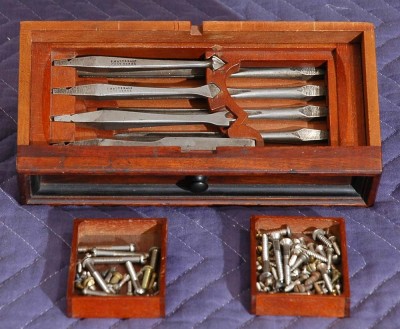
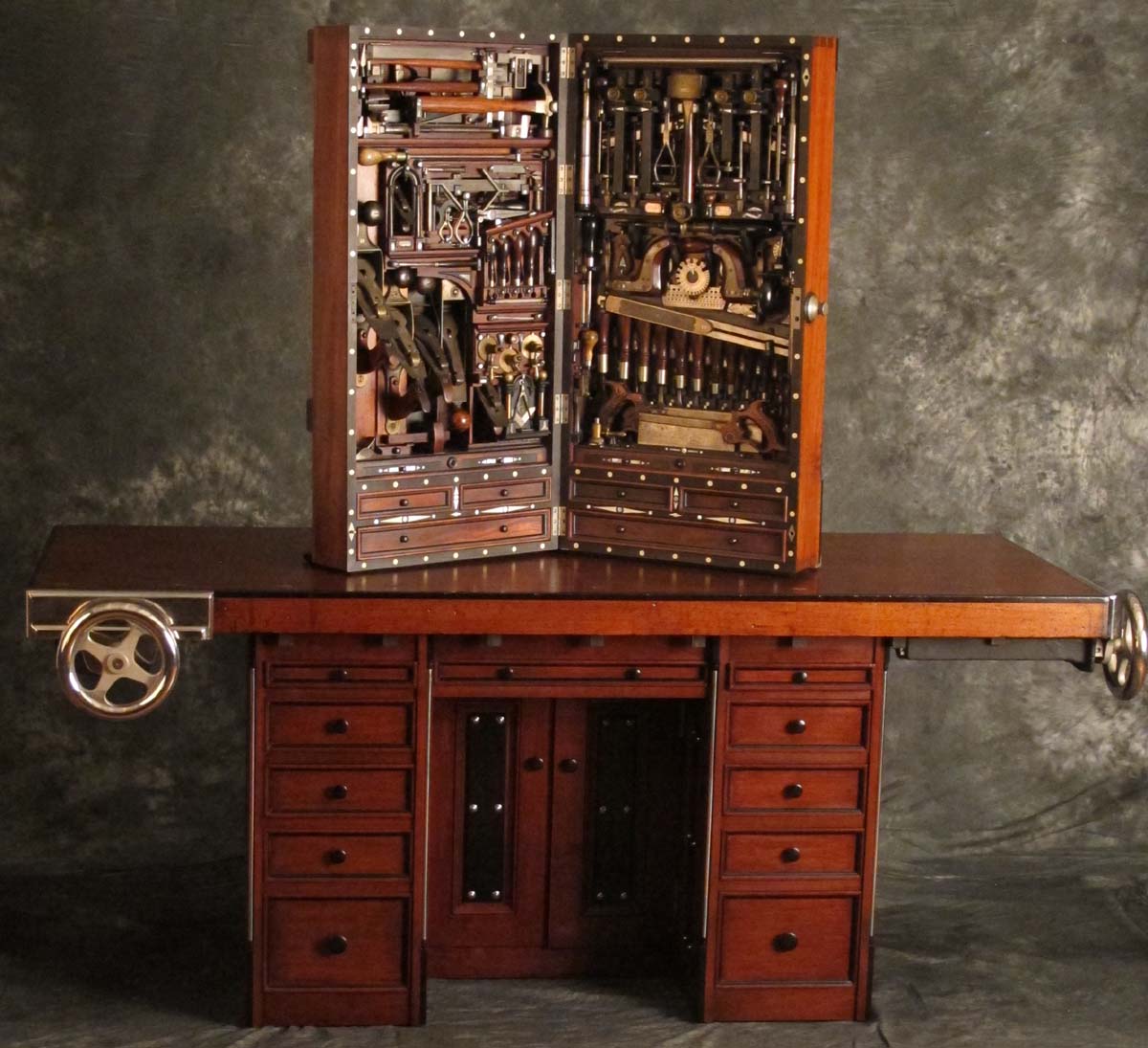
But no, I am not tired of H.O. Studley. How can you get tired of contemplating and exploring things like this?
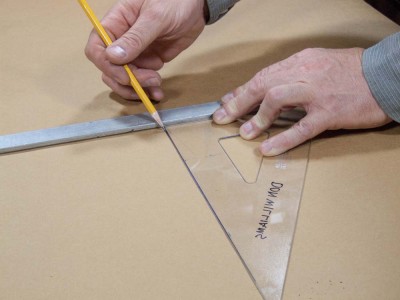
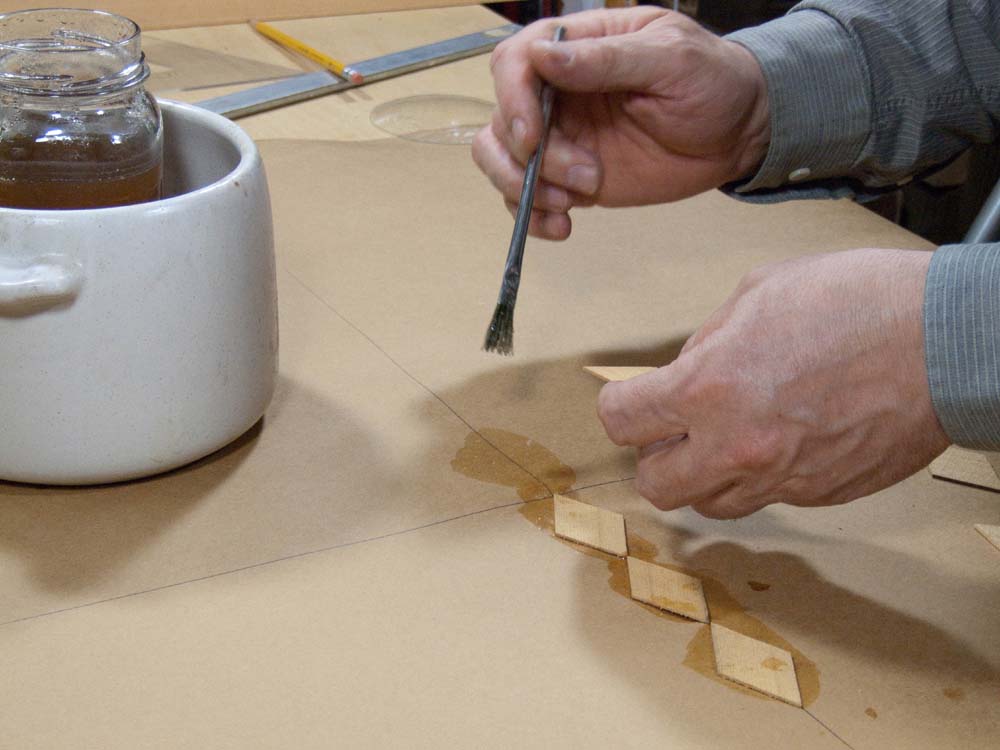
Once you have cut an adequate number of equilateral parallelogram lozenges, take a piece of heavy paper larger than the finished field onto which you will create the pattern field from the lozenges as has been illustrated previously.
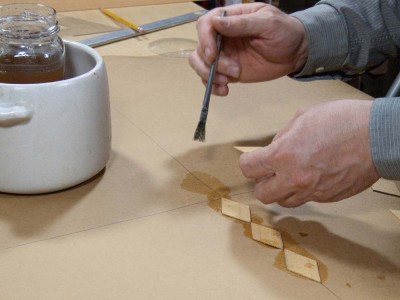
Mark the center lines of the pattern on both axis and the outer perimeter of the pattern field (one helpful step is to draw all the lines entirely to the edges of the paper; it will come back to assist you very soon!) begin to assemble and glue down the pattern with hot hide glue
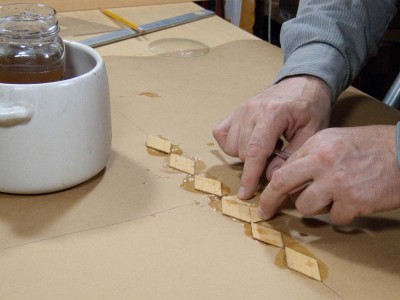
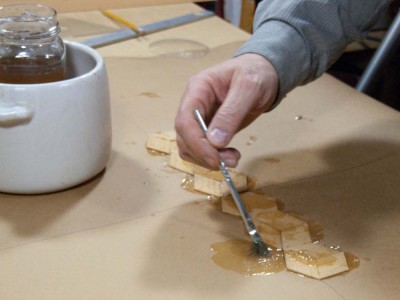
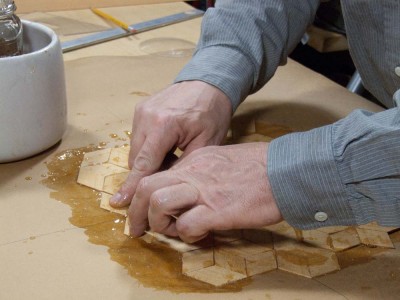
Take care to periodically check the pattern against the pattern system making sure to always get the correct orientation of each lozenge. Otherwise there will be wails of anguish when you discover something out of proper orientation, resulting in aggravation, discouragement, and perhaps abandonment of the technique. That would be unfortunate as it is such a powerful and useful design tool.
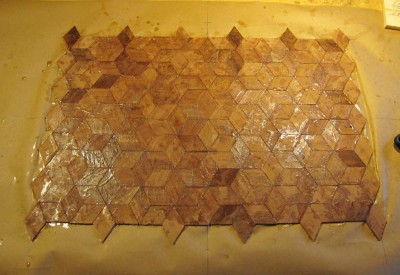
When you get enough lozenges glued down so that the entire pattern field is obscured, set it aside and let the glue harden prior to the next step of trimming the field.














Recent Comments