
Recently I ran into someone who expressed dismay that the upcoming exhibit Henry O.Studley Tool Cabinet and Workbench was sold out.
“Where did you get that idea?” I asked.
“I tried going in to buy mine on the second day they were available and had no luck, so I figured it was sold out.” Convinced of the unavailability he had never returned to see the status of the exhibit or its web site.
I reassured him that this was an artifact of the total meltdown of the web site in the first hour of tickets going on sale several months ago. If he returns to the site, all is well and functional.
It occurred to me that others might be thinking the same thing, hence this post to remind everyone.
The truth is there are still plenty of tickets available, and you can order them now. I do not have the spreadsheet in front of me right now, but I am pretty sure there are still time slots that could accommodate a woodworker’s guild or any other groups who wanted to purchase tickets and make it a shared experience.
Spread the word.
If you have any questions, drop me a line at the contact page of this site. And make sure to check out the goings-on for Handworks, occurring at the same time and only twenty minutes away.

Our final day for the recent Boullework marquetry workshop included wrapping up our sawing,
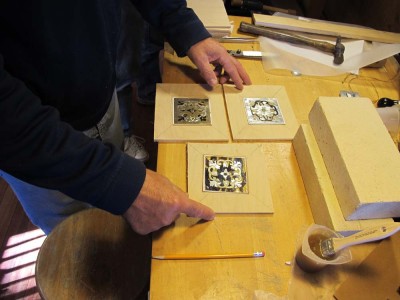
assembling the finished patterns,
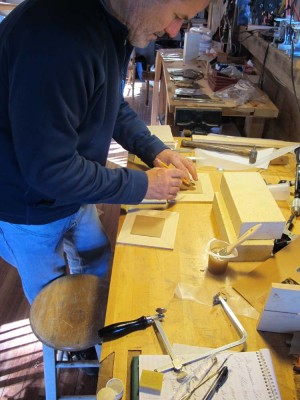
and gluing them down to supports.
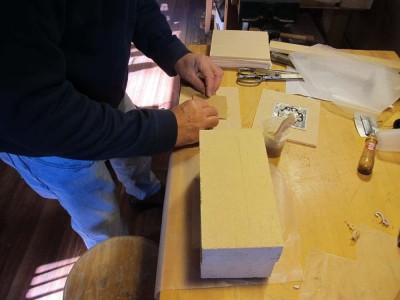
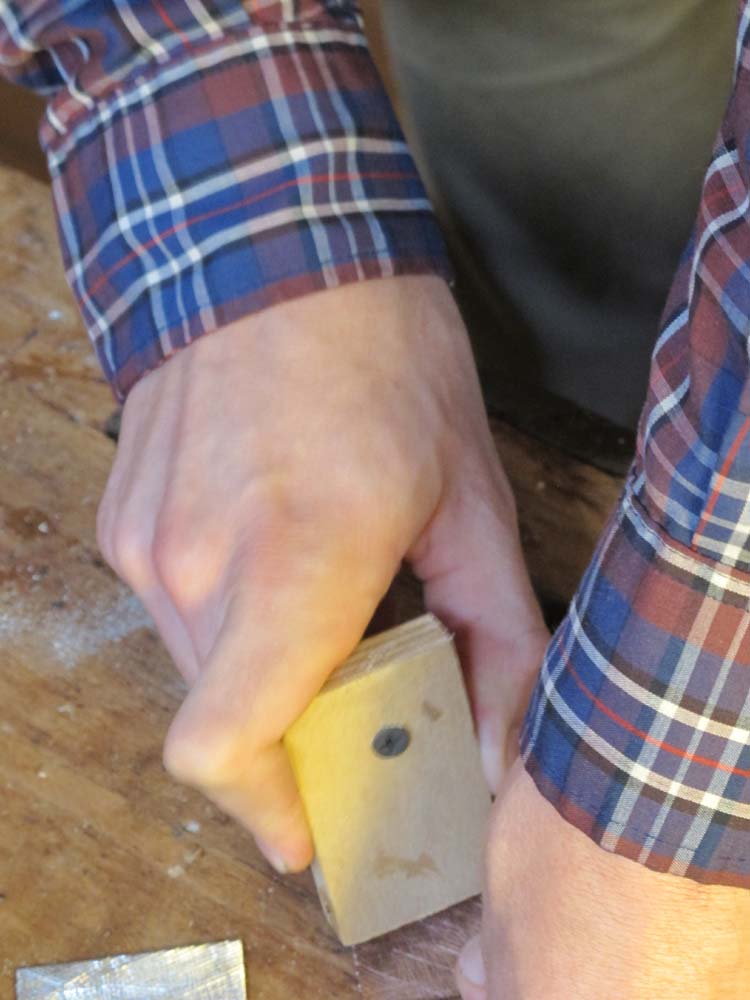
For small compositions I am a big believer in using bricks as free-floating dead weights to hold them steady while the glue sets. I think these will be used as project starters in the future.
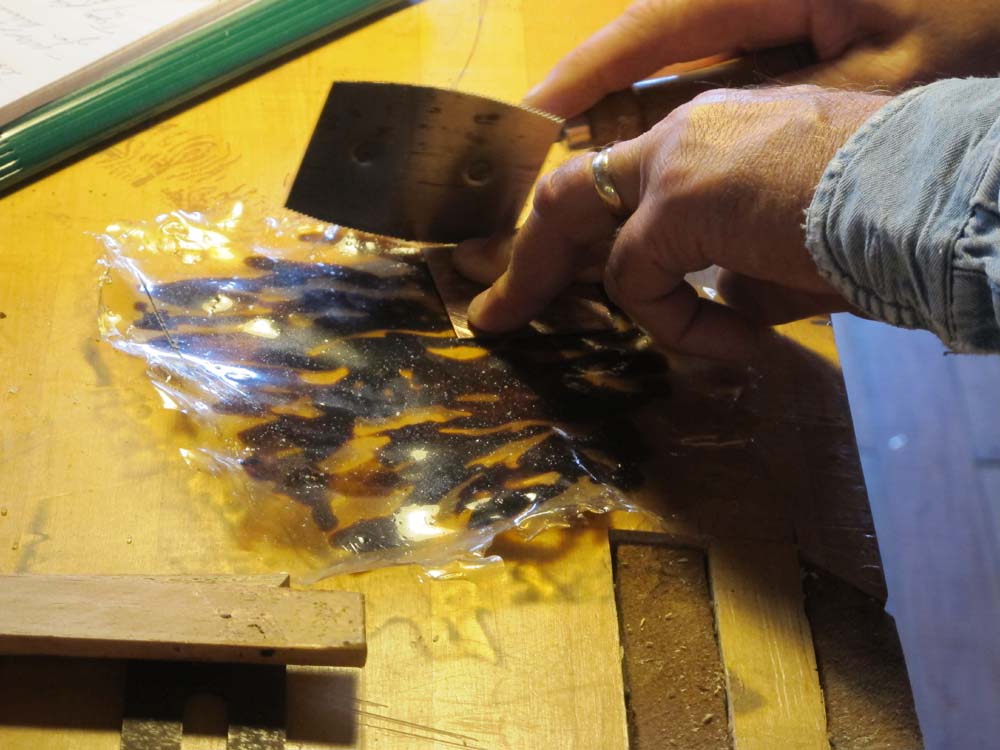
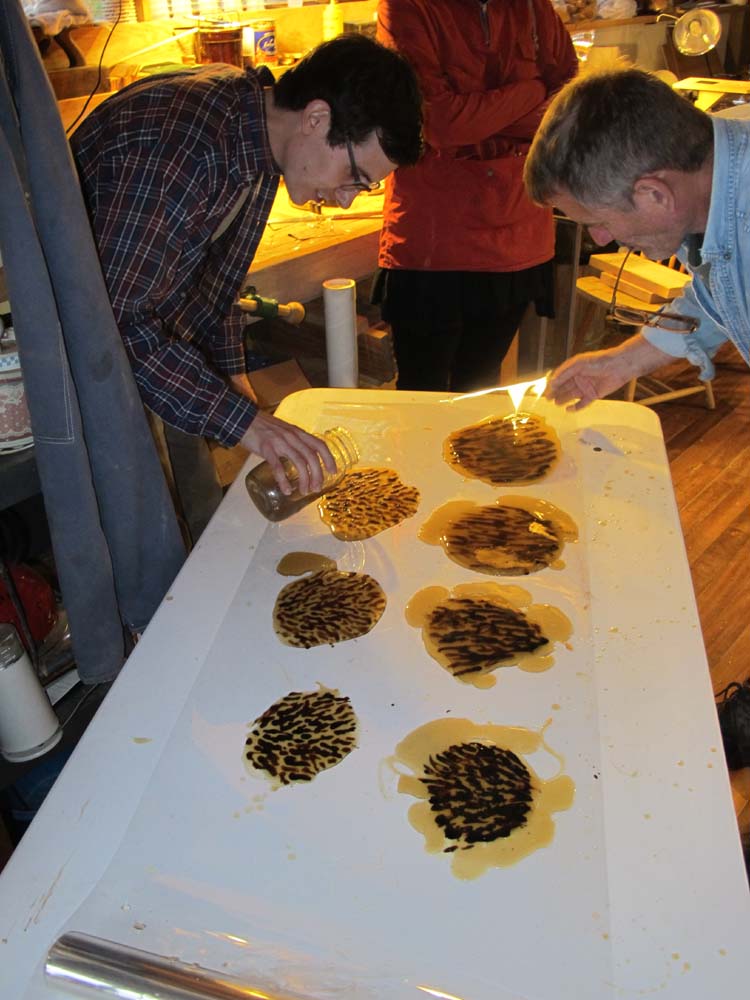
The students also had time to examine their tordonshell they made on the first day, which had air dried until the end of the second day and then spent the final night and day in the dessication chamber. Thus they had their own pieces to take with them, along with the leftovers from the pieces I’d made for the workshop. They’ve got plenty of tordonshell to experiment with several new projects.
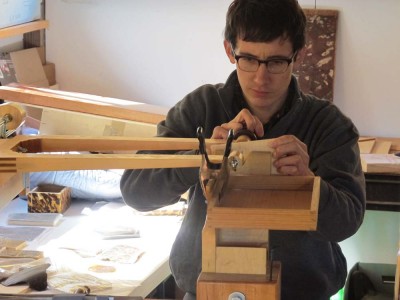
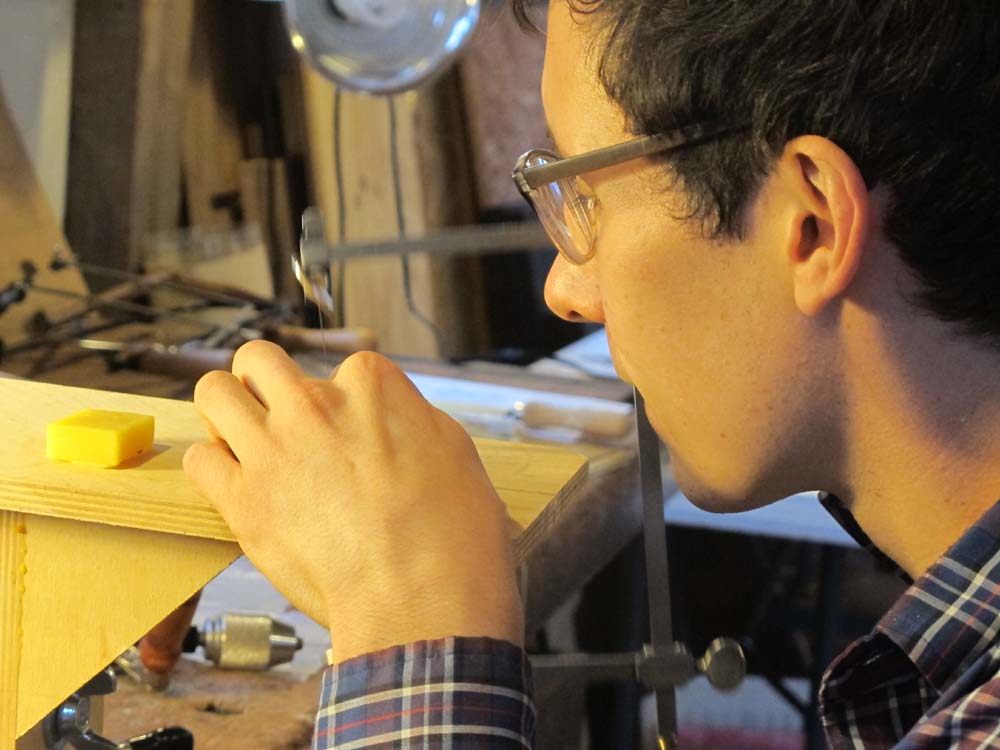
I also allowed them to practice with two important tools. First, the chevalet,

and second, the Knew Concepts precision saw (full disclosure — I often collaborate with Knew to give my two cents about developing new tools and uses for those tools).
A grand time was had by all, and I enjoyed it immensely. I look forward to the next time I teach this workshop.
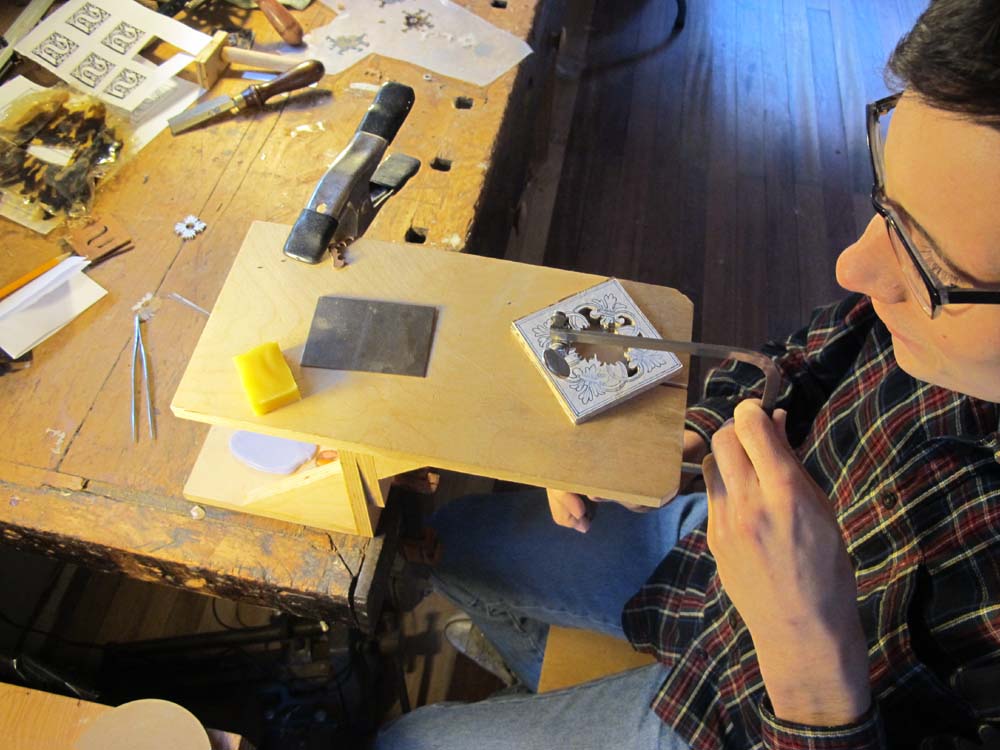
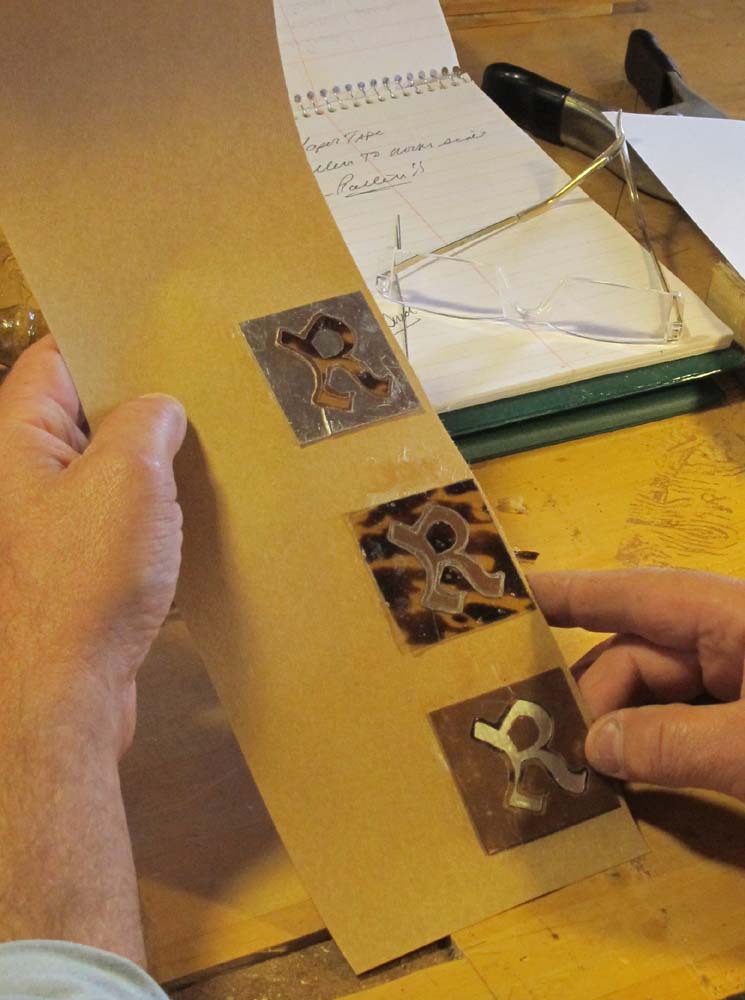
We hit the ground running at about 9 this morning with the review of Boulle-work, and then assembled packets for the first sawing exercise, whose only real function was to get newcomers comfortable with the tool and technique of sawing at this scale. Boullework is essentially a fret-sawing technique, and I started everyone off with a copy of their initial to saw in three parts; copper, pewter, and tordonshell.
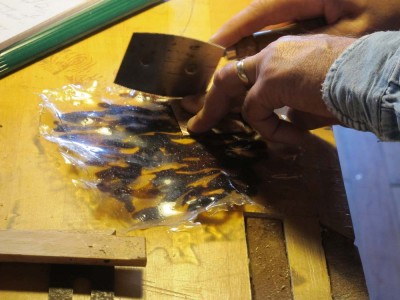
The first step was to cut all the pieces in the packet the same size,
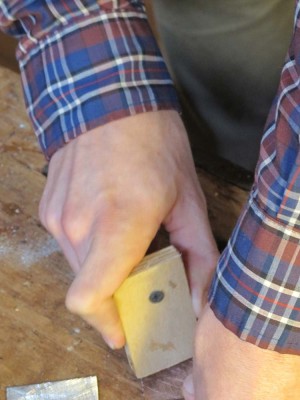
then score one face of the metal pieces to serve as a cleaner gluing surface. This meant that all the work was being done in a mirrored pattern to the final workpiece.
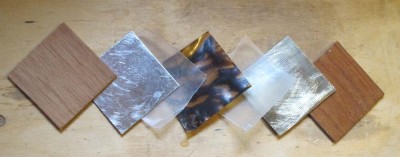
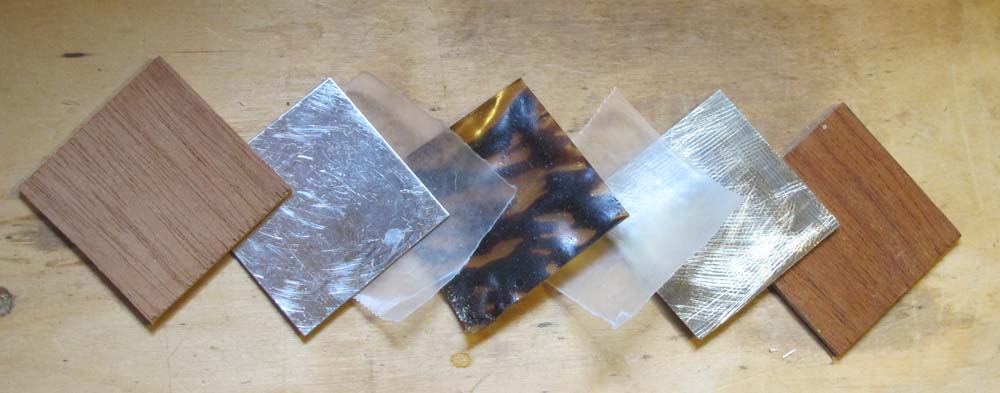
We assembled the packets with 1/8″ plywood as the bottom face, followed by the copper layer, followed by a piece of waxed paper (as a sawing lubricant), then the piece of tordonshell followed by another piece of waxed paper, then the pewter layer and finally another 1/8″ plywood face.
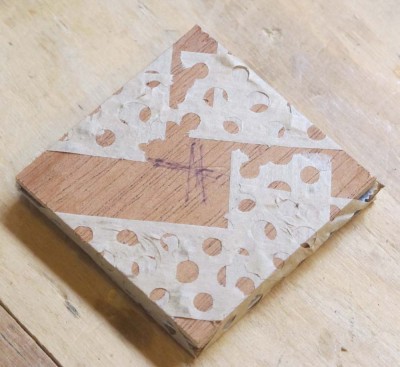
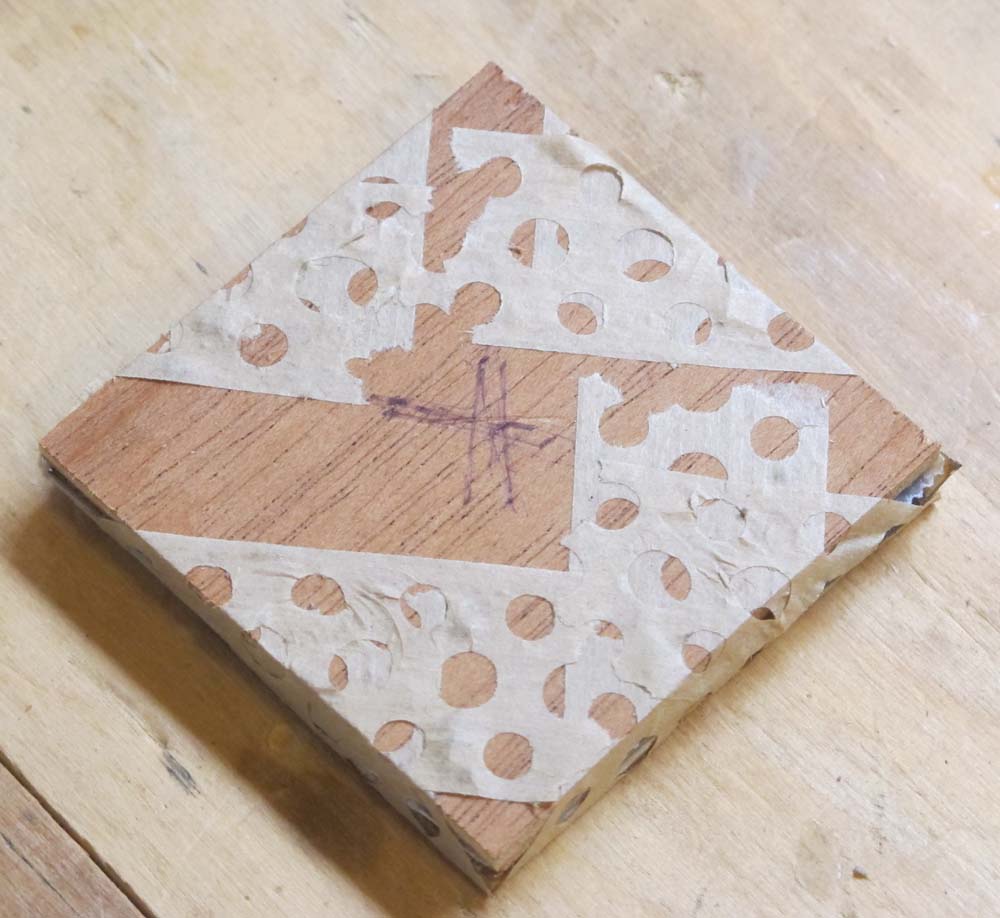
Veneer tape wrapped around the corners held the packet together, and the pattern was glued to the face of the plywood with stick glue.
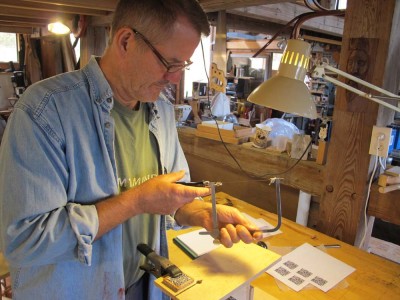
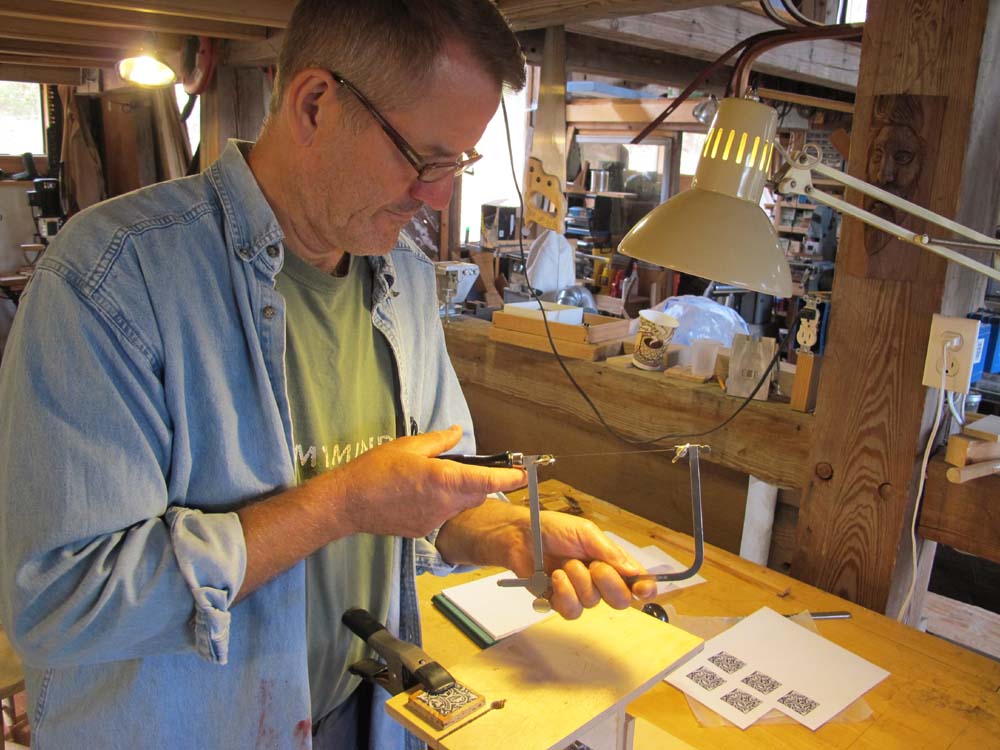
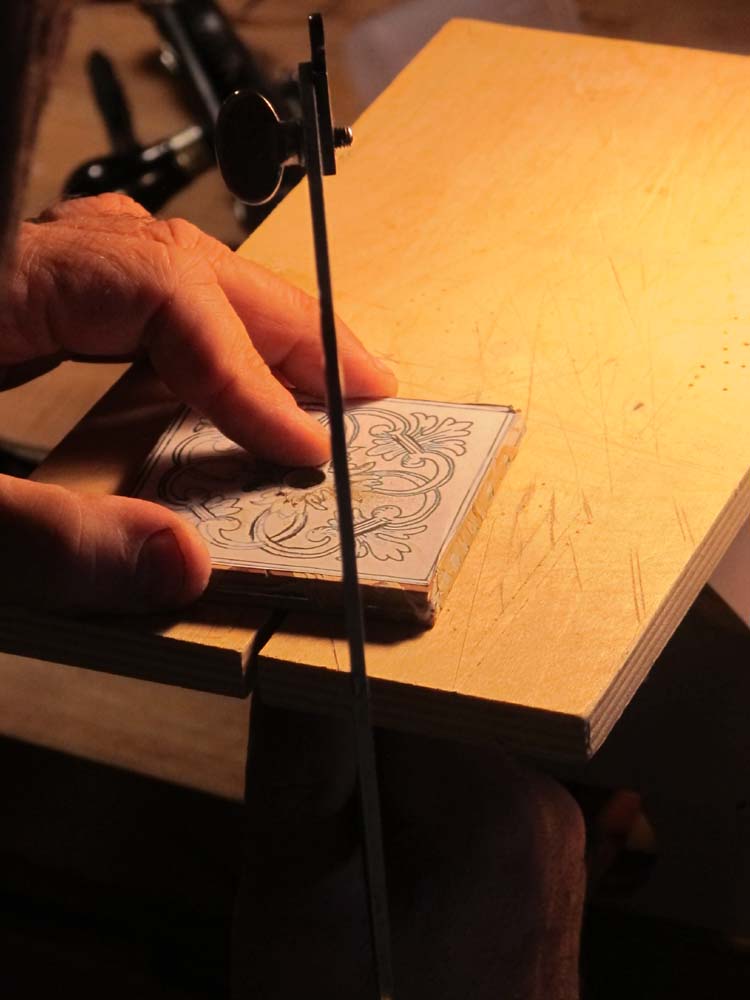
Everyone used the same type of saw, a traditional German jeweler’s saw, fitted with 6/0 blades.
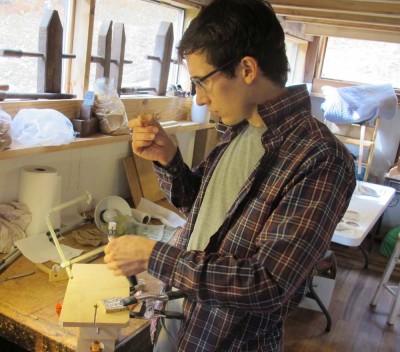
Getting the teeth in the right orientation was a challenge, given the near-microscopic size of them. I prefer these tiny blades as they allow for more detailed cutting, and leave such a tiny kerf.
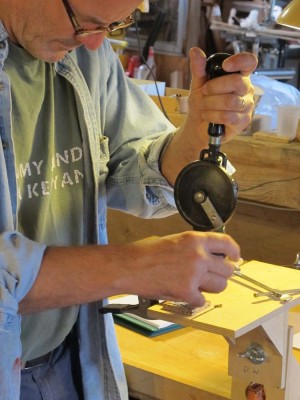
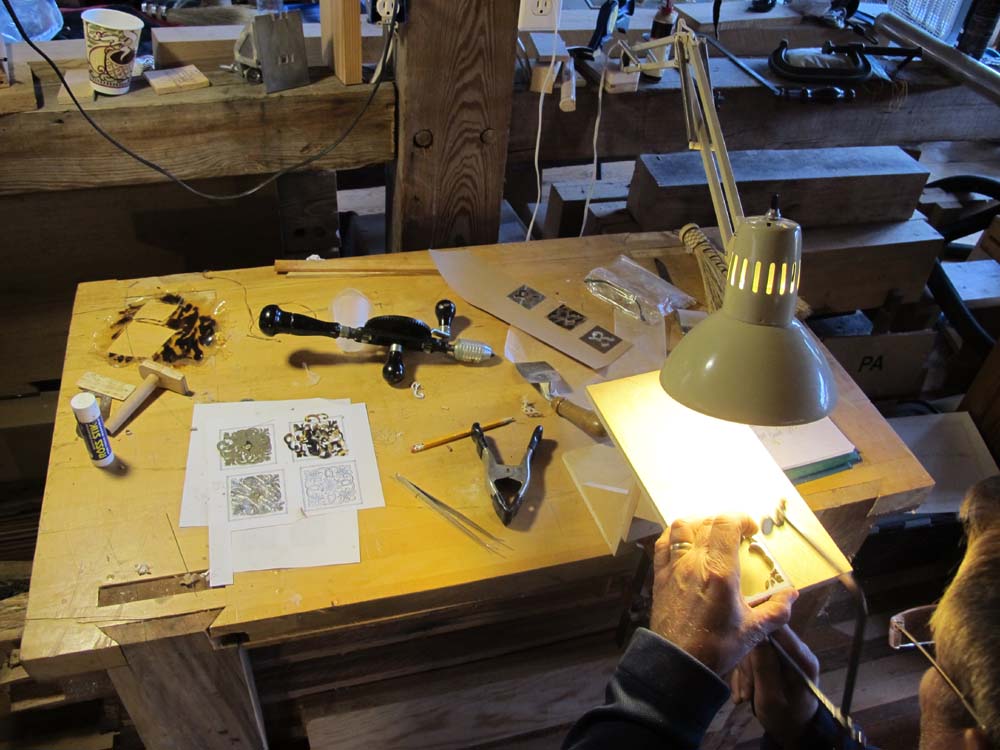
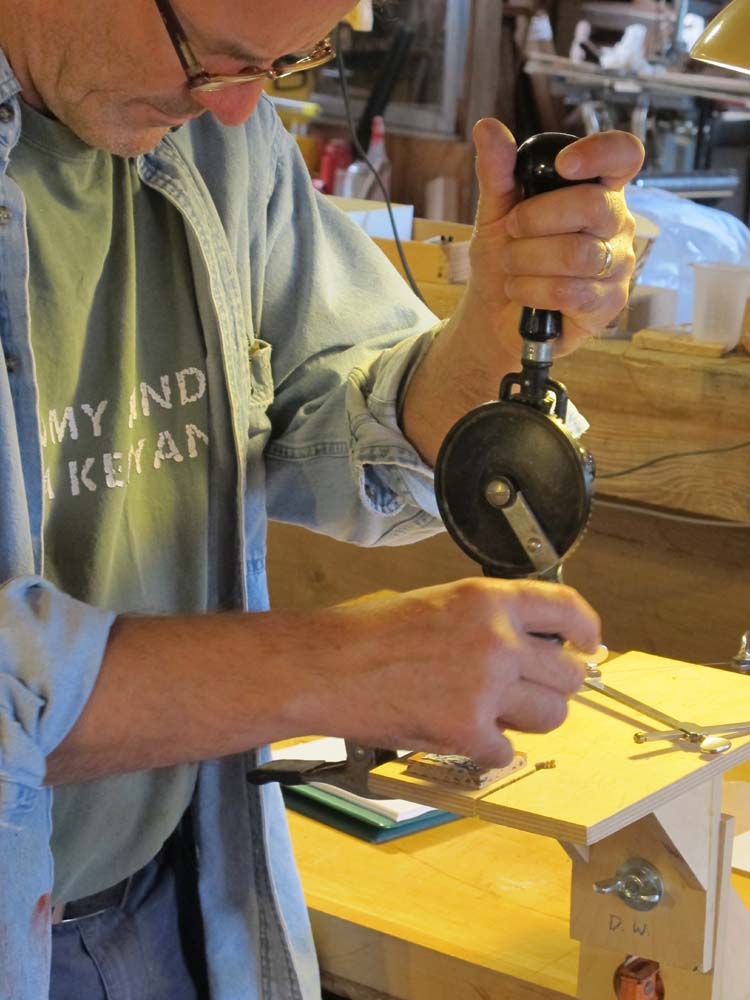
A hole drilled with an eggbeater drill gave entre’ for the blade to be inserted through the packet,
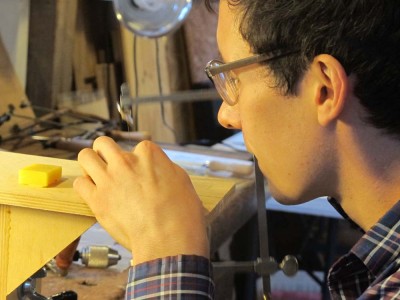
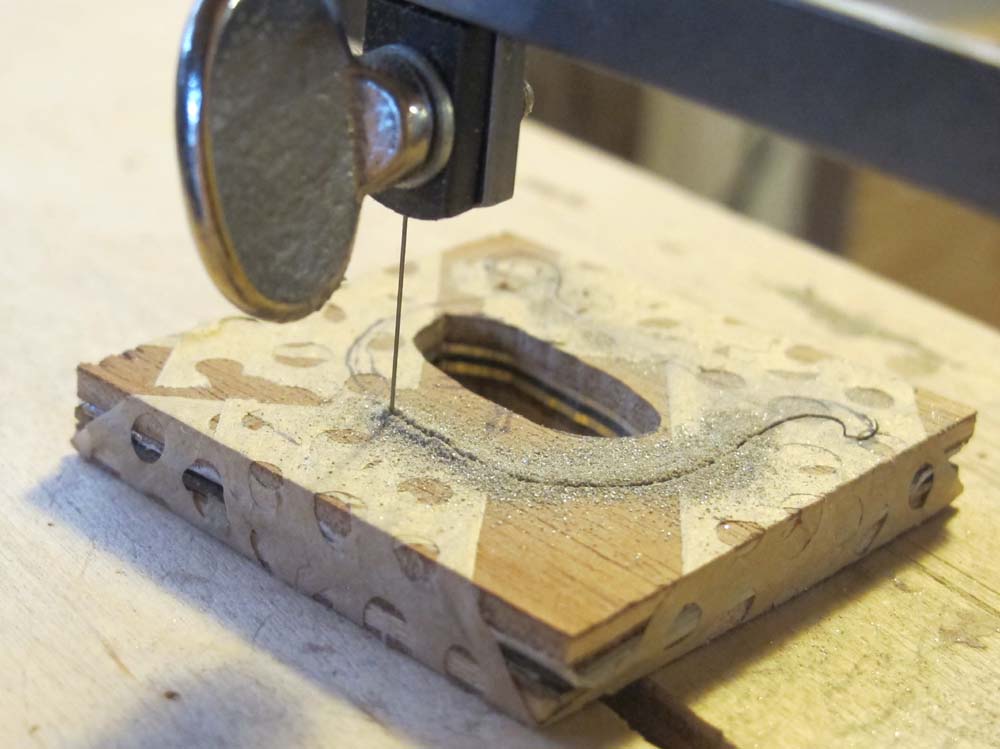
and sawing could begin.
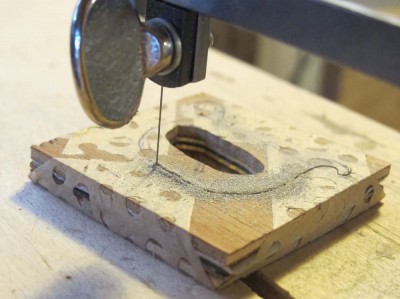
The scale of the sawing is tiny, and so is the saw dust.
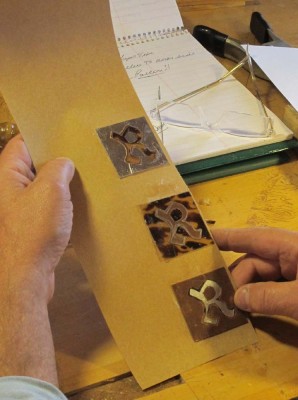
The results of this introductory exercise was gratifying.
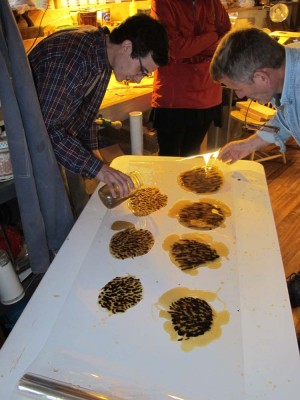
We then made some tordonshell, with everyone getting their hand in the process.
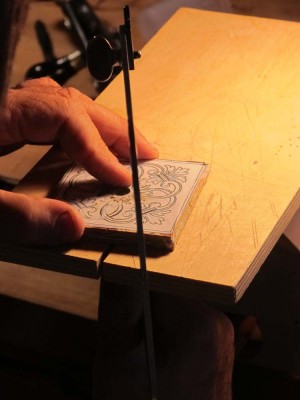
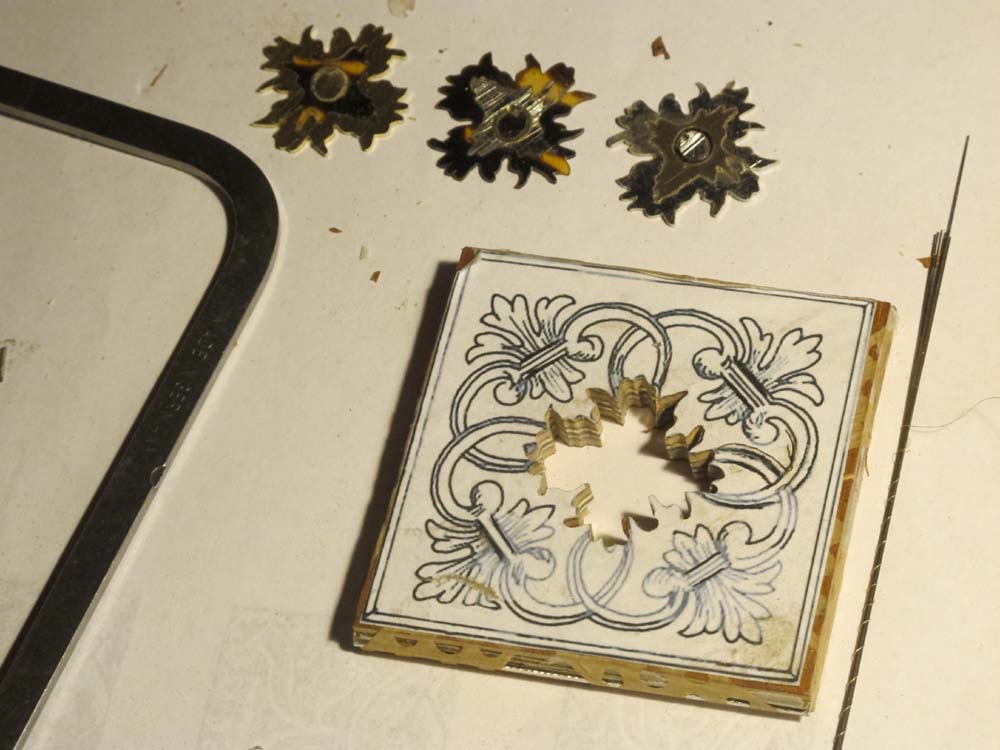
The second, larger packet was assembled, and the sawing began on the more complex pattern.
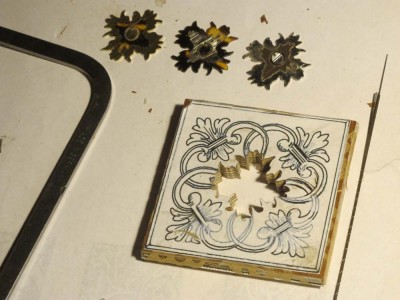
Here is how far we got today. More tomorrow.
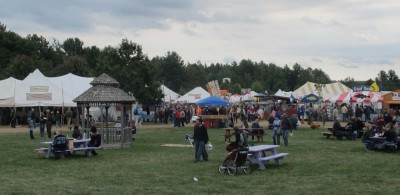
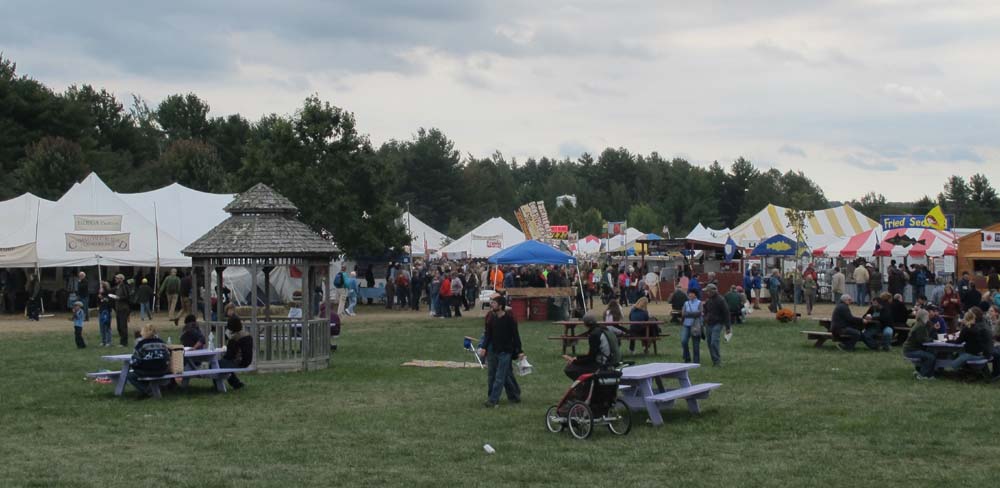
A week ago Saturday we attended the Maine Organic Farmer’s and Grower’s Association annual “Common Ground Country Fair,” a weird amalgam of passionate foodies, sensible homesteading and rural stewardship, self absorbed yuppie/hippie types who likely shed their costumes and returned to their Ivy-League lives by Monday (I can only hope they didn’t stay that way in perpetuity, although I don’t know what those old balding men will do with their pony-tails), skilled craftsmen, pagan mythology, eco-hysterics, some pretty cool gadgeteering, and some stuff that simply defied description.
And of course, fabulous food. And friends.
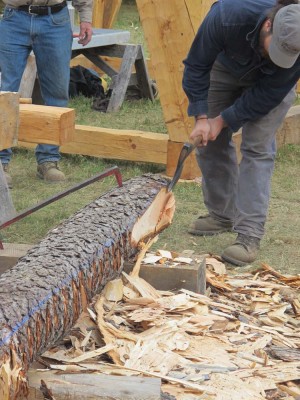
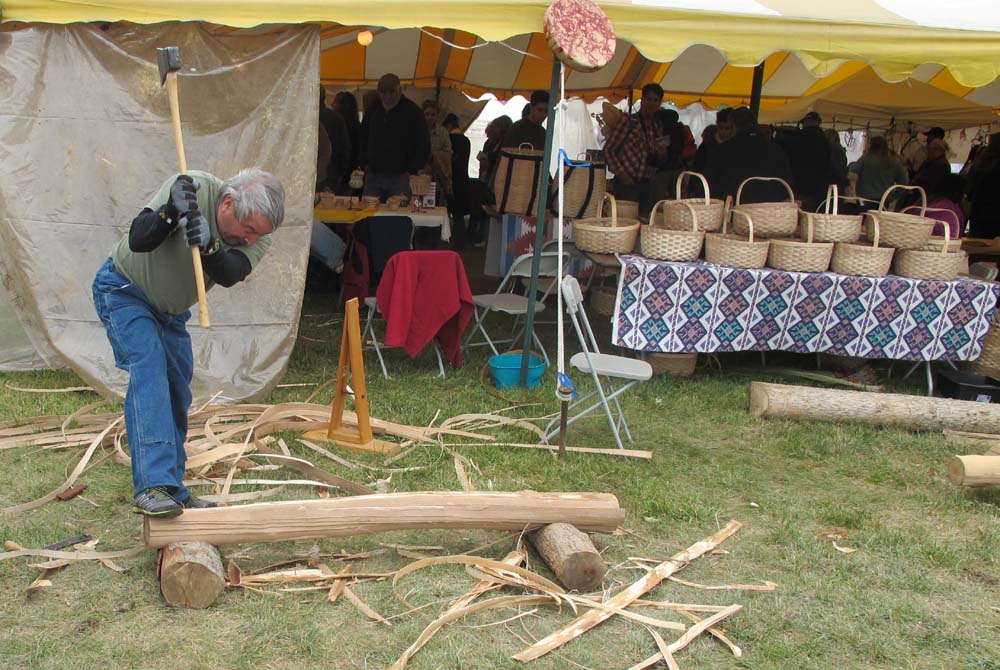
I especially enjoyed the skilled trades and crafts on display and being demonstrated, including hewing,
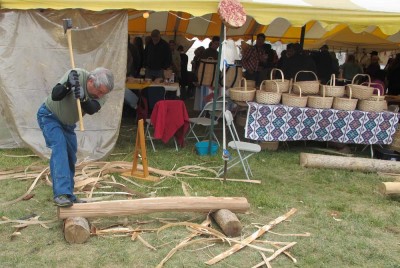
ash sapling peeling for basketry,
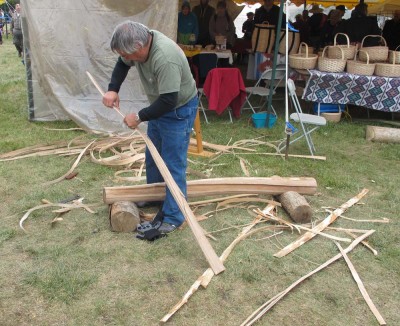
furniture making, woodlot and forestry managing,
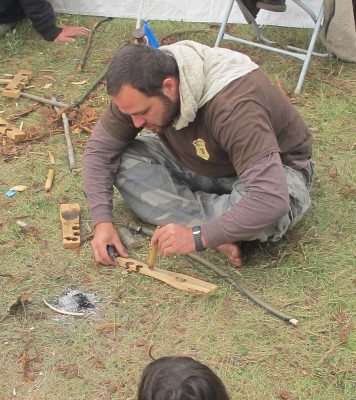
a huge range of primitive skills like starting a fire with a bowsaw setup and making archery bows (I wanted to take the fellow’s drawknife and sharpen it proper, because he was basically chewing his way through the wood), spectacular sheep dog exercises,
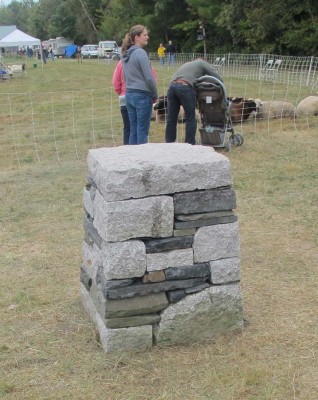
stone carving humble,
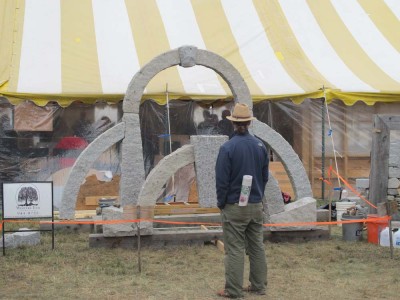
and spectacular, and a whole bunch more.
It definitely supplied this year’s quota of human contact, although that one gal with the black make-up and a hardware store’s worth of accouterments in/on/through her face makes me wonder about the human part. I really wish I had taken a picture. I simply do not understand the appeal of self mutilation.
It was pretty clear that the patron saint for the event was Karl Marx, and the omnipresent hectoring of the unctuous enviros made me recall this observation of CS Lewis.
Of all tyrannies, a tyranny sincerely exercised for the good of its victims may be the most oppressive. It would be better to live under robber barons than under omnipotent moral busybodies. The robber baron’s cruelty may sometimes sleep, his cupidity may at some point be satiated; but those who torment us for our own good will torment us without end for they do so with the approval of their own conscience.
Still, a grand time was had! I only wish I had yelled out, “Hooray Monsanto!” or “Fracking now!” just to see the tremors sweep through the crowds.

The second stop on the New England Tour 2014 was the homestead of Joshua and Julia and Eden, and what a delightful stop it was. Aside from the fellowship we encountered an overload of learning and experiencing
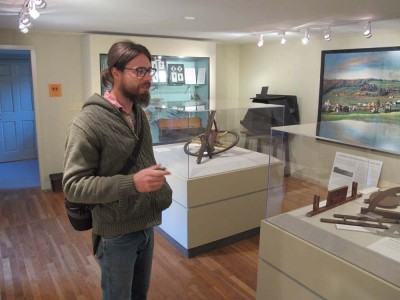
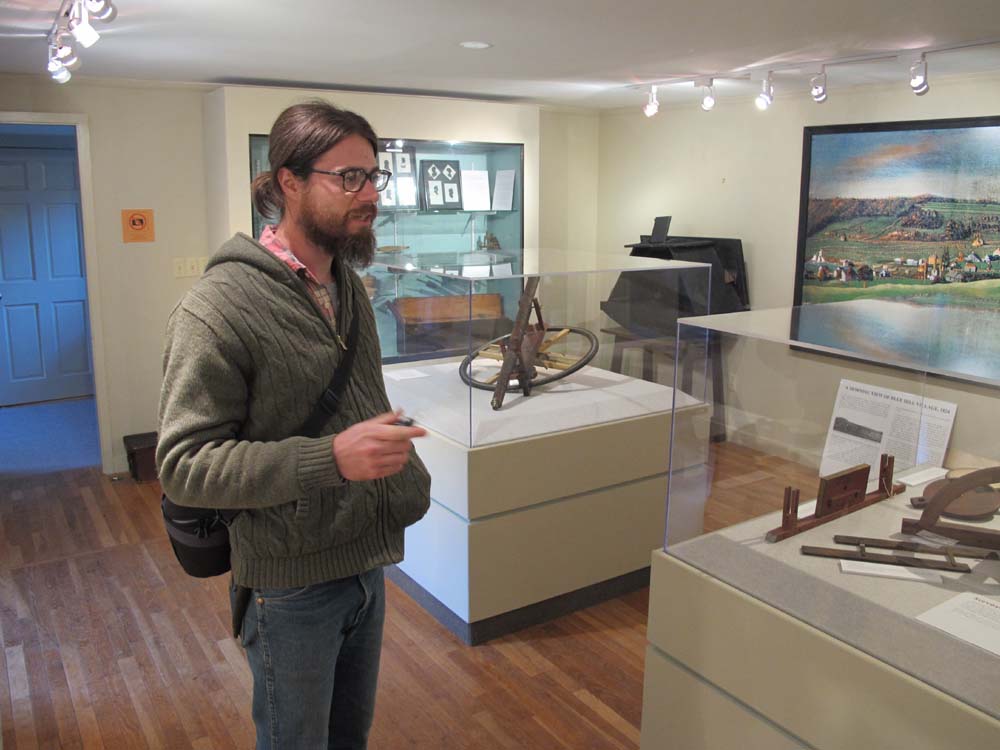
On our way to dinner the first evening we stopped by the Jonathan Fisher House museum, where Joshua is engaging in a lot of important research and recreation for his upcoming book on this rural Maine polymath. There was simply too much to see in such a short time, and I am eagerly awaiting the results of Joshua’s research on this remarkable man who was part parson and part inventive genius furniture maker.
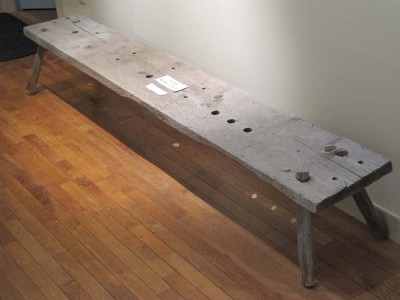
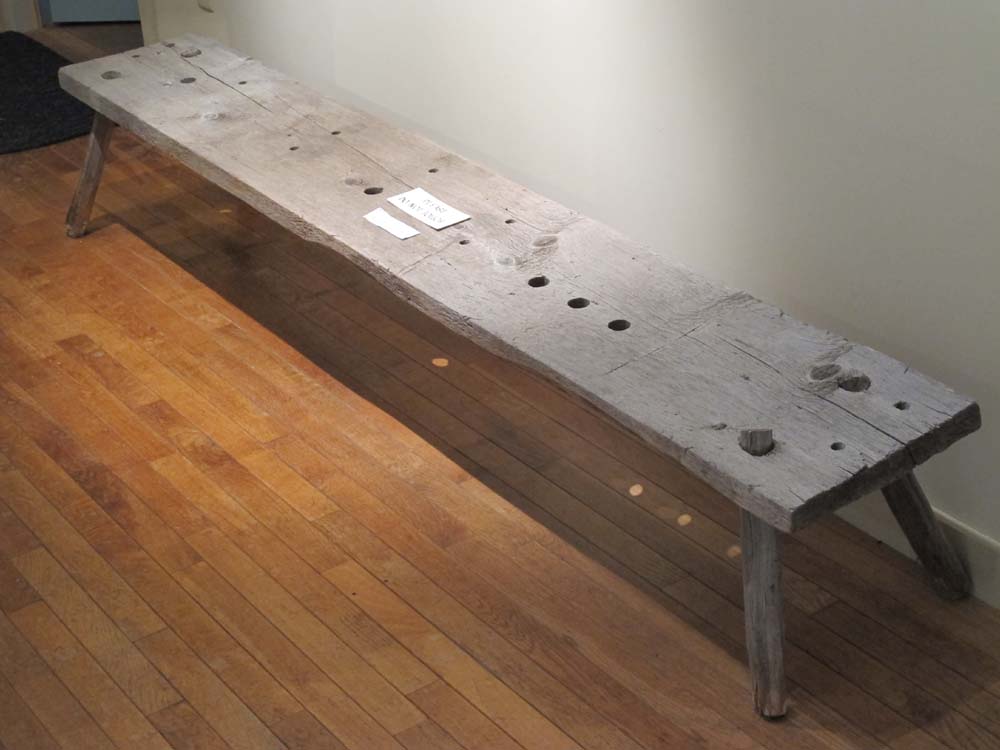
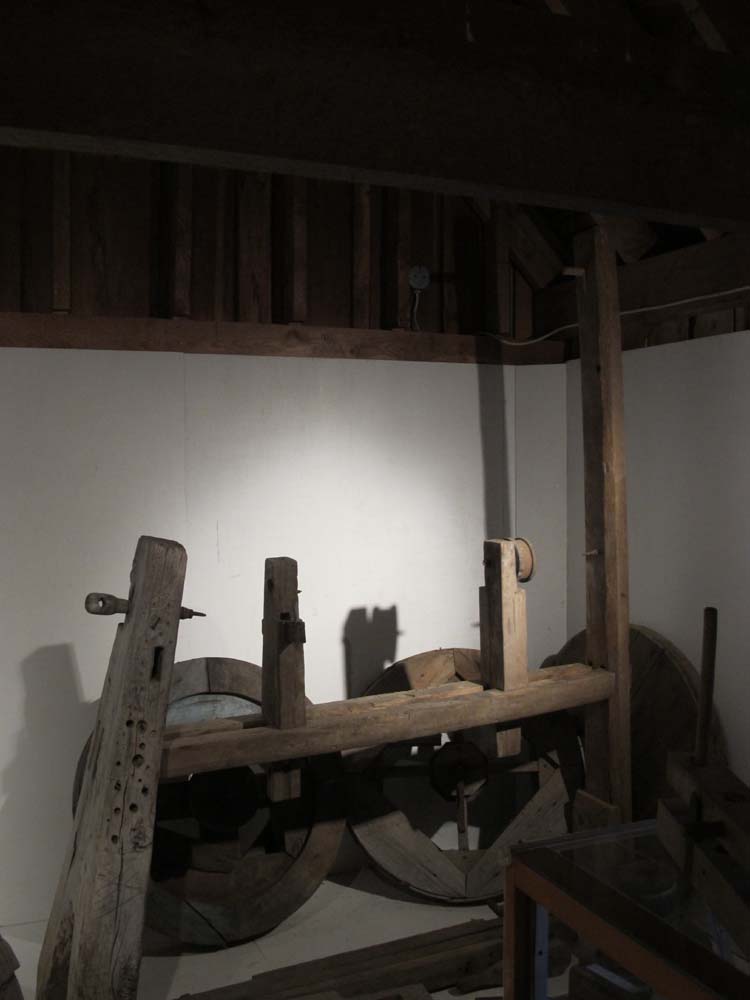
Of course one notable item in the collection is this Roman style workbench,
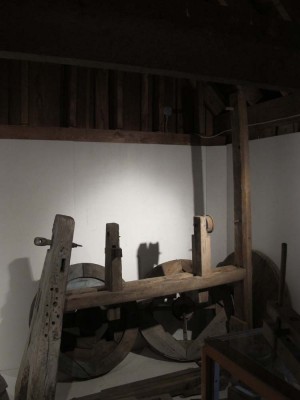
while another is the windmill powered lathe that Joshua is currently reassembling after two centuries of non-use.
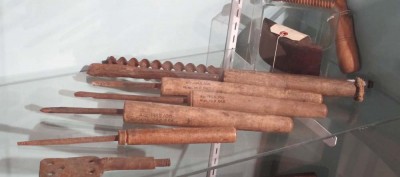
Miraculously many of the original turning gouges are still in the collection.
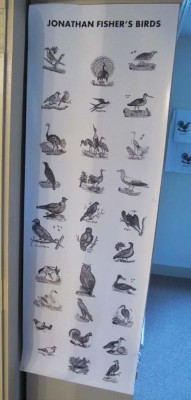
Fisher was many things including an accomplished artist, as these prints from his woodcuts will attest. I fully expect Joshua to paint a compelling picture of rural inventiveness and creativity from the Maine frontier of two hundred years ago.
This year’s just-completed whirlwind blitz through New England began with a day of photographing Ben’s bench in central Rhode Island.
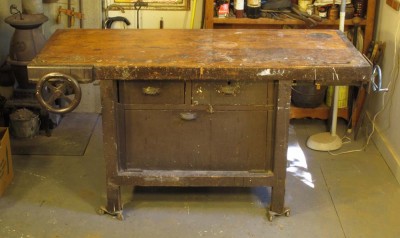
It turns out that Justin, the son of some dear friends here in the mountains, knew a guy with a piano maker’s workbench. The upcoming book on HO Studley and his tool cabinet and workbench will include a gallery of similar benches and vises, and Ben’s was certainly worthy of inclusion.
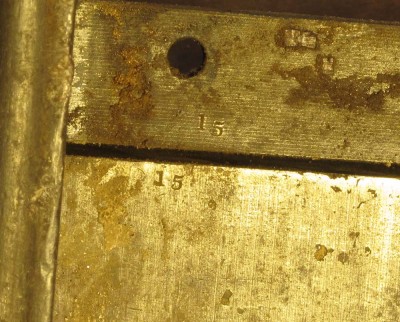
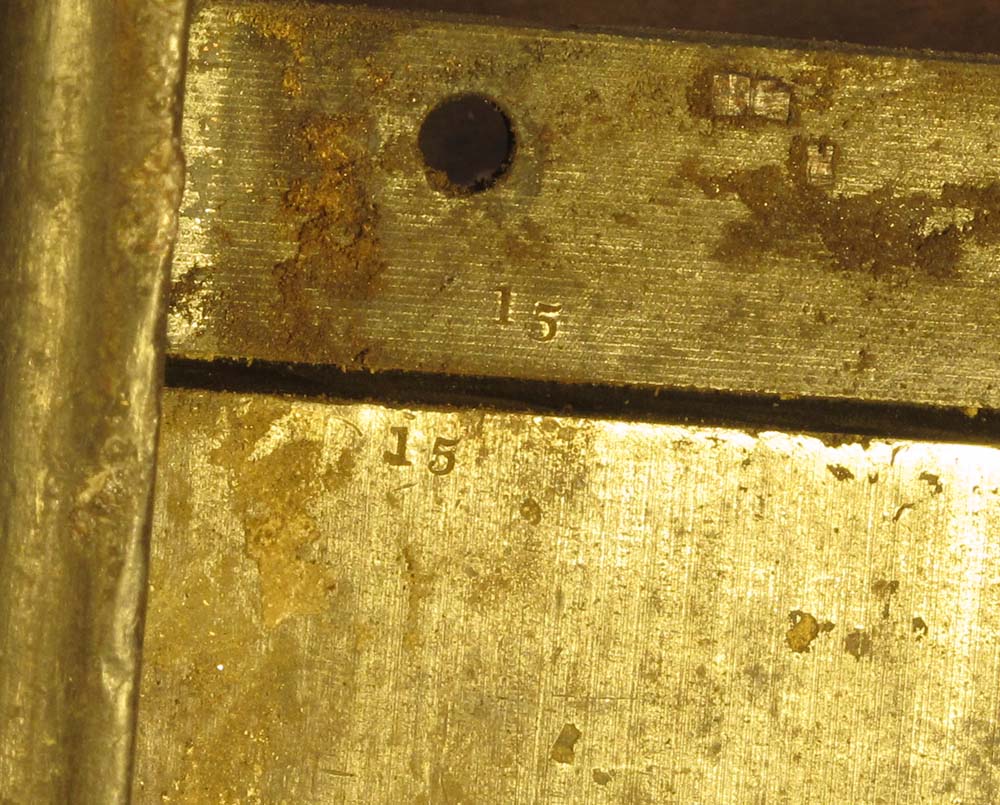
The bench featured a number of exciting revelations, not the least of which was the number “15” stamped perfectly on three of the adjacent parts. I can only conclude that there are (or were) at least 14 other units of the same manufacture somewhere.
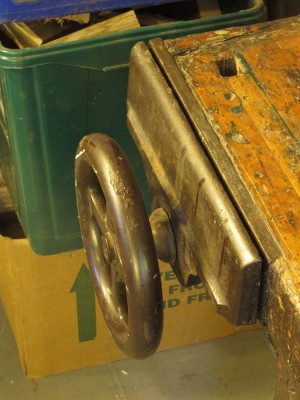
What was best about the visit was that Ben’s bench is still a working tool to this day. He was apologetic about some of the accretions, but I was thrilled to see it still helping a guy make a living.
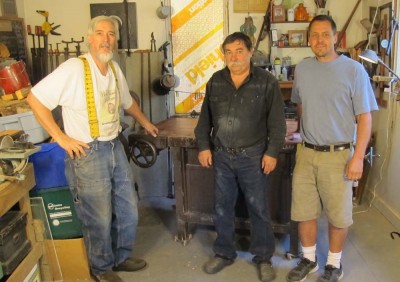
The motley crew, with Ben in the center and Justin on the right.
Thanks to the generosity of attendee BL I can post a number of images from the WIA Saturday afternoon session on gold leaf.
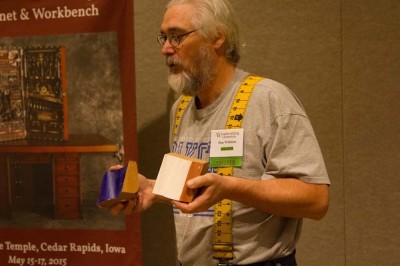
The preparation for either perfect polychrome or gold leafing is essentially the same, requiring good gesso and application techniques, along with attentive treatment of the surface at every step as each successive step amplifies the quality f the previous step like a blinding spotlight.
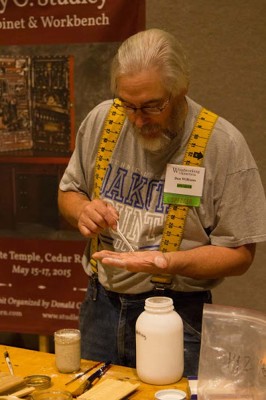
I test the first application of dilute gesso by making a drop in my hand; I want it to look like skim milk.
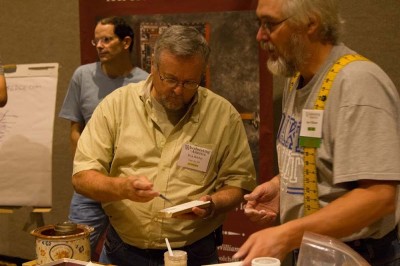
The really great things about the small audience were the ability of everyone to get really close to see what was going on, and the chance for almost everyone to try their hand at applying good gesso so they would know what it looked and acted like on the brush.
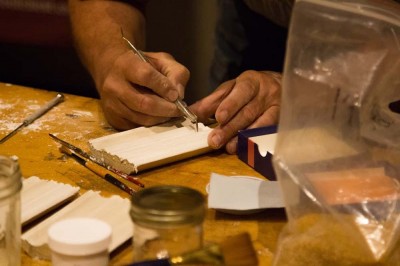
Once the gesso is built up on top of the carving it needs to be “re-cut” or re-carved since the gesso will obscure the detail as it gets built up. I generally use dental scrapers and chisels for my re-cutting. In gilding shops of old, the re-cutter was usually the highest paid guy in the shop.
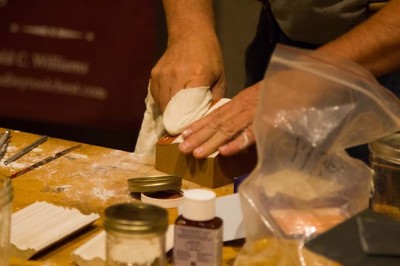
Often the final step in the gesso and bole stage is to briskly rub the surface with a piece of linen, which creates the polished base on which the gold leaf is applied.
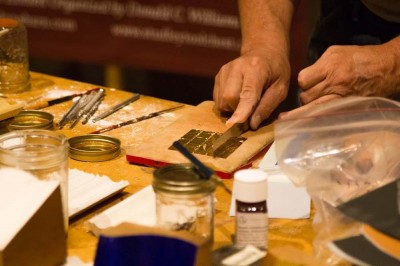
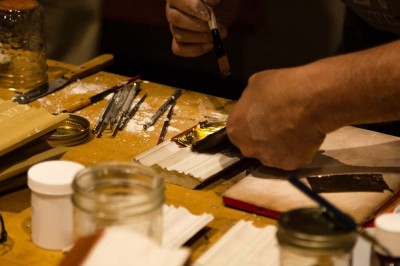
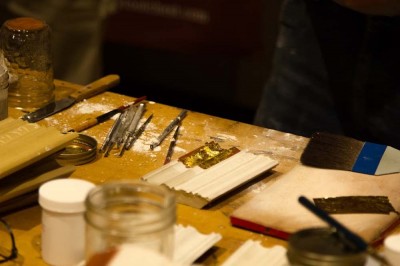
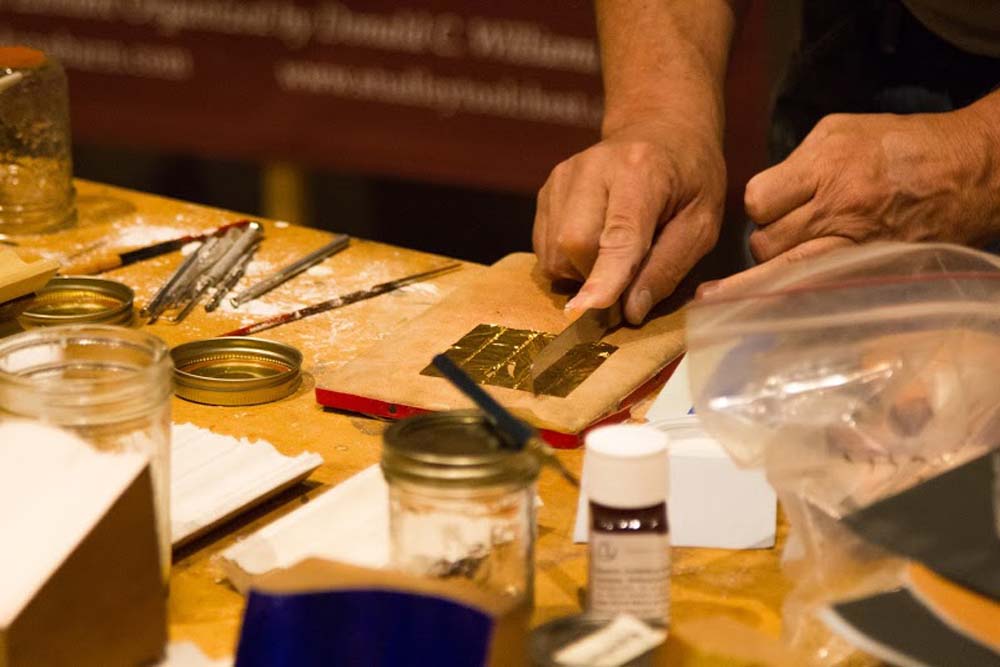
Here I am just showing the cutting of gold leaf on the gilder’s pad. Since modern gold leaf is somewhere around 1/100,000th of a inch thick, a delicate touch is required.
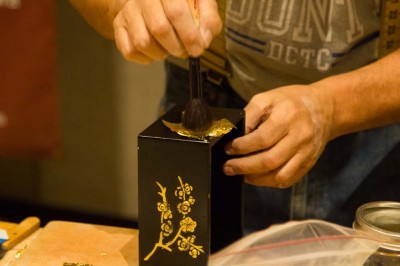
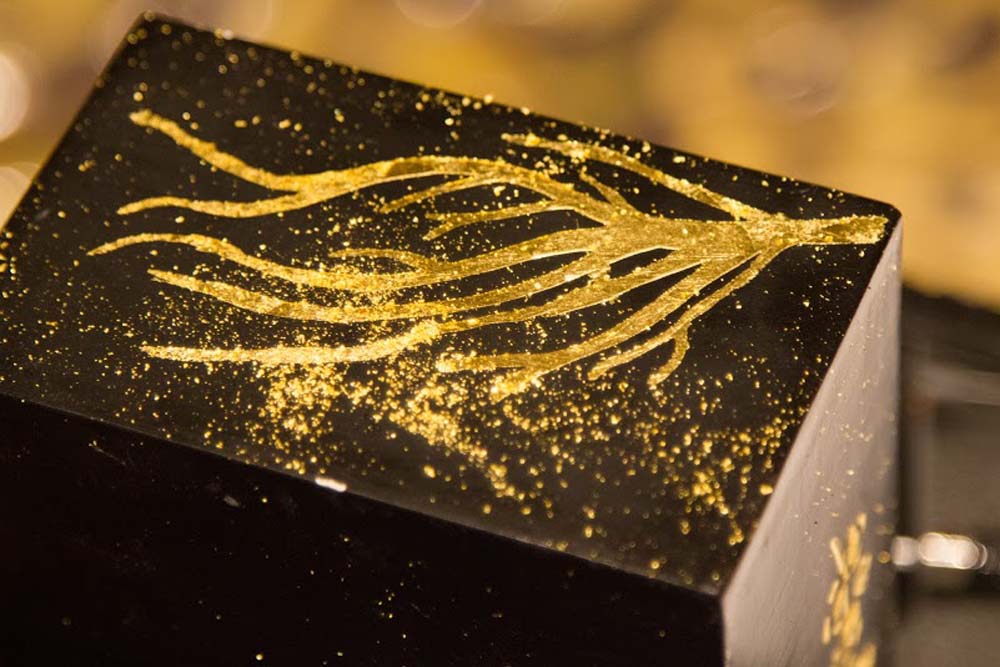
Prior to the start of the two-hour session I brushed some quick-set oil size on a painted and polished surface, and at the end of the session I laid the leaf. Here I have just set the fragile gold leaf on top of the hardening oil size and am pouncing it down.
Brushing of the leaf reveals the areas that had been sized and those which had not been sized.
Water gilding is a whole ‘nother cat. Here I had just wetted the surface with my gilder’s liquor and laid the leaf on it while it was still wet, allowing the water to draw the leaf down to the surface as it soaks into the gesso and bole.
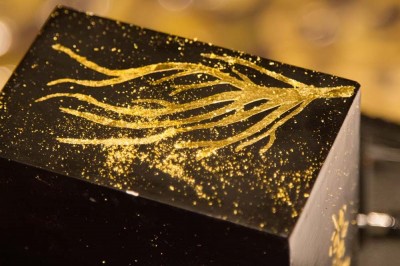
Water gilding, done.
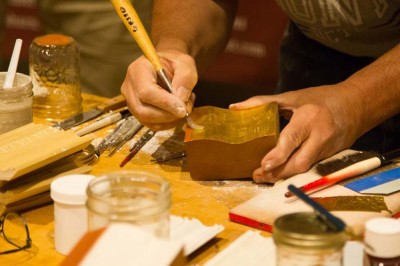
At a specific point in the process for water gilding the ground dries to the perfect point where a polished stone burnisher can be worked on the surface, bringing it to a mirrored shine.
All in all, not a bad amount of demonstrating for a complex process and only twp hours to show it.
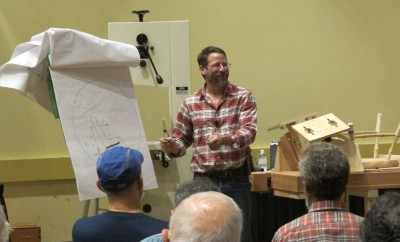
Last Saturday found me first at Peter Galbert’s talk on rocking chair design, which I found very helpful as I contemplate some efforts in this area, and merely heightened my anticipation for his up coming book
Following that I hustled to my room to set up for the gold-leafing discussion and talk, from which unfortunately I have no pictures as I forgot to ask anyone to take pictures on my camera. If you were there and would like to share some of your pictures with me, please let me know.
Our assembly for that was wonderfully small, perhaps two dozen, so I just had everyone gather around the workbench while I worked and talked and demonstrated. The size of the audience allowed for much more participation than normal, as everyone got to try brushing good home made gesso, etc.
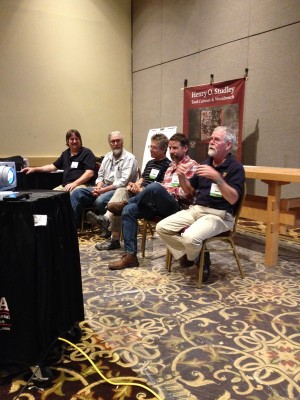
photo courtesy of Megan Fitzpatrick
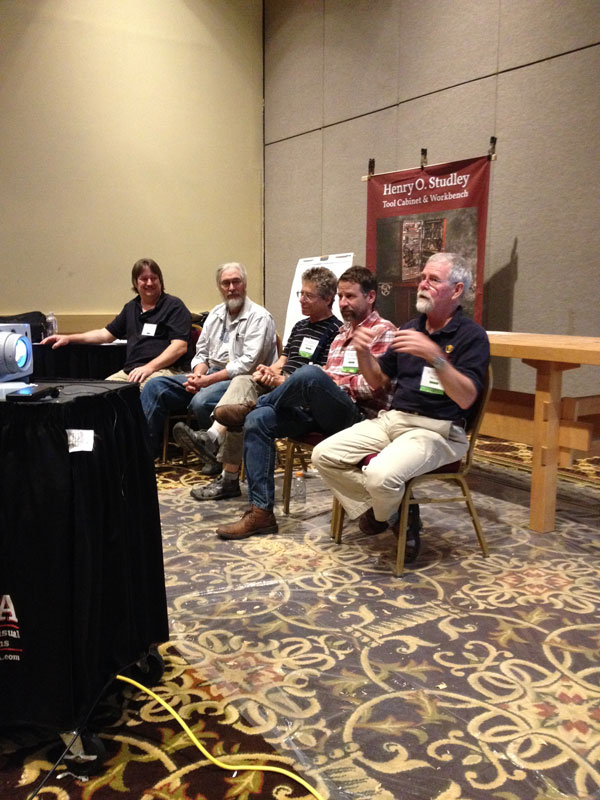
Following that was the chairmaker’s roundtable. Again the discussion was enlightening and helpful to future work in that area. Notice how cleverly I placed the banner for the upcoming Studley exhibit.
We had a quiet delightful dinner with our hosts, then sped home the next morning to reload out suitcases for another whirlwind research trip to New England.
More about that anon.
From Chris Schwarz’ blog:

The deluxe edition of “To Make as Perfectly as Possible: Roubo on Marquetry” has been named one of the “50 Books of the Year” for 2013 by the Design Observer, in association with AIGA and Designers & Books.

Designed by Wesley Tanner, “To Make as Perfectly as Possible” is the most beautiful modern book I have ever held, much less worked on. Wesley, a fine woodworker himself, did justice to the immense years-long translating job by Don Williams, Michele Pagan and Philippe Lafargue.
You can see all of the winners of the competitionhere.
This “50 Books” competition is the oldest continuously operating graphic design competition in the United States, starting in 1922.
Please join me in congratulating Wesley on his prestigious award.
— Christopher Schwarz
P.S. We have about two dozen copies of the deluxe edition for sale in our store. Once they are gone, they are gone forever.















Recent Comments